Breaking
Latest health news from South Africa and around the world•Wellness, nutrition, and fitness updates daily•Medical breakthroughs and healthcare updates•Science-backed health explainers and guides•Health tech, reviews, and upcoming events•
 SA Health News Desk
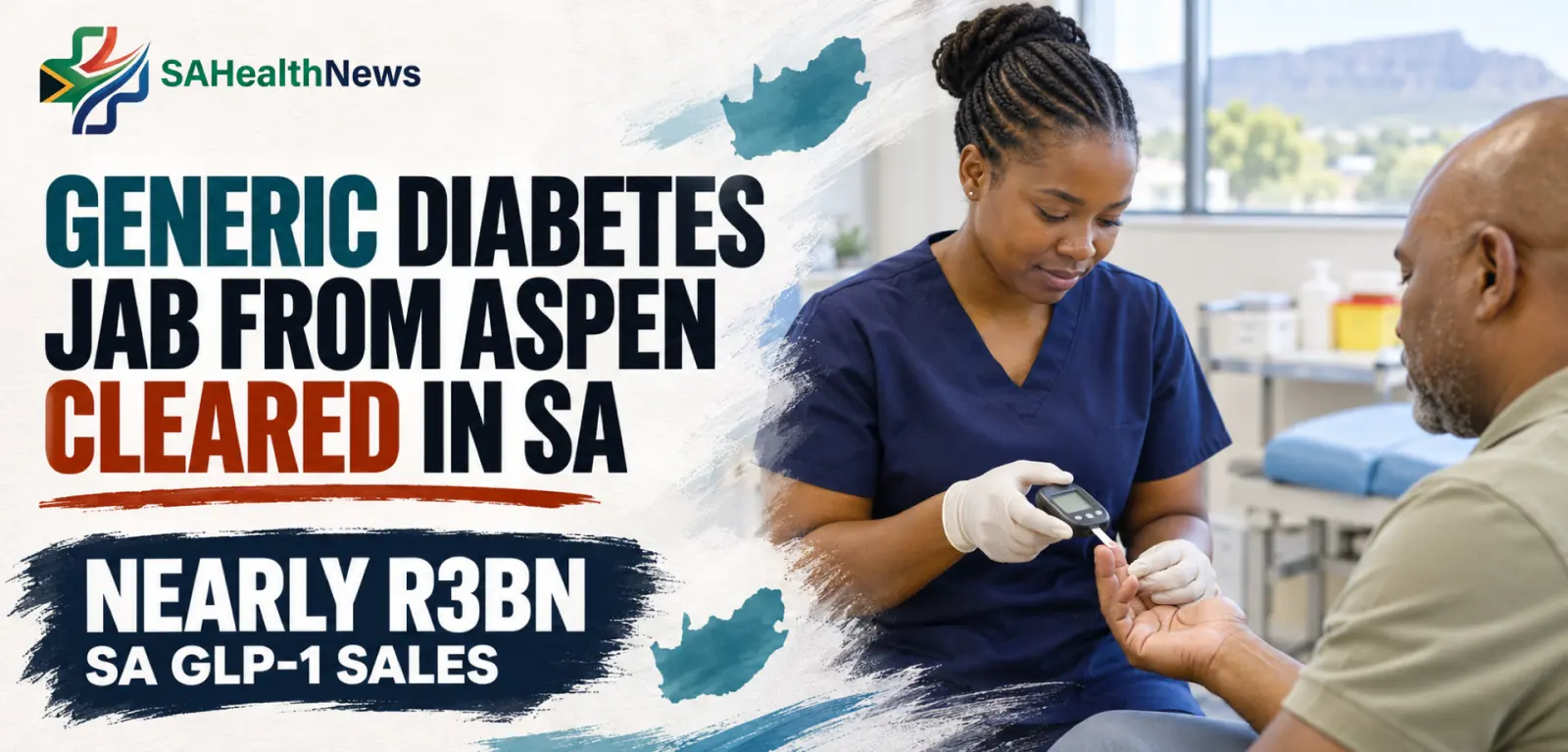
Aspen's generic semaglutide is registered in South Africa for type 2 diabetes. It promises a price below Ozempic but has named no figure or launch date.
For people in South Africa who have been quoted a high private price for a weekly diabetes injection, the useful news is narrow. Aspen Pharmacare has received regulatory approval for its generic semaglutide injection, a copy of the medicine Novo Nordisk sells as Ozempic for diabetes and Wegovy for weight loss. The JSE-listed drugmaker announced the approval on Wednesday 11 November, along with one in Brazil, and said it expects to start selling the product in both countries and in Canada in the coming months.
The South African registration is for adults with type 2 diabetes. It does not cover weight loss, although a doctor may prescribe a registered medicine off label for weight management. Nothing is on a pharmacy shelf yet, and Aspen has not named a price.
The short version: a local generic is now registered for type 2 diabetes, it is not a weight-loss registration, and families still cannot compare a rand figure with Ozempic.
Semaglutide is a prescription injection in a class called GLP-1 medicines. It copies a gut hormone that helps the body handle blood sugar, and it can also reduce appetite. Novo Nordisk's brand for diabetes is Ozempic. Its brand for weight loss is Wegovy. They are the same active ingredient used for different registered purposes.
A generic is a copy that the South African Health Products Regulatory Authority (SAHPRA) has registered. Registration is not the same thing as a packet in the dispensary. A pharmacy can supply it only once a packer has stock, a price exists, and a prescriber has written for that product.
Chief financial officer Sean Capazorio told Business Day the generic would be lower than Novo's patent-protected Ozempic and Wegovy, and he declined to say by how much. He expects a crowded field of competitors and said lower prices should enlarge the market.
That is a direction, not a number. Until Aspen publishes a single-exit price or a pharmacy lists a pack, a patient cannot tell whether the gap is small or large, or whether a medical scheme will fund the generic on the same rules it uses for Ozempic. No launch date has been given.
Novo's semaglutide patent expired in many countries earlier this year, which opened the way for copies. SAHPRA approved Ranbaxy's generic, branded Semagard, in July. In October it approved a second Novo brand, Semditu. The regulator said in July that it was considering 12 applications to register generic semaglutide.
Aspen is therefore not the first name on the list. It is a large local manufacturer saying its own copy is now registered and that sales in South Africa, Brazil and Canada should start within months. "Within months" is the company's phrase. It is not a date a clinic can book against.
According to Aspen, South African sales of GLP-1 medicines have grown to nearly R3 billion, and Eli Lilly's Mounjaro accounts for more than half of that. Aspen markets and distributes Mounjaro in South Africa and other sub-Saharan countries for Lilly. Capazorio said he does not expect the generic semaglutide to eat into Mounjaro sales.
The difference is the hormone each medicine copies. Mounjaro's active ingredient, tirzepatide, mimics two gut hormones, GLP-1 and GIP. Semaglutide mimics only GLP-1. They are both weekly-style injections in the same broad conversation, and they are not interchangeable. A switch is a prescribing decision, not a swap a patient makes at the counter.
The injection will at first be manufactured in India. Aspen plans to move production later to its own sterile facilities in South Africa and France. The company buys the active ingredient from outside suppliers.
Canada approved the product in July. Aspen has said it is seeking registration in about 20 more countries. The South African approval announced on 11 November sits beside the Brazilian one. Local patients are affected by the SAHPRA registration and by whether Aspen's sterile plant here eventually fills the pens. They are not affected, this week, by a Canadian shelf.
People already using Ozempic, Wegovy, Mounjaro or another GLP-1 medicine keep the prescription they have. A generic reaches a patient only after it is registered, stocked and prescribed. Anyone thinking of switching once Aspen's product arrives should talk to the doctor who prescribes their treatment first, because the dose and the injection device may differ between products.
The registered generics are also not the same thing as unregistered GLP-1 products made and distributed unlawfully for weight loss. SAHPRA and the South African Pharmacy Council have acted against those. A product bought outside a pharmacy, or offered as a weight-loss pen with no SAHPRA registration, is not this approval.
The whole GLP-1 class carries safety warnings. This week US regulators ordered a sight-loss warning added to all GLP-1 medicines, including those sold in South Africa. That warning is about the class. It is not a reason to stop a prescribed medicine on your own, and it is not a reason to start one because a generic has been registered.
When a pharmacy or scheme first mentions Aspen's semaglutide, the practical questions are simple. Is this the diabetes registration or a weight-loss one? What is the pack price? Does the scheme fund it, and on what diagnosis? Which device is it, and does the dose match the one already prescribed?
None of those answers is in the 11 November announcement. The announcement confirms registration for type 2 diabetes in adults, a plan to sell within months in South Africa, Brazil and Canada, manufacture in India first, and a price that Aspen says will be lower than Ozempic and Wegovy without saying how much lower.
None of this replaces advice from your own clinician. If you are unsure about a diabetes or weight-loss injection, or about whether a generic is right for you, speak to the doctor or clinic that already knows your treatment, especially if you are pregnant, caring for a child, or living with another chronic condition.
Source: SA Health News