Breaking
Latest health news from South Africa and around the world•Wellness, nutrition, and fitness updates daily•Medical breakthroughs and healthcare updates•Science-backed health explainers and guides•Health tech, reviews, and upcoming events•
 SA Health News Desk
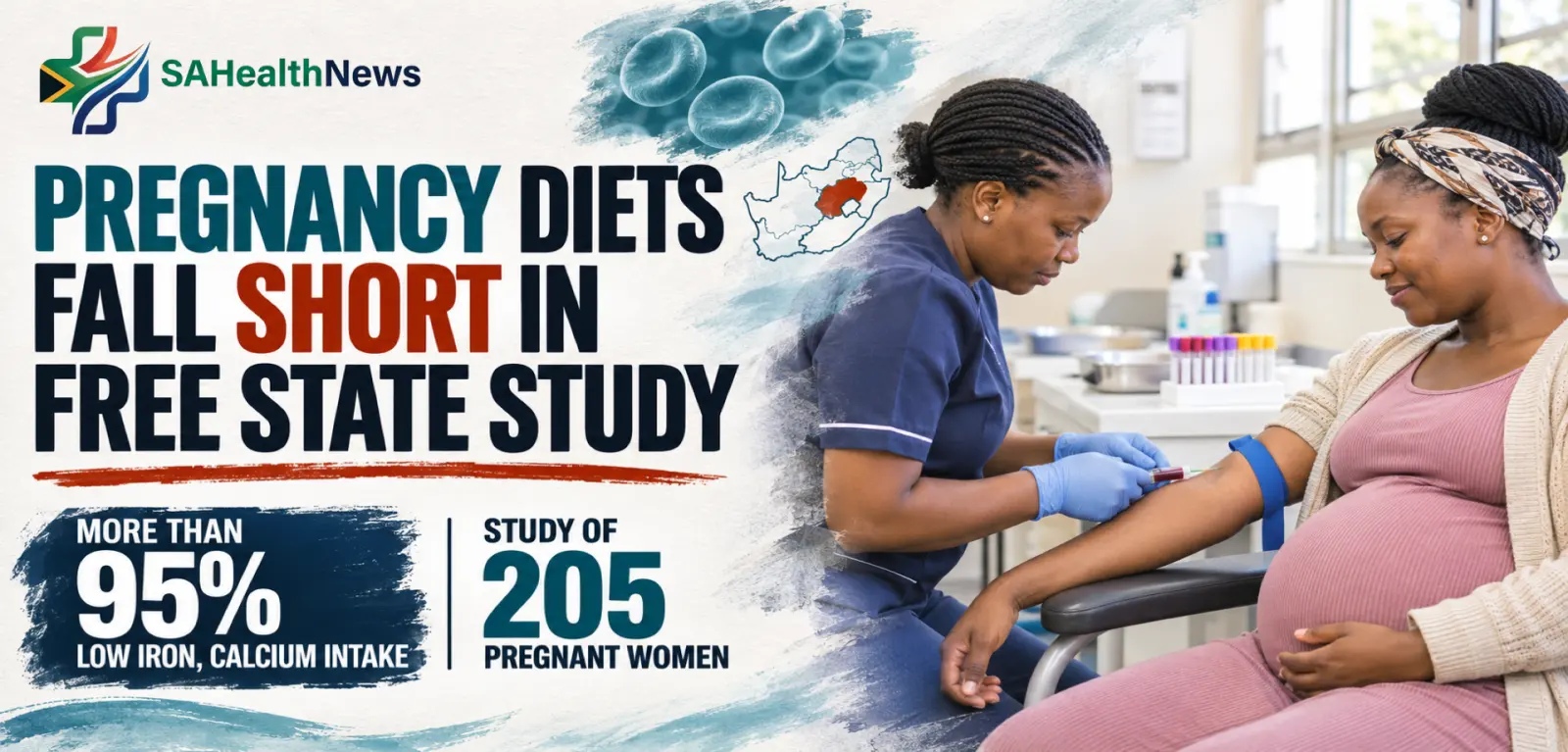
A University of the Free State study of 205 pregnant women in Kroonstad found over 95% short on dietary iron and calcium, and widespread inflammation.
A study of 205 pregnant women in Kroonstad has found that almost none were eating enough iron or calcium, that four in ten were not eating enough energy, and that most showed signs of inflammation that may be stopping their bodies from using the iron tablets clinics hand out.
The research, by Marita Serfontein, Mariette Nel and Corinna Walsh of the University of the Free State, appears in the November issue of the journal Nutrition. It first went online in June.
The women were all 21 weeks pregnant or less when they joined, and their median age was 26. The researchers recorded what they ate, asked about food security at home, measured their weight for height, and took blood from 142 of them.
A quarter of the women (25.4%) were underweight for their stage of pregnancy. Another quarter (25.8%) were overweight or obese. Severe food insecurity affected 10.2% of households.
More than 95% had inadequate dietary iron and calcium intake. Vitamin C, vitamin E and folate intakes were also often too low, and 40% of the women were not eating enough energy overall.
The authors call the combination a triple burden: undernutrition, overweight and micronutrient deficiency in the same group of women.
Blood tests showed that inflammation was common. C-reactive protein, one marker, was raised in 71.8% of the women tested, and a second marker, alpha-1-acid glycoprotein, in 61.3%.
That matters for iron. Only 23.2% of the women had low iron stores once the results were adjusted for inflammation. But 52.1% had a raised soluble transferrin receptor level, a sign that the body's tissues are not getting the iron they need to make red blood cells.
This was despite routine iron supplementation. The authors say the pattern is consistent with inflammation interfering with how the body uses iron. If so, more tablets alone would not fix it.
Almost half the women (49%) had raised thyroglobulin, which can point to too little iodine. The authors warn that this marker is unreliable on its own in pregnancy and that the finding should be read with caution.
This is a cross-sectional analysis: one set of measurements, taken early in pregnancy, in one semi-urban Free State town. It shows what was present together. It cannot show that inflammation caused the iron problem, or what happened to these women and their babies later. A sample this small, from one town, cannot stand for pregnant women across South Africa.
The researchers also report a link between high fat intake and two of the blood markers, and describe it themselves as exploratory.
The paper is a baseline analysis, and the authors say the associations need to be confirmed in longitudinal follow-up. Walsh declared financial support from Future Life. The authors say the analysis and interpretation are their own.
They conclude that antenatal care needs to deal with diet quality, inflammation and household money problems together.
Nothing in the study suggests stopping the supplements given at the clinic. Women who are pregnant and struggling to afford enough food can say so at an antenatal visit, where staff can check their weight and haemoglobin.
The study is of 205 pregnant women in Kroonstad. Marita Serfontein, Mariette Nel and Corinna Walsh of the University of the Free State wrote it. It appears in the November issue of Nutrition and first went online in June. The women were all 21 weeks pregnant or less when they joined. Their median age was 26. The researchers recorded what they ate, asked about food security at home, measured weight for height, and took blood from 142 of them.
A quarter, 25.4%, were underweight for their stage of pregnancy. Another quarter, 25.8%, were overweight or obese. Severe food insecurity affected 10.2% of households. More than 95% had inadequate dietary iron and calcium. Vitamin C, vitamin E and folate intakes were also often too low. Forty percent of the women were not eating enough energy overall. The authors call that combination a triple burden: undernutrition, overweight and micronutrient deficiency in the same group.
Inflammation was common in the women who gave blood. C-reactive protein was raised in 71.8%. Alpha-1-acid glycoprotein was raised in 61.3%. Once the iron results were adjusted for inflammation, only 23.2% had low iron stores. A larger share, 52.1%, had a raised soluble transferrin receptor level, which the paper treats as a sign that the tissues are not getting the iron they need to make red blood cells. This was despite routine iron supplementation. The authors say the pattern is consistent with inflammation interfering with how the body uses iron. If that reading is right, more tablets alone would not fix it. The paper does not show that inflammation caused the iron problem. It shows the two were present together.
Almost half the women, 49%, had raised thyroglobulin, which can point to too little iodine. The authors warn that this marker is unreliable on its own in pregnancy and that the finding should be read with caution. They also report a link between high fat intake and two of the blood markers, and they describe that link themselves as exploratory.
This is a cross-sectional analysis. The measurements were taken early in pregnancy, in one semi-urban Free State town. The design can show what was present together. It cannot show what happened to these women or their babies later. A sample this size, from Kroonstad alone, cannot stand for pregnant women across South Africa.
The paper is a baseline analysis. The authors say the associations need to be confirmed in longitudinal follow-up. Walsh declared financial support from Future Life. The authors say the analysis and interpretation are their own. Their conclusion is that antenatal care needs to deal with diet quality, inflammation and household money problems together.
Nothing in the study says a pregnant woman should stop the supplements given at the clinic. A woman who is struggling to afford enough food can say so at an antenatal visit, where staff can check weight and haemoglobin.
Source: SA Health News