Breaking
Latest health news from South Africa and around the world•Wellness, nutrition, and fitness updates daily•Medical breakthroughs and healthcare updates•Science-backed health explainers and guides•Health tech, reviews, and upcoming events•
 SA Health News Desk
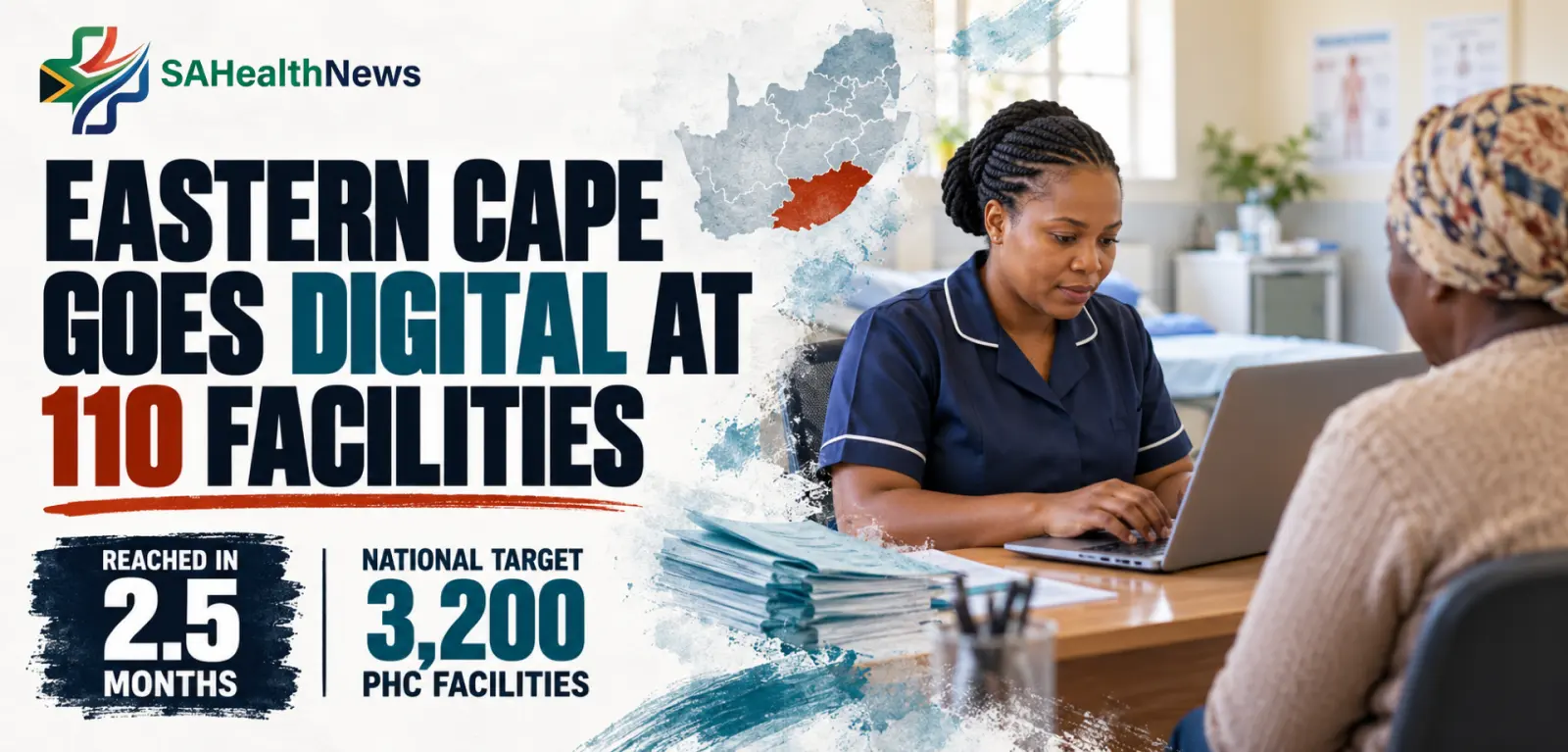
The Eastern Cape says 110 health facilities have moved from paper files to electronic medical records in two and a half months, starting in Buffalo City.
Staff at 110 public health facilities in the Eastern Cape have moved from paper patient files towards an electronic medical record, the provincial health department says. It describes itself as the first province to roll out an electronic medical record system for primary healthcare. That "first" is the department's claim. No national release in the reporting confirms the ranking.
Department spokesperson Siyanda Manana said the milestone came within two and a half months of the rollout starting. The system is now in use across all six of the province's districts and both metros, after training for staff and for the structures that oversee primary healthcare. Two and a half months is the department's own clock. It has not said which day the clock started, so the 110 cannot be pinned to a start date from the statement alone.
Buffalo City metro is the pilot site and has the most facilities on the system so far. The department named Pefferville, Beacon Bay, Gateway, Petros Jobane, Gonubie and Central clinics among them. "Among them" means the list is a sample, not the full Buffalo City count. The department has not said how many of the 110 sit in that metro and how many sit in the other districts.
The 110 figure comes from one outlet. Mthatha Express reported it on 26 October, quoting Manana. The article treats the number as the department's, which is what the paper did. It is not a figure repeated from a provincial gazette or a tender award in this reporting.
The department says the system is meant to deal with misplaced files, duplicated records and patient information that is not available when it is needed. It says the record captures clinical information electronically and makes it available to authorised health workers at the point of care, so a nurse can see a patient's history and follow them through treatment and referral.
That is the purpose the department stated. It is not a description of a screen a reporter watched, and the department has not named the software. A nurse at one of the named clinics is, on the department's account, no longer dependent on a paper folder being in the cabinet. Whether the folder's contents were typed in, and whether a clinic in another district can already see them, is not in the statement.
Manana said the rollout "is therefore not simply about installing software". Each facility needs trained staff, devices, a working connection and ongoing technical support before it can switch, which is why the department will add facilities only as they meet those requirements. He called the 110 facilities a milestone rather than the finish line. "The long-term objective is to build a connected health system in which accurate patient information supports care," he said.
The four requirements are the gate. A clinic without devices, without a connection, or without someone trained to use the system, stays on paper until those are in place. The department has not said how many facilities failed that test, or what share of primary care visits in the province now go through the electronic record. One hundred and ten is a count of facilities that have switched, not a count of patients.
The department has not said what the rollout cost, which system or supplier it uses, or when it expects every clinic to be connected. Those three blanks are the ones a buyer, a nurse or a patient cannot fill from the statement. The milestone is the switch at 110 sites. The finish line has no date on it.
The national Department of Health has built a single electronic record for primary healthcare facilities, linked to a patient registration system that gives each person a unique identifier and to a master list of health facilities. In a written reply to a parliamentary question asked in May, Health Minister Aaron Motsoaledi said the system had been tested in 85 primary healthcare facilities across five provinces. The large-scale phase was due to start in the second quarter of this financial year, between July and September, and to reach 3,200 primary healthcare facilities over 15 months.
An earlier reply, question NW4495 in August 2025, said that first phase went live on 28 March 2025 as a beta in 36 primary healthcare facilities and one general practice. By the May 2026 reply the tested count was 85. The two replies are different dates and different counts. They are not a contradiction the department has been asked to reconcile in this reporting. They are the public record of a test that grew, and of a large-scale phase that was due to start in the quarter just past.
The Eastern Cape was not one of the five provinces in the earlier test phase, which were the Free State, KwaZulu-Natal, the Northern Cape, Mpumalanga and North West. The provincial rollout Manana described is therefore not the same list as that beta. He linked it to South Africa's digital health strategy and to preparations for National Health Insurance, under which records would need to follow patients between facilities. The link is his. The statement does not say the 110 facilities are already on the national system the minister described to parliament.
Hospitals are a separate story. The same parliamentary reply said 43 Eastern Cape hospitals use the HMS 2 hospital system, while other provinces run different platforms. The minister said the standardised primary care rollout is meant to support shared records that can move with patients across facilities and provinces. A clinic file and a hospital file are not yet the same system in that reply. HMS 2 at 43 hospitals is the hospital number. The 110 is the primary-care number the province has claimed. Nothing in either statement says a patient referred from Pefferville or Gonubie arrives at an HMS 2 hospital with the clinic record already open.
What the province has put on the record is narrower than a finished digital health service. One hundred and ten facilities, six districts, two metros, a pilot in Buffalo City, a milestone inside two and a half months, and a list of conditions each further clinic must meet. What it has not put on the record is the supplier, the cost, the completion date, and whether these clinics are the national rollout or a provincial one running beside it.
Source: SA Health News