Breaking
Latest health news from South Africa and around the world•Wellness, nutrition, and fitness updates daily•Medical breakthroughs and healthcare updates•Science-backed health explainers and guides•Health tech, reviews, and upcoming events•
 SA Health News Desk
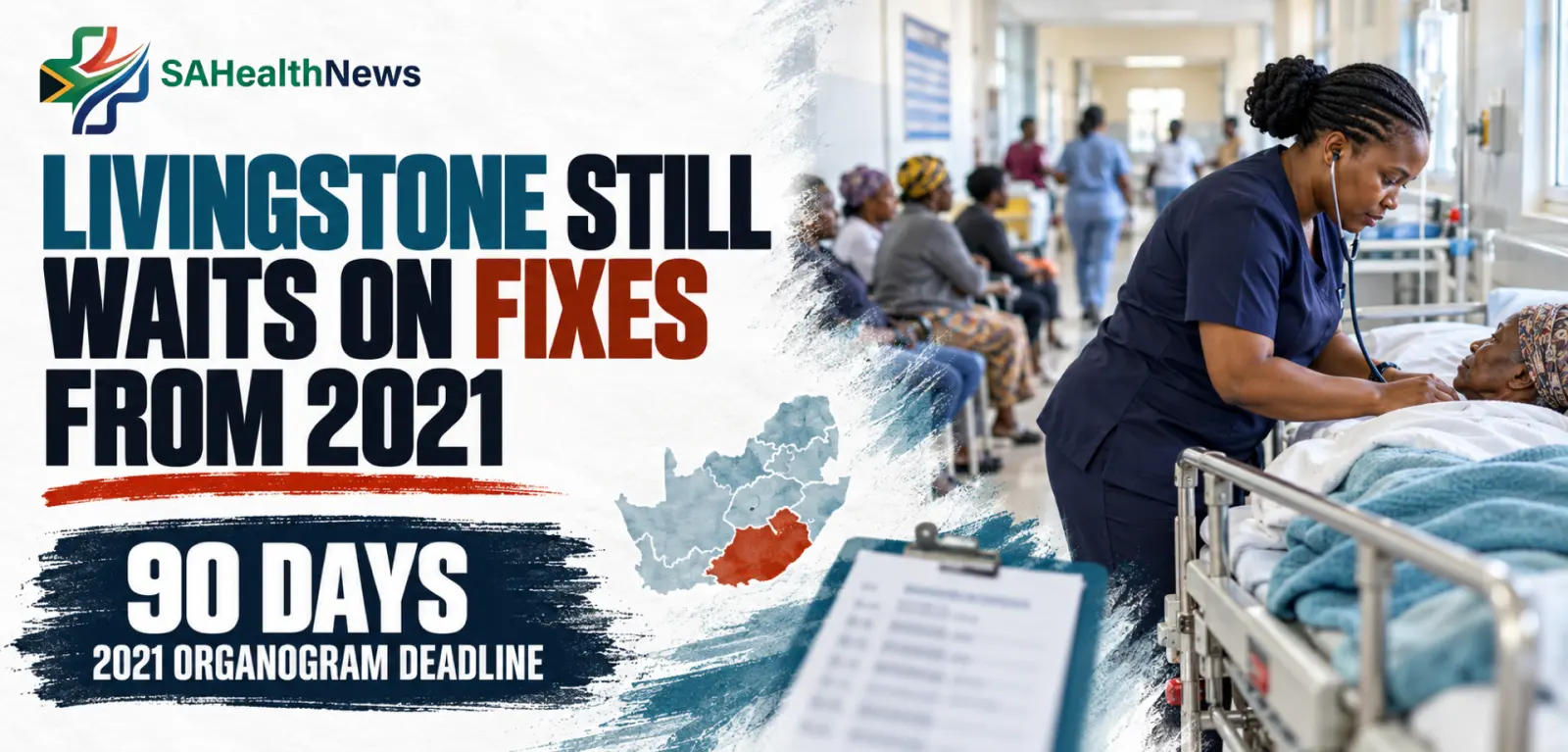
Parliament wants answers after the Public Protector found Livingstone Hospital's 2021 staffing orders still unmet. Motsoaledi says he is disappointed too.
Five years after the Public Protector ordered the Eastern Cape Department of Health to fix staffing and management at Livingstone Hospital in Gqeberha, Parliament has asked Health Minister Aaron Motsoaledi to account for the delays.
In a statement on 29 October, the National Council of Provinces' Select Committee on Social Services said it was concerned about the slow progress on the Public Protector's 2021 recommendations. The matter came up while the committee was considering the national Department of Health's 2025/26 annual report.
Committee chairperson Desery Fienies pointed to Public Protector Kholeka Gcaleka's unannounced visit to the hospital on 22 October, after which Gcaleka raised concerns over delays in implementing the recommendations.
Motsoaledi accepted the criticism. "We also saw with disappointment when the Public Protector went there," he told the committee. He said service failures often come down to human resources, infrastructure maintenance, procurement and financial management, and that these are provincial responsibilities.
The minister said the national department had already met the Eastern Cape Premier, the provincial MECs for health and finance, and their heads of department, and that the Public Protector's findings had featured prominently. "We are planning that, when time allows, we will rush there and have a second set of meetings with the province," he said. He gave no date.
The committee said the recommendations must be carried out without further delay and that it expects regular updates. It raised Livingstone while it was already sitting for the national department's 2025/26 annual report, not as a hearing called only for this hospital. Fienies tied the concern to an unannounced visit on 22 October, not to an inspection the province had been told to prepare for.
Gcaleka visited Livingstone, a tertiary hospital that serves Nelson Mandela Bay and a wide referral area, and then Butterworth Hospital, during a two-day trip to the province.
"I must say we are completely dissatisfied with the state of affairs at Livingstone Hospital," she told the Daily Dispatch. Some of the 2021 recommendations had been dealt with, she said, but the shortage of doctors and nurses had not. "Yes, beds have been delivered, but they are not sufficient."
She linked the pressure on Livingstone to weak primary and secondary care elsewhere in the system, which sends patients to the tertiary hospital, and said hospitals in the province were failing to uphold patients' constitutional right to dignity. "It is a challenge, very little progress has been seen since the time of Covid-19," she said.
The Herald reported that the hospital's chief executive blamed an organogram that has still not been signed, along with pressure from the wider region. The newspaper's account is paywalled. What is on the public record from that report is the chief executive's explanation: an unsigned staff structure, and demand from beyond the hospital's own catchment.
That organogram is not a new complaint. It is one of the items the 2021 report put on a clock.
The Public Protector's Report 11 of 2021/22, signed on 28 June 2021, followed an own-initiative investigation that began in July 2020. Gcaleka, then the deputy Public Protector, inspected Livingstone, Uitenhage, Mthatha and Nessie Knight hospitals in August 2020. She now holds the office of Public Protector, and on 22 October 2026 she went back to Livingstone to look at whether those recommendations had been carried out.
At Livingstone, the investigators found acute staff shortages, inadequate buildings, missing equipment and too little protective equipment. The provincial department did not dispute the findings, and the report found maladministration.
The remedial action gave the head of the provincial department 60 days to finish recruiting for the hospital's vacant leadership posts and 90 days to finalise its organogram, the approved staff structure, and to approach Treasury for money to fill vacancies. It also set 90-day deadlines for a mental health strategy for public hospitals in Nelson Mandela Bay and for outside contractors to maintain the laundry and other vital equipment. The department had to send an implementation plan within 30 working days and report every quarter. The report states that the remedial action is legally binding unless a court rules otherwise.
Those clocks started in 2021. Sixty days for leadership posts. Ninety days for the organogram and the Treasury approach. Ninety days for the mental health strategy. Ninety days for contractors on the laundry and other vital equipment. Thirty working days for a plan, then a report every quarter. The Select Committee's statement on 29 October is a parliamentary record that, five years on, the committee still does not regard that work as done.
Gcaleka's October remarks narrow what she says remains open. Some recommendations had been dealt with. The shortage of doctors and nurses had not. Beds had arrived and were not enough. The Herald's account of the chief executive's response puts the unsigned organogram in the same picture: the 90-day staff-structure deadline is the item the hospital's own leadership is still citing.
The Eastern Cape Department of Health had not publicly responded to Gcaleka's latest remarks by Saturday. Motsoaledi has described a first meeting with the premier, the health and finance MECs and their heads of department, and a second meeting that has no date. The committee has asked for regular updates. The report's own remedy for delay was a quarterly report to the Public Protector. That duty is what Parliament is now asking the minister to explain.
Source: SA Health News