
Breaking
Latest health news from South Africa and around the world•Wellness, nutrition, and fitness updates daily•Medical breakthroughs and healthcare updates•Science-backed health explainers and guides•Health tech, reviews, and upcoming events•
 SA Health News Desk
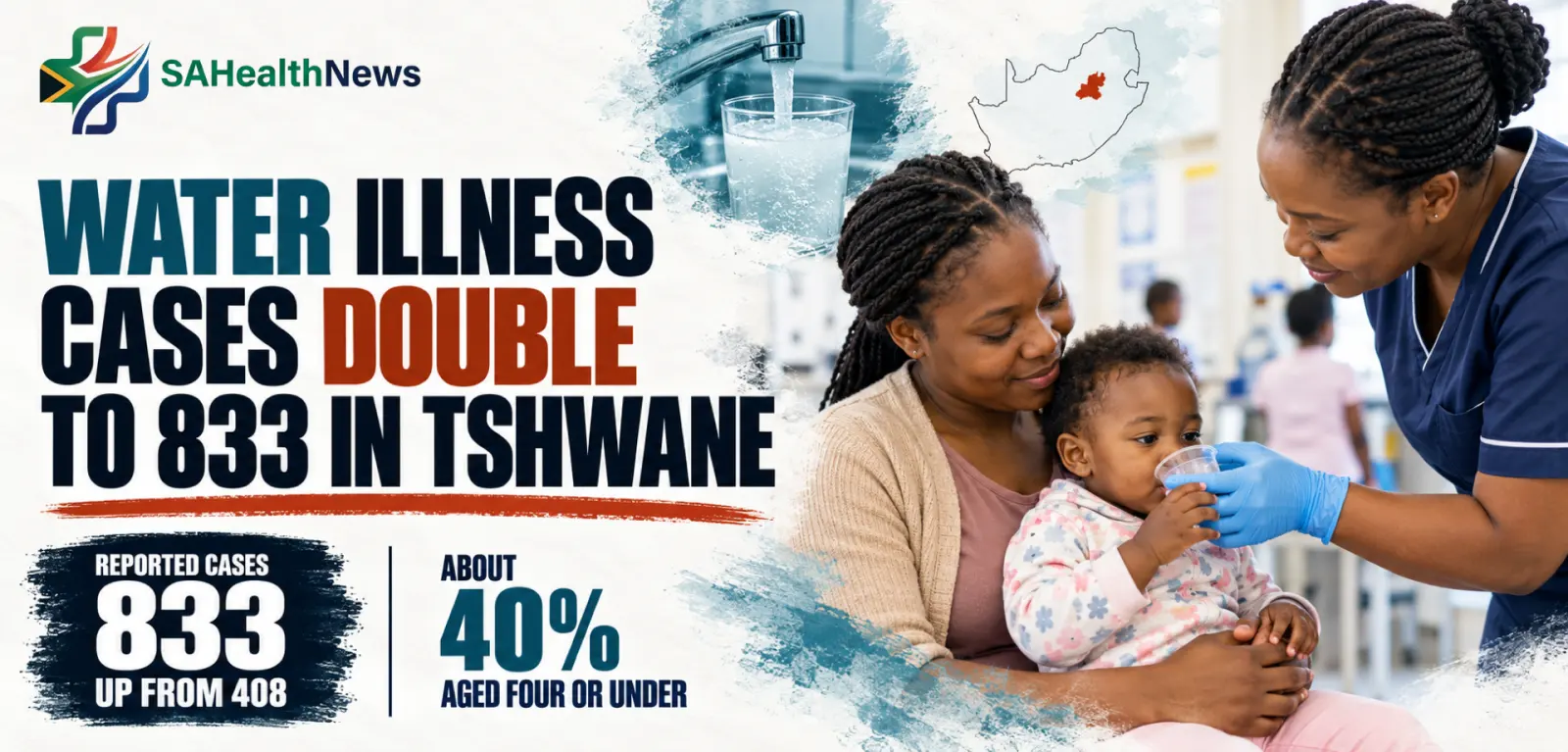
Bronkhorstspruit illness cases rose from 408 to 833, about 40% of them children aged four or under. The water minister says it is not an outbreak.
The number of people who have fallen ill after drinking contaminated tap water in Bronkhorstspruit, east of Pretoria, has more than doubled to 833. Water and Sanitation Minister Pemmy Majodina gave the new figure on 26 October. A week earlier the count stood at 408.
"When we last briefed you, the number stood at 408. As of today, the number have risen to 833," Majodina said, according to SAnews.
No deaths or critical cases have been reported. Children remain the main patients. About 40% of those who sought care were aged four or younger, Daily Maverick reported on 27 October. Three patients were still in hospital, and no one admitted since 7 October has stayed longer than three days.
The doubling is the story of this week. The illness itself is not new. Residents have been told since the plant failed to use tap water only for flushing toilets. The new figure is what the minister put on the record after a further week of cases, a visit by the deputy president, and a parliamentary account from the health minister that the illness is waterborne.
The Bronkhorstspruit Water Treatment Works supplied unchlorinated water from 24 September to 14 October because the City of Tshwane had problems with its chlorine supplier. That is a three-week window in which water left the works without the treatment step that is supposed to kill the organisms later found in patients. Health officials have said residents should use tap water only for flushing toilets.
Government gave two possible reasons for the continued rise in cases after that window closed. Water treated before the plant was shut down may already have been in the pipes, so households could still have drawn it after the works stopped producing. Some residents kept drinking water they had stored after tankers arrived. Majodina also said some people were buying untreated water from private tankers. Each of those paths can add cases without the plant itself still pumping unchlorinated water.
The dates matter for anyone trying to judge whether the curve has turned. Admissions since 7 October have not lasted longer than three days. Three patients were still in hospital when Daily Maverick reported on 27 October. The case total, though, moved from 408 to 833 in about a week. A short hospital stay and a rising case count can both be true: people are sick enough to seek care, most are not staying, and new cases are still being counted.
Majodina told reporters she did not regard the situation as an outbreak.
"I'm still firm that there's no outbreak. There's no death. There is no one that is critical," she said, adding that patients arrived dehydrated and were sent home after rehydration.
The World Health Organization defines an outbreak by the number of cases, not deaths: the occurrence of disease in excess of what would normally be expected in a community, area or season. On that definition, the absence of deaths does not decide the question. What decides it is whether 833 cases is more than Bronkhorstspruit would normally see. The minister's test, as she stated it, is deaths and critical illness. The WHO test is whether the count is above the usual level.
The National Institute for Communicable Diseases (NICD) issued an alert on 21 October about the rise in cases. That alert did not formally declare an outbreak. An alert tells clinicians and the public that cases are up. A declaration would be a separate step, and the NICD has not taken it in the material cited here.
Health Minister Aaron Motsoaledi told Parliament's portfolio committee on health on 24 October that the illness was waterborne.
"We concluded that it is a waterborne problem. It's not from food; it's from water," he said, according to SABC News.
Patients ranged from one month to 60 years old, and "children have been affected more than adults", he said. That age range matches the Daily Maverick figure that about 40% of people who sought care were four or younger. The illness is not confined to small children, but children are carrying a disproportionate share of the cases that reached care.
Earlier NICD tests found norovirus, Campylobacter and Shigella in patient samples. No cholera was detected. Those organisms fit a waterborne gut illness. They are not a single-pathogen outbreak with one named bug and one named dose. The joint picture from the earlier testing, which the 19 October statements also carried, is a mix of viruses and bacteria associated with contaminated water, and a clear negative for cholera.
Deputy President Paul Mashatile, who chairs the inter-ministerial committee on water and sanitation, visited the plant on 26 October. It is shut while Rand Water restores it, starting with the first of its two phases. Four pumps have been installed, and Majodina said chlorine stocks would last six to seven weeks. Chlorine on site answers the failure that started this: the works ran without it because the City's supplier relationship broke down. Stock for six or seven weeks is a buffer, not a date for safe tap water.
Mashatile said Rand Water would "take a few weeks to resolve the problem". No date has been given for when tap water will be safe to drink. Until that date exists, the instruction stands: tap water is for flushing, not for drinking, cooking or washing food.
Tshwane is delivering free drinking water with 36 tankers from 8am to 8pm, with no limit on how much residents can collect, Executive Mayor Nasiphi Moya said. Majodina said tankers were an emergency measure that should not run longer than two or three months. Residents told Daily Maverick that some trucks run dry before everyone has been served. A tanker programme with no volume cap can still fail the last household in the queue if the truck is empty.
Moya called the City's performance "indefensible" and admitted municipal negligence. A plant manager has been suspended while investigations continue. Government is also auditing water treatment works, with Gauteng first. The audit is the wider consequence. Bronkhorstspruit is the works that failed in public. The audit asks which other plants have the same chlorine, pump or operator weaknesses before they produce the same case curve.
The NICD advises anyone with diarrhoea, vomiting, stomach cramps or signs of dehydration to get medical care quickly. The signs it names are passing little urine, a dry mouth, dizziness or unusual drowsiness. While arranging care, give small, frequent sips of properly prepared oral rehydration solution to anyone who is conscious and able to drink. Young children, older people and people with weakened immune systems are most at risk. That list overlaps the people already showing up in the case count, especially children under five.
Use only tanker water or another officially confirmed safe source for drinking, cooking and washing food. Throw away tap water stored before the warning, and wash and disinfect containers before refilling them. Keep stored water covered, and pour it out rather than dipping cups or hands into it. Stored water is one of the routes the minister gave for why cases kept rising after the plant stopped. Water saved in a bucket before the warning is not a reserve. It is part of the exposure.
Private tankers are the other route she named. Water sold from a tanker that is not part of the City's supply is not the same thing as the 36 official trucks. Until a source is confirmed, the safe list is the official tanker water and any other source the authorities have named.
Sources: SAnews, "Gastrointestinal illness cases rise to 833" and "Mashatile visits Bronkhorstspruit to assess water conditions", 26 October 2026; Daily Maverick (Jamie Ho and Reitumetse Pilane), 27 October 2026; SABC News, 24 October 2026; NICD, "Increase in gastrointestinal illness cases reported in Bronkhorstspruit and surrounding areas", 21 October 2026; EWN, 20 October 2026.
Source: SA Health News