Breaking
Latest health news from South Africa and around the world•Wellness, nutrition, and fitness updates daily•Medical breakthroughs and healthcare updates•Science-backed health explainers and guides•Health tech, reviews, and upcoming events•
 SA Health News Desk
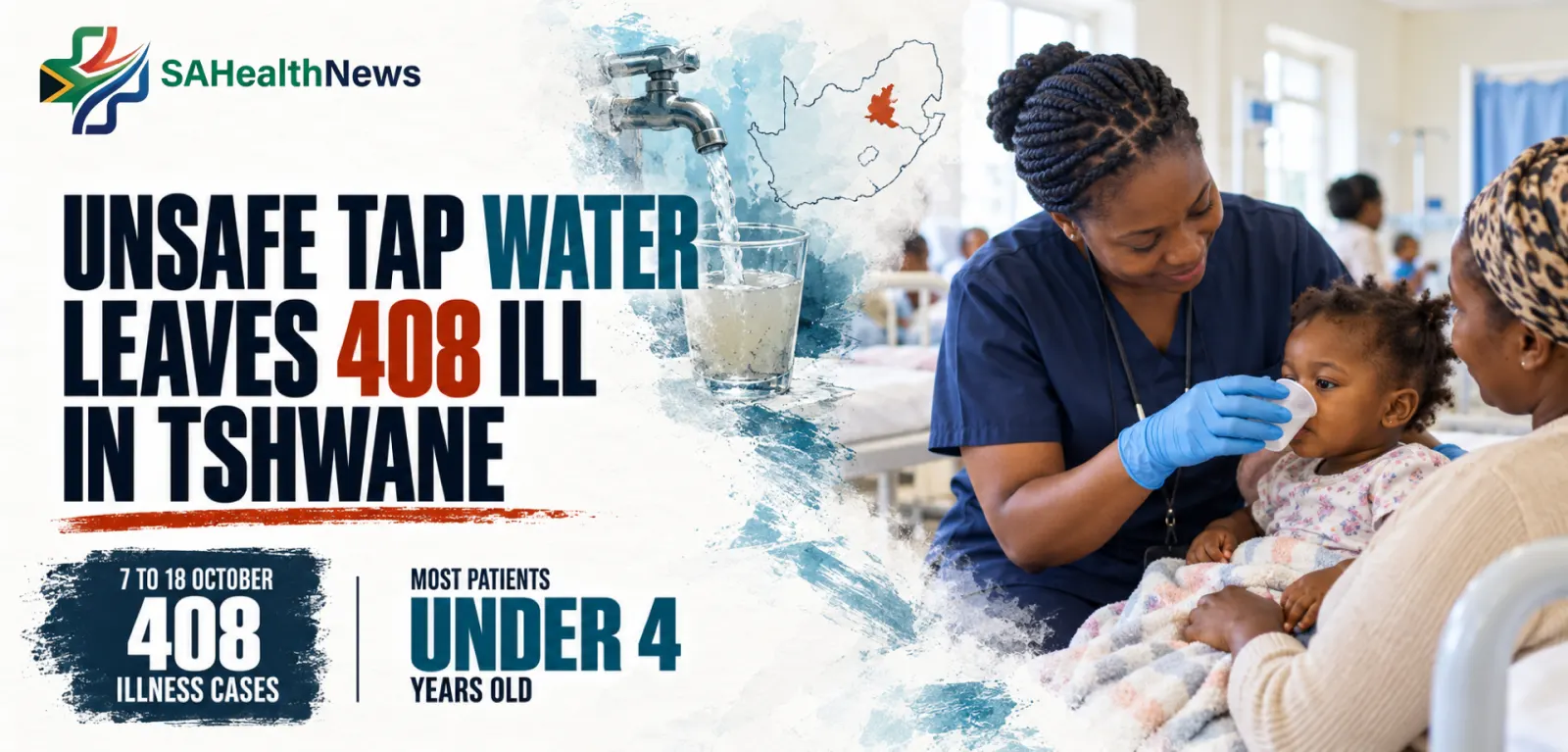
Bronkhorstspruit residents must not drink tap water after 408 people, most under four, fell ill. Tests found E. coli in the supply from the local plant.
Residents of Bronkhorstspruit and surrounding areas east of Pretoria have been told not to drink, cook or wash with tap water after 408 people fell ill with gastrointestinal illness between 7 and 18 October. Most of the patients are children under four. No deaths have been reported.
The figures come from a joint statement issued on 19 October on behalf of Health Minister Aaron Motsoaledi, Water and Sanitation Minister Pemmy Majodina, Gauteng Premier Panyaza Lesufi and Tshwane Executive Mayor Nasiphi Moya, after a briefing in Pretoria.
The affected areas are Zithobeni, Bronkhorstspruit, Dark City, Rethabiseng and Sokhulumi in Tshwane's Region 7, which are largely supplied by the Bronkhorstspruit Water Treatment Works.
New cases peaked at 72 on 13 October. On 18 October, 16 new cases were reported. Patients have been treated at Bronkhorstspruit Hospital and local clinics, and most were rehydrated and discharged within a day.
The National Institute for Communicable Diseases (NICD) found norovirus, Campylobacter and Shigella, among other pathogens, in three of four stool specimens tested. No cholera bacteria were found.
Water samples taken by the Department of Water and Sanitation on 14 October showed extremely high levels of E. coli and total coliforms at the treatment works and in the Ekandustria and Zithobeni reservoirs. Together, the laboratory and water results point to contaminated water from the plant as the cause of the illness, the statement said. Further tests are looking for other contaminants.
According to the department, the plant's water was not chlorinated from 24 September to 14 October because the City of Tshwane had problems with its chlorine supplier. The Bronkhorstspruit River, which feeds the plant, is polluted with sewage from failing wastewater works upstream in the Victor Khanye municipality and from broken City sewage pump stations. Several of the plant's pumps, sand filters and other equipment were also not working.
The department said the City did not warn residents that the unchlorinated water was unsafe to drink, even if boiled. It said it has started steps to hold those responsible to account.
The plant was shut on 14 October and its chlorine supply restored the next day. It reopened on 16 October, but the water it supplies is still not fit to drink, and officials have not said when it will be. Rand Water is being appointed to take over improvements at the plant.
The Water Research Commission is running independent tests and a separate investigation into the causes, with a report due by 28 October.
Until further notice, residents should use tap water only for flushing toilets. It should not be used for drinking, cooking, bathing, brushing teeth or washing food or clothes. Water stored before the outbreak should be thrown away and the containers disinfected with household bleach, and tanker water kept in clean containers with lids. Anyone with diarrhoea or vomiting, especially young children, should get medical care early, and suspected cases should be reported to the nearest clinic.
Since 14 October the City has delivered drinking water by tanker from the Cullinan Water Treatment Works, which tests show is safe. The fleet is being increased to 36 tankers.
Bronkhorstspruit Hospital has set up an isolation area and overflow beds. A four-level surge plan allows for more beds and staff, referrals to Mamelodi Regional, Tshwane District and Pretoria West District hospitals, and provincial support if cases rise. Health promoters are going door to door and using loudhailers to explain safe water storage and hygiene.
The City says it has committed more than R107 million to the plant over three years, R21 million of it in the current financial year.
Sources: Joint media statement by the Ministries of Health and of Water and Sanitation, the Gauteng Provincial Government and the City of Tshwane, 19 October 2026 (gov.za); TimesLIVE, 19 October 2026; EWN and TimesLIVE, 16 October 2026.
Source: SA Health News