Breaking
Latest health news from South Africa and around the world•Wellness, nutrition, and fitness updates daily•Medical breakthroughs and healthcare updates•Science-backed health explainers and guides•Health tech, reviews, and upcoming events•
 SA Health News Desk
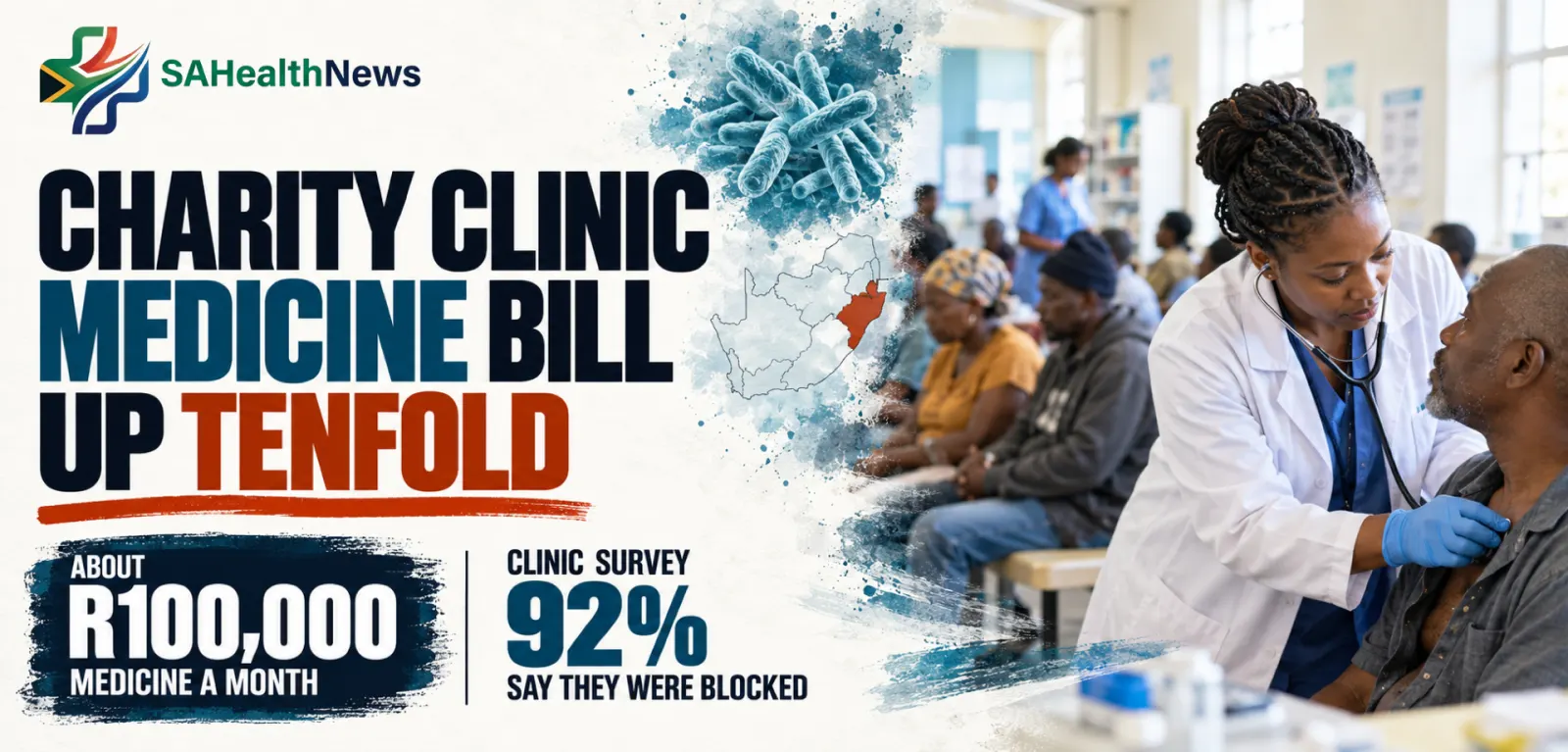
A Durban charity clinic's medicine bill rose from R10,000 to about R100,000 a month after KwaZulu-Natal Health stopped its TB and HIV supply.
The clinic at the Denis Hurley Centre in central Durban now spends about R100,000 a month on medicine, up from R10,000, after the KwaZulu-Natal Department of Health stopped supplying it with TB and HIV medication, Daily Maverick reported this week.
The centre is a non-profit named after the late Archbishop Denis Hurley, an anti-apartheid campaigner, and is funded by donations from Christians, Muslims, Hindus and Jews. Its Usizo Lwethu Sibaya Clinic has run for more than a decade and sees about 1,200 patients a month. Dr Rishigen Viranna leads a medical team of eight, with two volunteers.
Staff told Daily Maverick that the provincial supply was suspended in December 2025, that they did not know why, and that repeated contact with the department had not restored it. The department did not answer Daily Maverick's questions before publication, and SA Health News could not find a public explanation from it.
The centre has also collected numbers on why its waiting room is fuller. Over five weeks from July 2026 it surveyed 294 patients, 239 of them foreign nationals. Of the 184 foreign nationals who had tried to use a government facility in the previous year, 92% said they had been prevented from doing so, even when they showed documents. The centre says at least 72% of those stopped from collecting medication held papers showing they were in South Africa legally.
The survey is the centre's own and has not been independently checked.
Before the recent rise, immigrants made up about 30% of the clinic's patients. Viranna says that share has more than doubled in recent months. "This treatment is available. It is access that is the problem," he told Daily Maverick.
The clinic cannot absorb everyone. It now turns some patients away, or refers them to government clinics outside the city centre, where blockades are reportedly less common.
According to the report, vigilante groups linked to March and March have been blocking public health facilities and turning immigrants away since July 2025.
In December 2025 the Gauteng High Court found blockades at two Johannesburg clinics unlawful and a violation of the right to health, in a case brought by the Treatment Action Campaign, Médecins Sans Frontières and Kopanang Africa Against Xenophobia. That interim order covered only those two Gauteng clinics.
The clinic lost its state supply of TB and HIV medicine. A person whose TB treatment stops can stay infectious for longer, and interrupted treatment raises the risk of drug-resistant TB. When antiretroviral treatment stops, the virus rebounds, which harms the person's health and makes HIV easier to pass on.
Both risks reach beyond the patients who are turned away.
Source: SA Health News