Breaking
Latest health news from South Africa and around the world•Wellness, nutrition, and fitness updates daily•Medical breakthroughs and healthcare updates•Science-backed health explainers and guides•Health tech, reviews, and upcoming events•
 SA Health News Desk
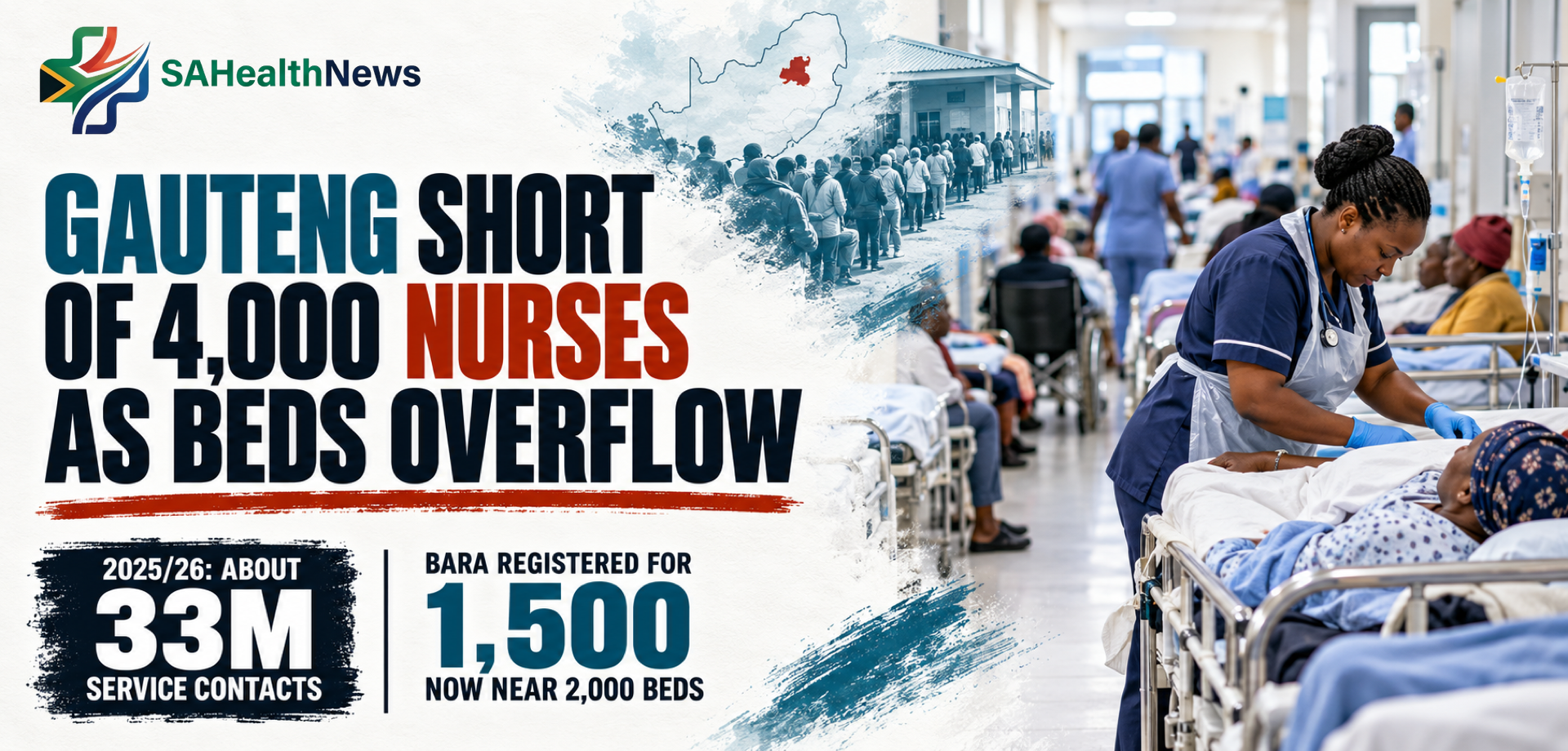
Bara is registered for 1,500 patients but runs close to 2,000 beds, and Gauteng is short of about 4,000 nurses, Health MEC Faith Mazibuko says.
Gauteng's public hospitals are carrying more patients than they were built for, and the province is short of about 4,000 nurses, Health MEC Faith Mazibuko told business leaders this week.
"We are short of almost more than 4,000 nurses," Mazibuko said at a Progressive Business Forum colloquium on investing in health and wellness, TimesLIVE reported on Wednesday, 22 October. The nurses who remain "will tell you they are overworked, they are tired", she said, and some take early retirement. "It's because they are exhausted."
Mazibuko used Chris Hani Baragwanath Hospital as an example. Bara "is registered to only accommodate 1,500 people", she said, "but currently you have beds that are almost standing at 2,000". She named Bara, Charlotte Maxeke, Dr George Mukhari and Steve Biko, the province's four academic hospitals, as the worst affected, because they take patients from across the continent.
"I've been stuck here at casualty, I can't find a bed," she said, describing the complaint many families will have heard. "It's because our hospitals are overloaded."
According to the MEC, the province recorded more than 20 million patient contacts in 2025/26. That includes about 5.8 million outpatient visits and 670,807 admissions at provincial hospitals, 8,026,972 patients seen at primary healthcare facilities, and 8,491,700 people reached through outreach. Together, she said, that comes to about 33 million healthcare service contacts in one financial year.
Clinics are struggling too. "Many of our clinics, they no longer meet the demand," Mazibuko said. "They are either small, others don't even have a waiting area." Queues stretch outside, leaving patients exposed to the rain and the cold. Some residents pay more than R45 to reach a clinic, she said, which leads some mothers to miss their children's immunisations. The department has bought mobile clinics under its Siyabaphilisa programme to cut that distance.
The province also needs doctors, Mazibuko said, though many are out of work. "We also need more nurses and more doctors," she said. "We have a lot of unemployed doctors." She said the limits of the personnel budget prevent the province from employing them.
She asked business to partner with the department to build hospitals in Diepsloot and Olievenhoutbosch and to modernise ageing clinics, saying the province does not have enough resources on its own.
Prof Monique Marks, a life coach and speaker at the same event, said patients are "getting lost in the system", with little continuity of care once they enter hospitals. "There is very poor follow up," she said.
The MEC's figure is lower than an earlier estimate. In September, provincial figures reported by Business Day put the nursing gap at about 16,000 and said Gauteng was losing at least 100 nurses a month, with 27,670 nursing posts filled and 2,272 funded posts vacant. Mazibuko did not explain how her figure of about 4,000 was calculated, and the department has not said whether it refers to funded vacancies or to the wider need.
In September the department said a provincial nursing summit was planned for November. ## What the colloquium was for
Mazibuko was speaking at a Progressive Business Forum colloquium on investing in health and wellness, not at a budget vote and not at a hospital board. TimesLIVE reported the remarks on Wednesday 22 October. The audience matters, because the ask at the end of the speech was aimed at business: partner with the department to build hospitals in Diepsloot and Olievenhoutbosch, and help modernise ageing clinics. She said the province does not have enough resources on its own.
The mobile clinics already bought under the Siyabaphilisa programme are the department's own attempt to shorten the trip. Mazibuko said some residents pay more than R45 to reach a clinic, and that the cost leads some mothers to miss their children's immunisations. A mobile clinic changes distance. It does not add the nurses she says the province is short of, and it does not add beds at Bara.
The bed figure is the one families will recognise. Bara, she said, is registered to accommodate 1,500 people, while beds are almost standing at 2,000. She described the complaint she hears: "I've been stuck here at casualty, I can't find a bed." Her explanation was overload, not a single broken ward.
She named the province's four academic hospitals as the worst affected: Chris Hani Baragwanath, Charlotte Maxeke, Dr George Mukhari and Steve Biko. The reason she gave is that they take patients from across the continent, so the pressure is not only Gauteng's own population. The speech did not give a bed count for the other three, or a date by which Bara would be back inside its registered size.
Clinics, she said, no longer meet the demand. Some are small. Others do not have a waiting area. Queues stretch outside, in the rain and the cold. That is a buildings problem sitting next to a staffing problem. A new waiting area does not employ a nurse, and a nurse does not enlarge a clinic that she says is already too small.
The MEC's figure of about 4,000 is lower than an earlier estimate, and the article should not pretend they are the same calculation. In September, provincial figures reported by Business Day put the nursing gap at about 16,000 and said Gauteng was losing at least 100 nurses a month, with 27,670 nursing posts filled, 2,272 funded posts vacant and 1,186 posts unfunded. Mazibuko did not explain how her figure of about 4,000 was calculated. The department has not said whether it refers to funded vacancies or to the wider need.
Both figures can be in the public record without being forced into one total. A funded vacancy is a post the province says it can pay for and has not filled. An unfunded post is a post on the establishment with no budget. A "shortfall" of 4,000, in the MEC's words "almost more than 4,000", may be either, or something else. Until the department publishes the worksheet, the Care Room reading is that the MEC has put a number on the shortage and has not shown the sum.
She also said the nurses who remain will tell you they are overworked and tired, and that some take early retirement because they are exhausted. That is her account of why people leave. It is not a resignation table.
The province also needs doctors, Mazibuko said, though many are out of work. "We have a lot of unemployed doctors." She said the limits of the personnel budget prevent the province from employing them. The remark leaves the shortage and the unemployment in the same sentence: posts the hospitals say they need, and doctors the budget will not take on.
Prof Monique Marks, a life coach and speaker at the same event, said patients are getting lost in the system, with little continuity once they enter hospital. "There is very poor follow up." Her comment is not a provincial statistic. It is a second speaker, at the same colloquium, describing what happens after the overloaded casualty the MEC described.
The ledger from the speech is specific. About 4,000 nurses short, on the MEC's wording. Bara registered for 1,500 and running close to 2,000 beds. More than 20 million patient contacts in 2025/26, about 5.8 million outpatient visits, 670,807 admissions at provincial hospitals, 8,026,972 patients at primary facilities, 8,491,700 people reached through outreach, and about 33 million healthcare service contacts in the year on her account. Four academic hospitals named. An ask for hospitals in Diepsloot and Olievenhoutbosch. Mobile clinics already procured. A personnel budget that, she says, cannot absorb unemployed doctors.
What the speech did not contain, and what TimesLIVE's report did not add, is a union response, an opposition response, a funded-vacancy table that produces the figure of 4,000, or a date for the nursing summit beyond the September statement that one was planned for November. Those are the gaps. The overload at Bara does not depend on them. The size of the nursing gap, as a single number the province will hire against, still does.
This report is journalism, not a staffing plan.
Source: SA Health News