Breaking
Latest health news from South Africa and around the world•Wellness, nutrition, and fitness updates daily•Medical breakthroughs and healthcare updates•Science-backed health explainers and guides•Health tech, reviews, and upcoming events•
 SA Health News Desk
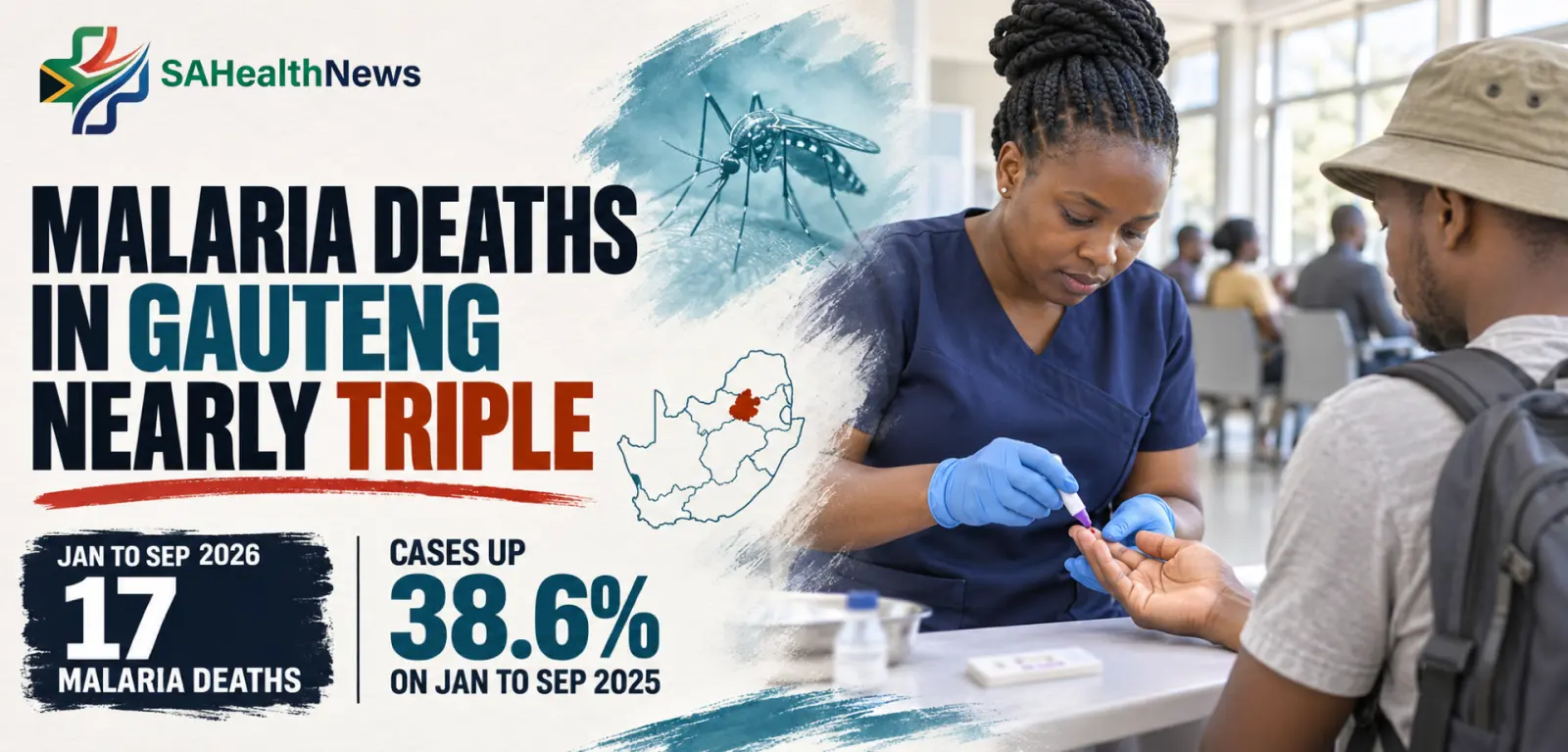
Gauteng recorded 17 malaria deaths from January to September, up from six a year earlier, and 15 of those who died had travelled in the SADC region.
Seventeen people died of malaria in Gauteng between January and September 2026. Six people died in the same months of 2025. The provincial health department released the figures on 12 November. Gauteng is not a malaria area. The parasite is picked up somewhere else, and the person comes home with it.
Of the 17 who died, 15 had travelled in other countries of the Southern African Development Community. Mozambique accounted for about 59% of the deaths, the department said. Two of the people who died had not travelled in the region, on those figures. The department did not say where those two infections came from.
Cases rose by 38.6% over the same nine months, from 554 to 768. The province has already passed the 666 cases it recorded in the whole of 2025, a year in which seven people died. A death count that has nearly tripled, with a quarter of the year still to run, is the number a household planning a December trip should sit with. It is also seventeen families, not a score.
The rise was visible early. By the end of March, once the holiday travel season had ended, the department had already counted 414 cases and 11 deaths. Most of the year's deaths, on that count, had already happened before winter. The months that produced them were the months when people came back from elsewhere in the region.
That is why the department is talking about the festive season now, in November, rather than waiting for January's tally. It says it is stepping up awareness at taxi ranks, bus stations and other busy points, especially over public holidays and the peak travel weeks. On 11 November it held an awareness event at Holomisa Sports Grounds in Bekkersdal, on the West Rand. A sports ground is not a clinic. It is where the department chose to meet people who are about to move.
For someone in the province, the practical fact is simple. The illness is not circulating at home. It is acquired on the road, in a malaria area, and it shows up after the person is back. The department says health workers receive ongoing training to recognise a suspected case, and that cases are monitored daily.
The department calls malaria "a serious but preventable and treatable disease". It advises anyone travelling to a malaria area to visit a travel clinic before the trip. It says there are travel clinics in all five of the province's health districts. Precautions, it says, apply before the journey and during it. The statement does not name a medicine, a dose or a brand. That choice sits with the clinic, not with a news report.
The symptoms it names are fever, chills, headache, muscle aches, nausea and vomiting. They can start while the person is still away, or after they are home. The instruction is to get medical help immediately, and to tell the health worker where they have travelled. A fever after travel in the region is, on the department's account, a reason to be seen at once, and a reason to say where you went.
The department audits every malaria death to find the factors that contributed to it. It has not published those factors for the 17 deaths this year. It has not said whether the people who died had been to a travel clinic, how long they waited after the fever started, or which facility saw them first. Those are the questions an audit can answer. They are not in the 12 November statement.
Environmental health practitioners in each district investigate every case to work out where the infection came from. Cases are classed as imported when the person was infected in a malaria area. They are classed as odyssean when a mosquito carrying the parasite is brought into a place that does not have malaria, usually in luggage or a vehicle, and infects someone who has not travelled.
That second route is the one that can reach a person who never left Gauteng. It is also the one the headline figures do not split out. Fifteen of the seventeen deaths were in people who had travelled in the region. The statement does not say the other two were odyssean. It does not say they were not. Until the investigation says so, those two deaths stay unexplained in public.
The department works with municipalities, the National Institute for Communicable Diseases and the national Department of Health. The province is the one that counts the cases, investigates the likely source and trains the staff who have to recognise an illness they do not see every day.
The travel-clinic advice, the symptom list and the instruction to say where you have been are the department's words, reported here. They are not a prescription for a particular person, and they are not a reason to start or stop any medicine on the strength of an article.
None of this replaces advice from a clinician who can see you and who knows where you are going, or where you have been. If a fever starts after travel, the department's instruction is to get medical help immediately and to name the place. Do not decide at home that it is something else.
The open questions are the ones the statement left closed. Which countries, other than Mozambique's share of the deaths, account for the rest. Whether any of the 17 deaths was odyssean. What the death audits found. And whether the festive-season warning at the taxi ranks reaches people before they travel, or only after the next March count.
Source: SA Health News