Breaking
Latest health news from South Africa and around the world•Wellness, nutrition, and fitness updates daily•Medical breakthroughs and healthcare updates•Science-backed health explainers and guides•Health tech, reviews, and upcoming events•
 SA Health News Desk
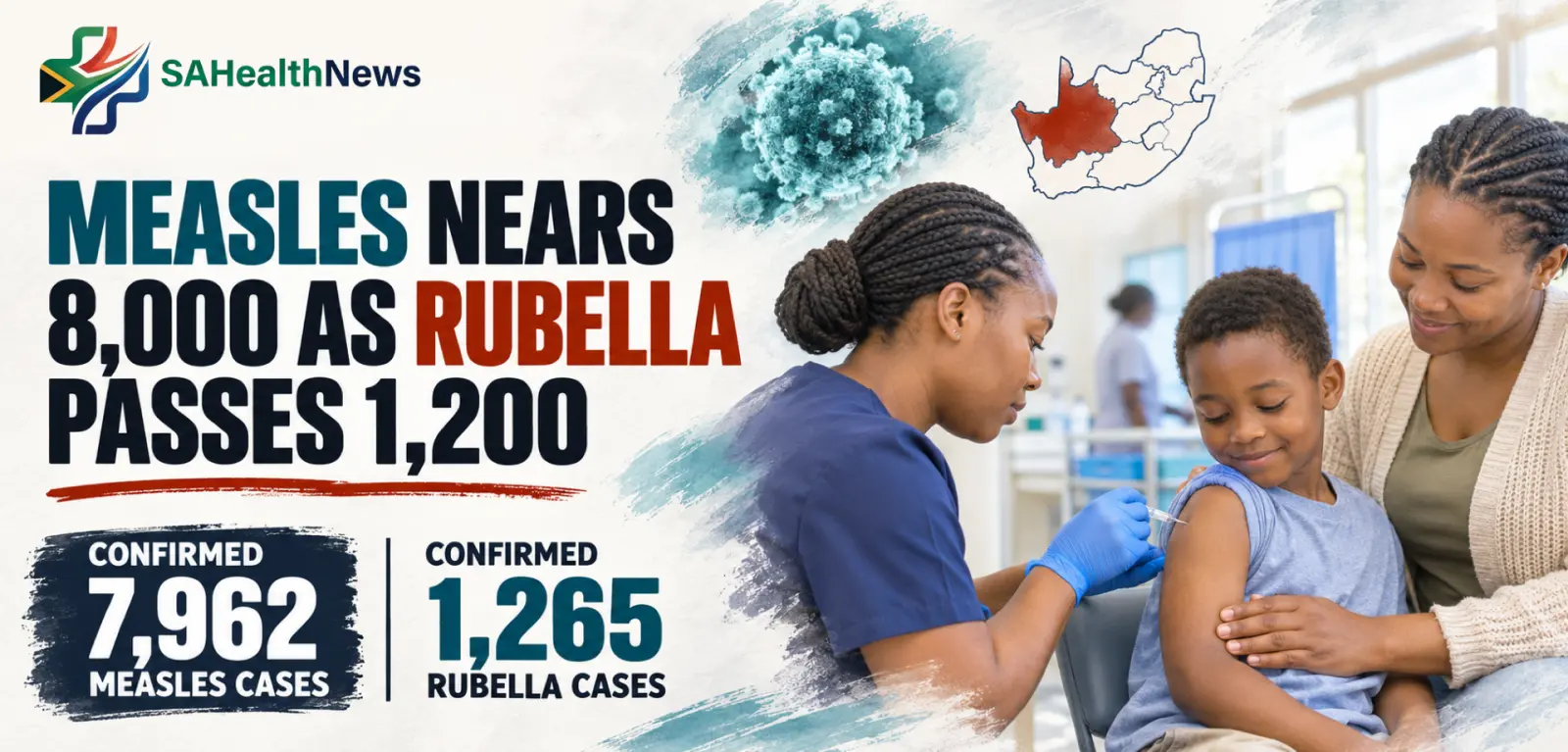
NICD data to 1 November show 7,962 confirmed measles cases and 1,265 rubella cases, with the Northern Cape case rate rising to 88 per 100,000 people.
South Africa had recorded 7,962 laboratory-confirmed measles cases by 1 November, according to the National Institute for Communicable Diseases (NICD). The NICD count with data to 4 October stood at 6,186. That is 1,776 more cases in four weeks of data.
Rubella, which is running alongside the measles outbreak, has climbed to 1,265 confirmed cases, up from 845.
The figures are in the NICD's measles and rubella situation report for week 45, posted on 20 November. It covers 29 December 2025 to 1 November 2026, using data accessed on 8 November. The NICD says every province has reported an increase in cases.
The Western Cape has the most confirmed measles cases this year (1,889), followed by the Free State (1,382) and the Northern Cape (1,227). Limpopo has 767, Gauteng 688, Mpumalanga 684, North West 543, Eastern Cape 401 and KwaZulu-Natal 381.
Measured against population, the Northern Cape remains worst hit. It now has 88.0 cases per 100,000 people, up from 59.6 in October, against a national rate of 12.5. The Free State (45.2) and Western Cape (24.4) follow.
Children account for most cases. Those aged 1 to 14 make up 68.1% (5,421), and children aged 5 to 9 alone 40.8% (3,252). Babies under a year old account for 841 cases. They have the highest attack rate nationally, 76.3 per 100,000, because they are less likely to have been vaccinated or have had only one dose. In the Northern Cape that rate reaches 407.9 per 100,000.
Adults are usually protected by past infection or vaccination, and the national rate for people aged 20 and older is 2.8 per 100,000. In the Free State, Northern Cape and Western Cape it is above 4.
Measles is endemic in South Africa and usually rises in autumn and spring. This year, the NICD says, transmission built from early 2026 and peaked in June and July, then fell back but stayed high through the spring.
Wastewater testing found measles virus in the Free State, Gauteng, Mpumalanga, North West and Western Cape in the week to 1 November. In eThekwini and Buffalo City the virus turned up in wastewater but not in clinical samples.
Rubella cases rose steadily from mid-August, peaked in mid-September and have declined since, though they remain high. The Free State has the most (249), followed by the Western Cape (227), Northern Cape (208) and North West (160). Children aged 5 to 9 account for 577 of the 1,265 cases.
Rubella, also called German measles, is usually mild in children. The risk is in pregnancy, when infection can cause congenital rubella syndrome in the baby. The NICD advises women planning a pregnancy to confirm their rubella immunity with a healthcare provider.
The same measles-rubella (MR) vaccine protects against both diseases and is part of the routine childhood schedule. The NICD asks parents and caregivers to check their children's vaccination booklets or cards. Children under five who missed a routine measles dose should be taken to a clinic for a catch-up dose as soon as possible.
It also wants provinces to run targeted or supplementary vaccination drives where coverage is low, including mass campaigns for children up to 15 years old, and says contacts of confirmed cases should be vaccinated where eligible. Clinicians are asked to take blood samples from every suspected case and notify it through the Notifiable Medical Conditions Surveillance System.
The Western Cape has the largest count, 1,889 cases. The Northern Cape has fewer cases, 1,227, and a far higher rate: 88.0 per 100,000 people, against 12.5 nationally. A smaller province can look quieter in a raw total and still be the place where a child is most likely to meet the virus. The Free State sits between them, with 1,382 cases and a rate of 45.2.
Most of the cases are children. Ages 1 to 14 account for 5,421 of the 7,962, and ages 5 to 9 alone for 3,252. Babies under a year account for 841 cases. They are the group with the highest attack rate, 76.3 per 100,000 nationally and 407.9 in the Northern Cape, because they are less likely to have been vaccinated or have had only one dose. An adult rate of 2.8 per 100,000 does not describe a household with a baby and a child in primary school.
The season also did not behave as it usually does. Measles in South Africa tends to rise in autumn and spring. This year transmission built from early 2026, peaked in June and July, and stayed high after that. A fall after the peak is not the same as an end. The NICD says every province has reported an increase.
Wastewater testing found the virus in the Free State, Gauteng, Mpumalanga, North West and Western Cape in the week to 1 November. In eThekwini and Buffalo City it showed up in wastewater without a matching clinical sample. That is a signal to watch, not a case count, and it is not a reason to skip a missed dose.
Rubella is the quieter half of the same report, and it is not only a childhood rash. It is usually mild in children. In pregnancy it can cause congenital rubella syndrome in the baby. The NICD's advice to women planning a pregnancy is to confirm rubella immunity with a healthcare provider. Children aged 5 to 9 account for 577 of the 1,265 rubella cases. The same measles-rubella vaccine is the one already on the routine childhood schedule.
A catch-up dose is for a child under five who missed a routine measles dose, taken to a clinic as soon as possible. It is not a treatment for a child who is already ill, and it is not a decision to make from a headline. If a child has a fever and a rash, or has been close to a confirmed case, the clinic is the place that can say whether a dose is due, whether a contact should be vaccinated, and what to watch for.
None of this replaces advice from the clinic, a pharmacist or a doctor.
Source: SA Health News