Breaking
Latest health news from South Africa and around the world•Wellness, nutrition, and fitness updates daily•Medical breakthroughs and healthcare updates•Science-backed health explainers and guides•Health tech, reviews, and upcoming events•
 SA Health News Desk
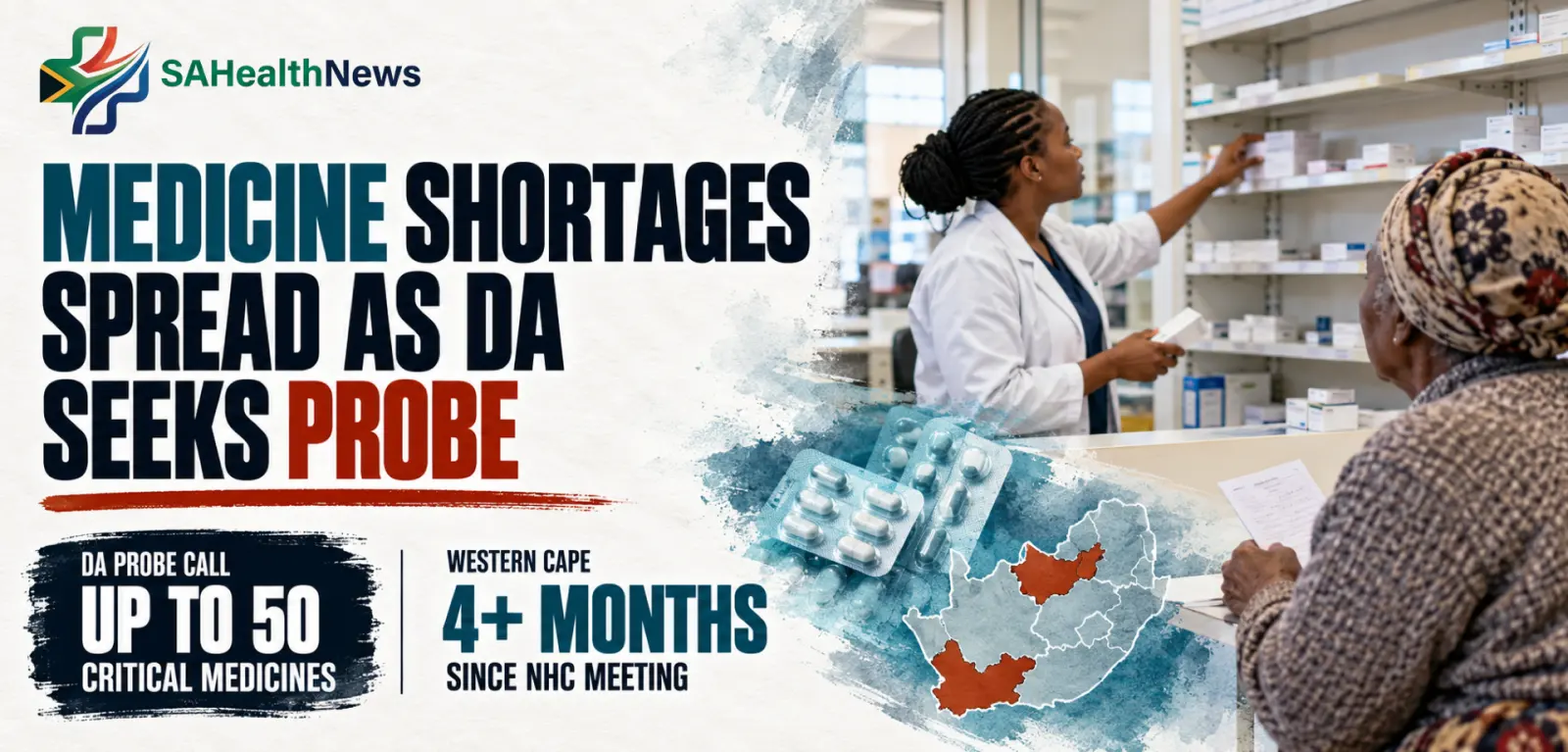
Western Cape and North West confirm chronic medicine stock-outs as the DA asks Parliament to probe shortages of up to 50 critical medicines.
The DA wants Parliament's health committee to hold a special meeting on public-sector medicine shortages, saying up to 50 critical medicines are affected. The call, made on 28 October by the party's health spokesperson, Michele Clarke, comes as provincial health departments in the Western Cape and North West confirm that chronic patients are struggling to get their treatment.
Clarke named six medicines among those affected: amlodipine for high blood pressure and angina, rosuvastatin for high cholesterol, metformin for type 2 diabetes, olanzapine for schizophrenia and bipolar disorder, pregabalin for nerve pain, seizures and anxiety, and mebendazole for worm infections. The figure of 50 and the list are the DA's. The national Department of Health has not published a list of medicines in short supply, so a patient cannot yet check the party's list against an official one.
The party wants Health Minister Aaron Motsoaledi, the department, the South African Health Products Regulatory Authority (SAHPRA), Pharmaceuticals Made in South Africa (Pharmisa) and the Pharmaceutical Society of South Africa to appear before the committee. Clarke warned that patients switched to other medicines could react badly, or become confused and stop treatment altogether.
"A considerable risk is that some patients might experience adverse reactions to the replacement medications."
The DA also says some local manufacturers blame new SAHPRA regulations and the single exit price, the regulated price for medicines sold in the private sector, for a fall in local production. That is the manufacturers' account as the party relayed it, not a finding by SAHPRA. The reports published on Wednesday carried no response from SAHPRA or the national department.
The six medicines are everyday treatments, which is why a stock-out is not an abstract supply story. Amlodipine is used for high blood pressure and angina. Rosuvastatin is used for high cholesterol. Metformin is a standard medicine for type 2 diabetes. Olanzapine is used in schizophrenia and bipolar disorder. Pregabalin is used for nerve pain, seizures and anxiety. Mebendazole is used for worm infections. Clarke presented them as examples among a wider group she put at up to 50. They are not, on the public record today, a national shortage list.
On 19 October the Western Cape's health and wellness minister, Mireille Wenger, asked national government to act.
"Medicine supply constraints are a country-wide challenge and requires a coordinated national response."
Her department set out how long the problem has run. Wenger first raised stock-outs on 2 June. The National Health Council discussed them on 11 June and agreed that national coordination and monitoring of medicine availability needed to improve. In September she wrote to Motsoaledi asking for national action and clear timelines. More than four months after the council met, the shortages continue.
The province blames production and regulatory problems, supplier limits, delays at ports, customs and import, and slow testing and release of some medicines. It has not named the medicines affected. It says it monitors stock weekly at the Cape Medical Depot, reports stock and supplier performance to national government, moves stock between facilities, supports temporary imports where needed and issues smaller quantities while supplies are secured.
Read against the DA's list, the Western Cape statement is a confirmation that supply is failing, not a confirmation of any particular drug. The province wants a national response. It has not said which of Clarke's six medicines are short in its own facilities.
At Madidi Clinic near Brits, residents told TimesLIVE on 28 October that they had struggled to get medication for more than three weeks. Samuel Mogauwe, 54, said he had not taken his blood pressure medication since September because buying it himself would cost more than R200, which he cannot afford while unemployed. Community councillor Keaobaka Sefike said attempts to get the health department to fix the problem had failed.
The North West Department of Health said some facilities have intermittent shortages. It listed manufacturing disruptions, raw material shortages, transport delays, rising international demand and changes to procurement contracts, and said some medicines have not been awarded national contracts while some manufacturers face regulatory constraints. It is working with its medical depot, suppliers and the national department to find other sources and move stock.
Gauteng's health department acknowledged supply problems at its hospitals and clinics on 7 October, citing supplier delays, procurement lead times and contract changes. Three provinces have now said, in public, that supply is not normal. None of the three has published the list of up to 50 medicines the DA wants Parliament to examine.
The Western Cape and North West departments give the same advice. Keep collecting your medication, and do not stop or change how you take it without speaking to a nurse, pharmacist or doctor first. If your usual medicine is out of stock, staff may give you a different strength, pack size or an approved alternative. If your tablets look different, ask why before you take them, and if you are sent home with nothing, raise it with the staff at the facility.
That advice is the practical answer while the political one is still a request. Clarke wants a special meeting of the health committee, with the minister, the regulator and two industry bodies in the room. The meeting has not been scheduled in anything published on Wednesday. Until it is, the only instructions a patient can act on are the ones the two provincial departments have already given: do not stop a medicine on your own, and ask why the tablets look different.
Sources: IOL, 28 October 2026; Western Cape Government, 19 October 2026; TimesLIVE, 28 October 2026; IOL, 7 October 2026, on Gauteng.
Source: SA Health News