Breaking
Latest health news from South Africa and around the world•Wellness, nutrition, and fitness updates daily•Medical breakthroughs and healthcare updates•Science-backed health explainers and guides•Health tech, reviews, and upcoming events•
 SA Health News Desk
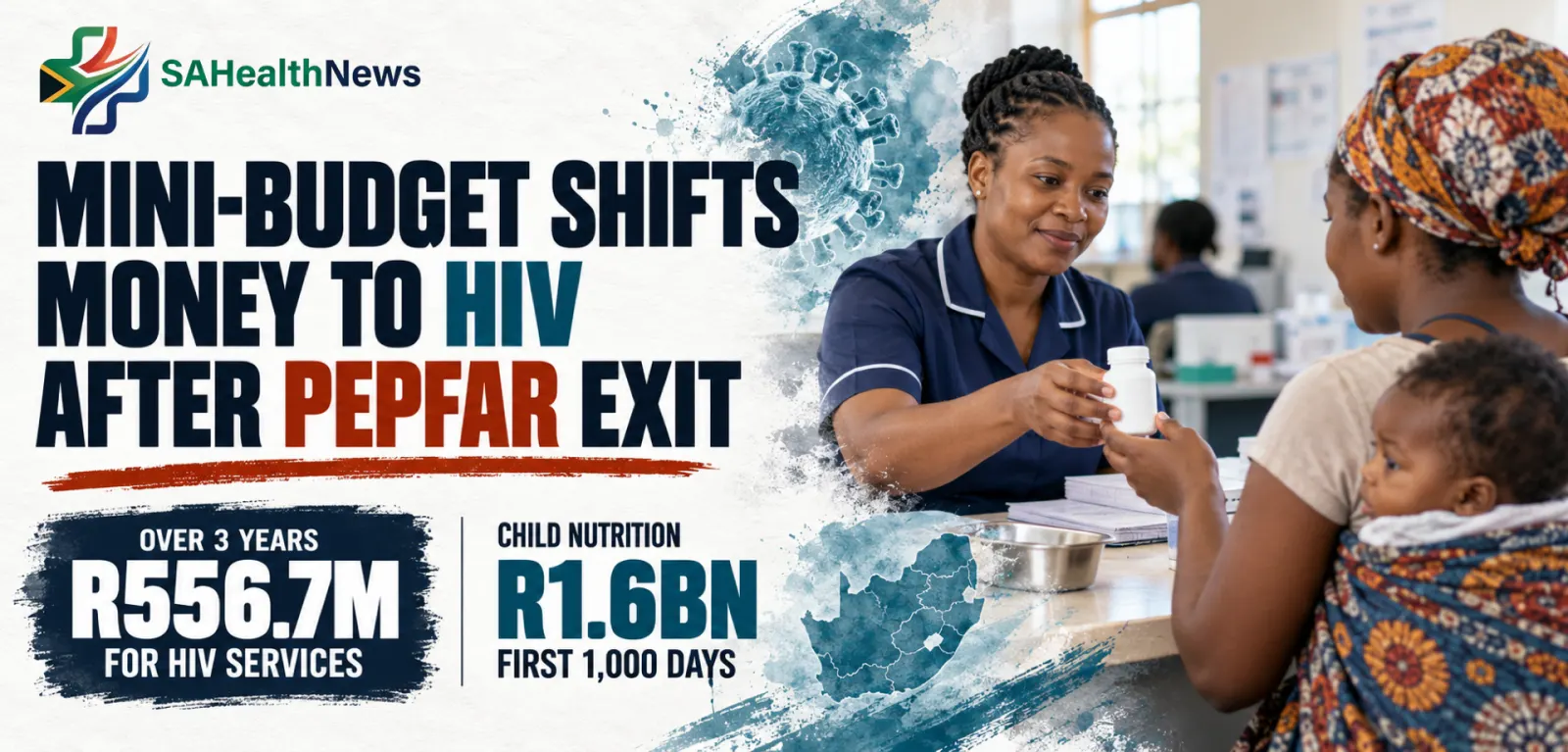
The mini-budget moves R556.7m to keep HIV services running after Pepfar's exit and puts R1.6bn into nutrition for children's first 1,000 days.
Finance Minister Enoch Godongwana's medium-term budget policy statement, tabled in Parliament on Wednesday afternoon, moves money towards two parts of the health system under the most strain: HIV services that have lost United States funding, and the nutrition of babies and toddlers.
According to the government news agency SAnews, R556.7 million will be reprioritised over the medium-term expenditure framework, the next three financial years, "to sustain HIV and AIDS services" after the withdrawal of funding from the US President's Emergency Plan for AIDS Relief (Pepfar). SAnews says this comes on top of R3.8 billion already reprioritised through the district health programmes grant, the conditional grant through which national government funds provincial HIV and TB programmes.
Godongwana said R1.6 billion is allocated over the medium term, with the focus on care before birth and the "first 1,000 days of life", Daily Maverick reported. BusinessTech described the money as an allocation for child nutrition aimed at reducing malnutrition and stunting. In the speech, Godongwana said stunting and malnutrition stop children reaching their growth and learning potential.
The first 1,000 days run from conception to a child's second birthday, the window in which poor nutrition does the most lasting damage. The allocation follows the national mission to end child stunting that the president announced in February's State of the Nation Address.
Treasury also expects the number of social grant beneficiaries to fall from 17.8 million in 2026/27 to 17.1 million by 2029/30, saving R6.2 billion, TimesLIVE reported. That money is earmarked for preventing gender-based violence and femicide, and for "priority health-sector interventions to combat child malnutrition and stunting". Ulrike Britton, Treasury's head of public finance, linked the drop in child grant numbers to falling birth rates, according to Daily Maverick.
Provinces run public hospitals and clinics, and they will receive an extra R20.5 billion through the provincial equitable share over the three years to cover higher health and education costs, TimesLIVE and Daily Maverick reported. Neither report says how that amount splits between the two sectors.
The wider picture is still tight. EWN reported that government will spend more on servicing debt than on health, social development or basic education over the medium term.
National Treasury's full budget documents, which would show the line-by-line health split, could not be accessed when this article was prepared. It is not yet clear which HIV services the R556.7 million will pay for, how it will be divided between provinces, or which programmes will deliver the R1.6 billion for the first 1,000 days.
Medium-term figures are indicative. Departments' final three-year allocations are set in the main Budget in February 2027.
Source: SA Health News