Breaking
Latest health news from South Africa and around the world•Wellness, nutrition, and fitness updates daily•Medical breakthroughs and healthcare updates•Science-backed health explainers and guides•Health tech, reviews, and upcoming events•
 SA Health News Desk
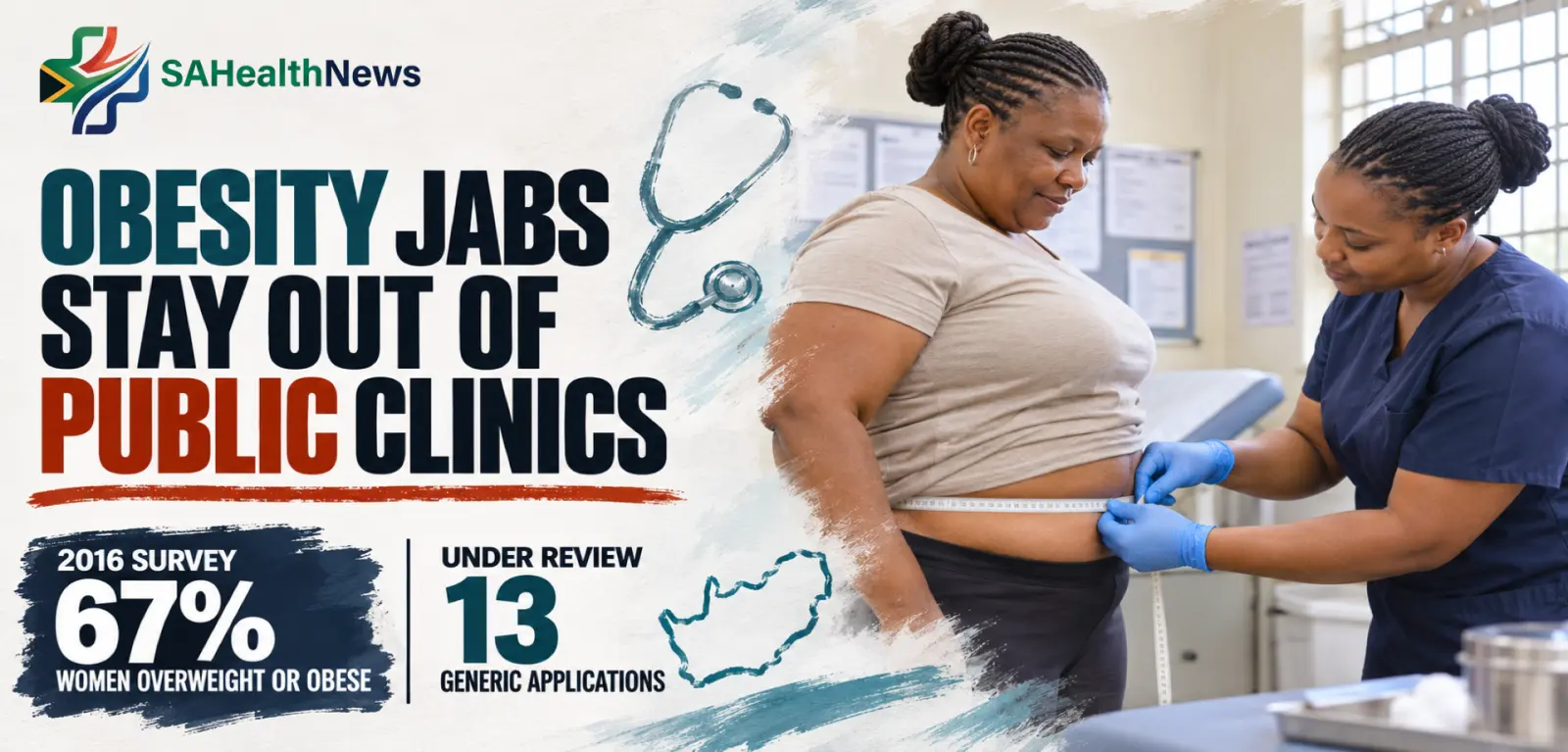
The health department has not yet begun assessing GLP-1 obesity drugs for public patients, as the first generic semaglutide reaches pharmacies.
The health department has not started assessing whether GLP-1 medicines such as semaglutide should be offered to public-sector patients for obesity, almost a year after the World Health Organization backed their long-term use.
Rebone Ntsie, the department's chief director for health promotion, told the Global Obesity Forum in Madrid that using the drugs for obesity is "on the radar", but that the work has not begun, Business Day reported on 28 October. The forum ran alongside the Global Obesity Summit hosted by Spain's health ministry and the WHO.
The national essential medicines committee is considering adding GLP-1 medicines to the list that state clinicians can prescribe for diabetes. It has not started reviewing the evidence for treating obesity, according to the same report.
"On the radar" and "the work has not begun" are both Ntsie's, via Business Day. They are not a queue position and they are not a start date. A review that has not started cannot have a result, and the department has not given one.
A year ago the department described the review in broader terms. In December 2025, Jeanette Hunter, deputy director-general for primary health care, told 702 that the Essential Medicines List Committee was examining whether GLP-1 medicines should be included and how cost-effective they are. "At the moment, the medication is quite costly, even for people in the private sector," she said then.
The WHO added GLP-1 drugs to its essential medicines list for diabetes in September 2025 and issued guidelines on their use as a chronic treatment for obesity in December 2025.
Those are two WHO decisions, ten months and a year before this article, and they are not the same decision. September 2025 put the drugs on the essential list for diabetes. December 2025 was the obesity guideline, the long-term-use backing the lead refers to. South Africa's committee, on Business Day's October account, is looking at the diabetes question and has not opened the obesity one. Hunter's December 2025 interview on 702 described a broader examination of inclusion and cost. By Madrid, the obesity half of that work had still not begun.
Hunter told the Madrid forum that she expects prices to fall as more generics reach the market. She also said weight is being overlooked in primary care. "Clinicians will put people on diabetes treatment without addressing the fact that they are overweight or obese," she said, calling it "the elephant in the room".
South Africa has the highest obesity prevalence in sub-Saharan Africa and the third highest in Africa, according to the Global Obesity Observatory. A 2016 national survey found that 31% of adult men, 67% of adult women and 13% of children under five were overweight or obese.
The survey year is 2016. It is the figure the observatory ranking sits on in the coverage. It is not a 2026 measurement, and the department has not published a newer national split in this reporting.
About 84% of South Africans rely on public health care, Bhekisisa has reported. For them, the drugs remain out of reach: GLP-1 medicines are registered in South Africa but sold only in the private sector, and medical schemes are not required to cover them for weight loss. Depending on the drug and dose, they cost roughly R3,000 to R10,000 a month.
Registration is not a public-clinic listing. A medicine can be legal to sell privately and still be absent from the essential list that state clinicians prescribe from. That is the current split: registered, private only, and not required cover for weight loss.
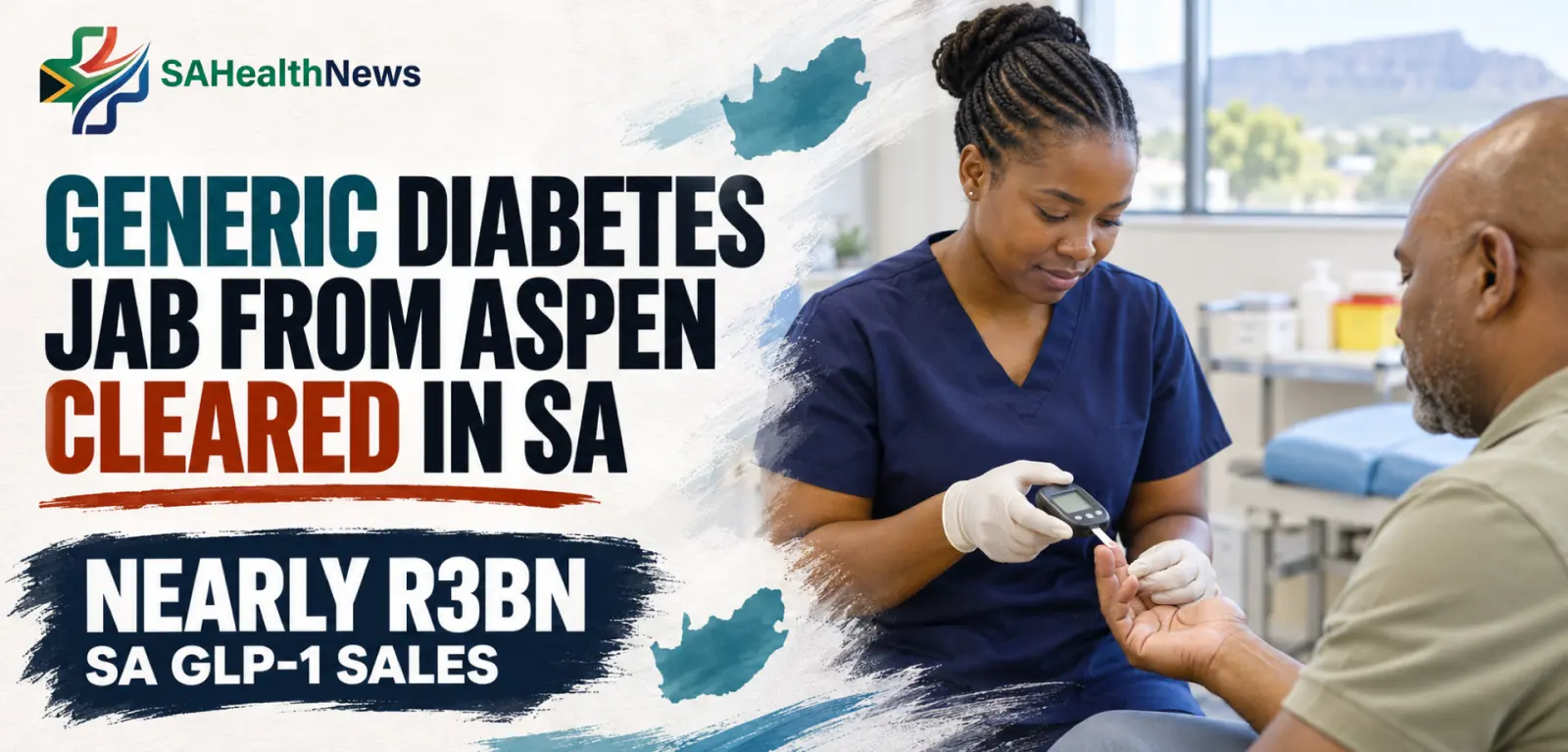
Novo Nordisk's patent on semaglutide, the active ingredient in Ozempic and Wegovy, expired in South Africa earlier this year. In July, the South African Health Products Regulatory Authority (SAHPRA) approved Sun Pharma's generic semaglutide injection for adults with type 2 diabetes whose blood sugar is not controlled.
The generic, sold as Semagard through Sun Pharma's local subsidiary Ranbaxy, went on sale in August. Bhekisisa found it was about 18.5% cheaper than Ozempic at a national pharmacy chain; generics usually start 25% to 30% below the brand price. Business Day reported that it is still the only cheaper generic on the market.
The 18.5% gap is a pharmacy-chain comparison Bhekisisa made, not a regulated price cut. It is also narrower than the 25% to 30% drop the same reporting gives as the usual opening gap for a generic. Semagard is approved for type 2 diabetes that is not controlled. The approval Bhekisisa and Business Day describe is not an obesity indication.
SAHPRA is reviewing 13 more applications for generic semaglutide and 18 for liraglutide, an older GLP-1 medicine, according to Bhekisisa. Researchers have estimated that generic semaglutide could be made for about R100 to R200 a month.
That R100 to R200 is a manufacturing estimate from researchers. It is not Semagard's shelf price, and it is not a price the health department has costed for clinics. Thirteen semaglutide applications and 18 liraglutide applications are under review. They are not approvals.
Liraglutide and Eli Lilly's tirzepatide, sold as Mounjaro and distributed locally by Aspen, are also available privately.
For now, people who use public clinics will not be offered GLP-1 medicines for obesity, and any change depends on the essential medicines committee first completing a review it has not started. The committee is considering the drugs for diabetes, but no date has been given for a decision.
Anyone using or considering these medicines should get them on prescription from a registered pharmacy. SAHPRA and the South African Pharmacy Council have warned against unregistered and compounded versions sold for weight loss.
Source: SA Health News