Breaking
Latest health news from South Africa and around the world•Wellness, nutrition, and fitness updates daily•Medical breakthroughs and healthcare updates•Science-backed health explainers and guides•Health tech, reviews, and upcoming events•
 SA Health News Desk
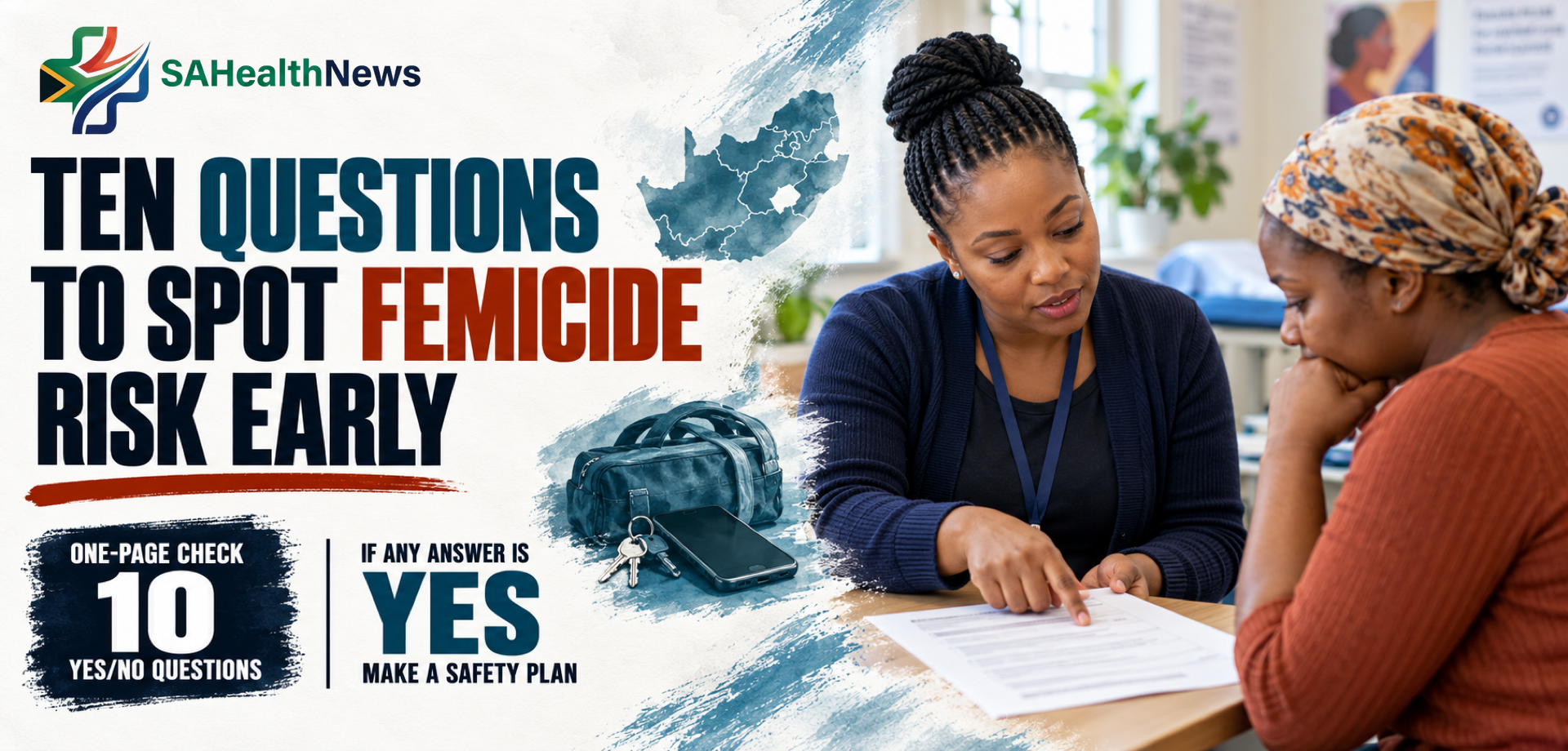
The SAMRC has released a one-page, 10-question femicide risk check and two safety plans, and wants police, clinics and social workers to use them.
Ten yes-or-no questions on a single page are at the centre of a new attempt by the South African Medical Research Council (SAMRC) to stop intimate partner violence from ending in murder.
The council's Gender and Health Research Unit has published a femicide risk assessment tool and two safety plans, one for an emergency and one for the longer term, and is asking government departments to build them into everyday services. The tools were developed with women survivors, service providers and experts, and adapted for South African settings, the SAMRC said in a statement on 30 September.
"Many women who are ultimately killed by intimate partners experience escalating patterns of violence, threats, coercive control, and abuse prior to their deaths," said Professor Naeemah Abrhams, a chief specialist scientist at the council.
The SAMRC says the national femicide studies show femicide can be prevented, but that the most recent study found the rate of intimate partner femicide had gone up.
The one-page form asks a woman whether her partner has ever injured her with a weapon or other dangerous object badly enough that she needed medical help; stalks or harasses her in person or by phone; has raped or sexually abused her; tries to control her constantly; has ever choked her or tried to strangle her; has a gun or access to one; or has tried to kill her or threatened to.
It also asks whether she wants to leave but is too frightened of what he will do, whether she has ever applied for a protection order against him, and, if so, whether he broke its conditions.
The instruction to the person administering the form is blunt: if the woman answers yes to any of the questions, she might be at risk of severe violence or of being killed by her partner. The next step is to help her complete both safety plans. The form tells the woman that the decision on what to do next is always hers.
The emergency plan is for a woman who may have to leave in a hurry. It suggests keeping a small bag ready with an ID, clinic card, bank or Sassa card, cash, spare keys and a SIM card; saving emergency numbers where they are easy to reach; removing knives and other objects that could be used as weapons on days violence is likely; agreeing on an alarm signal with children; and deciding in advance where to run, such as a police station, a trusted neighbour or a petrol station. It notes that it is fine to leave with nothing, because police can go back with her for her belongings later.
The long-term plan covers physical, emotional and financial safety and the safety of children. It ranges from applying for a protection order and changing daily routes to opening a separate bank account, joining a stokvel and checking eligibility for a child support grant.
Both plans list the same emergency numbers: 112 or 10111 for police and ambulance, the GBV Command Centre on 0800 428 428, and the Stop Gender-Based Violence helpline on 0800 150 150.
Women can use the tools on their own, but the SAMRC recommends that police officers, social workers, health workers, victim support services and community organisations administer them.
The council says many women at risk never get protection orders or other safety measures, and that safety monitoring and the removal of weapons are underused. "This needs to urgently change to ensure that women have ready access to prevention and response options," said Associate Professor Nwabisa Shai, who heads the Gender and Health Research Unit.
Dr Leane Ramsoomar, a senior specialist scientist in the unit, said femicide is often preceded by warning signs and missed chances to step in, and that the tools can help women, families, communities and service providers "recognise danger early and take action before violence escalates to a femicide".
The tools form part of the National Strategic Plan on Gender-Based Violence and Femicide and a separate draft National Integrated Strategy on the Prevention of Femicide. The SAMRC says it is in talks with government departments about putting them into existing services, which will need training, monitoring and cooperation across justice, health, social development and community sectors.
The risk assessment and both safety plans can be downloaded free from the SAMRC website.
Source: SA Health News