Breaking
Latest health news from South Africa and around the world•Wellness, nutrition, and fitness updates daily•Medical breakthroughs and healthcare updates•Science-backed health explainers and guides•Health tech, reviews, and upcoming events•
 SA Health News Desk
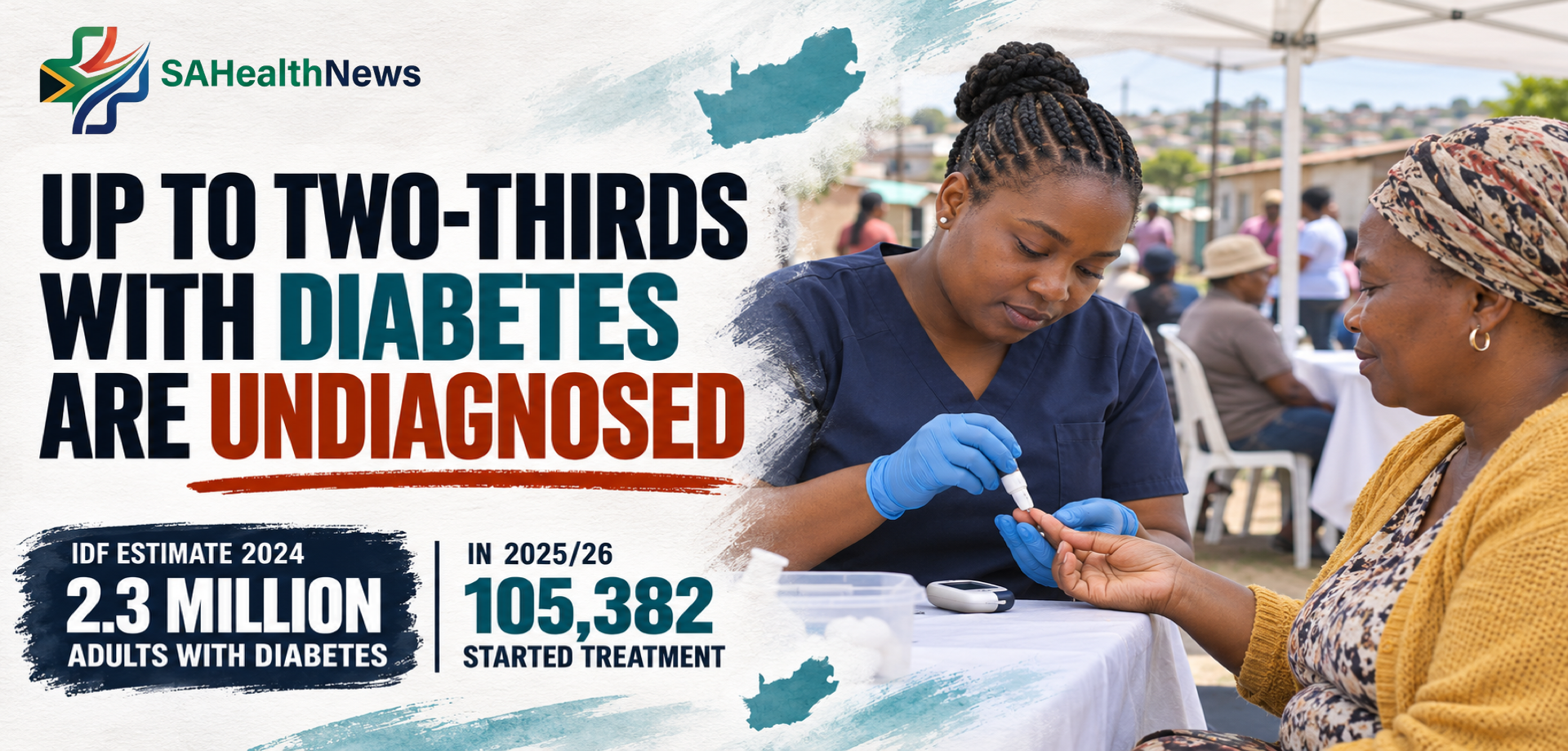
About 2.3 million South African adults have diabetes and most may be undiagnosed. Who should test, when, and why screening data still has gaps.
Up to two-thirds of South Africans with diabetes are estimated to be undiagnosed. On World Diabetes Day, Saturday 14 November, Health Minister Dr Aaron Motsoaledi urged people to get tested early and to start treatment promptly.
Department spokesperson Foster Mohale said early detection and proper care can prevent serious complications and improve quality of life.
The International Diabetes Federation estimates that 2.3 million South Africans aged 20 to 79 had diabetes in 2024, and projects almost 4 million by 2050.
Nobody knows exactly how many of them are undiagnosed. Bridget McNulty, chief executive of the Sweet Life Diabetes Community, puts it at about half. Dr Patrick Ngassa Piotie, who chairs the Diabetes Alliance, told Health-e the figure may be as high as 70%.
Diabetes is the leading underlying natural cause of death in South Africa, according to Statistics South Africa, which linked it to about 6.1% of recorded deaths in 2024.
The District Health Information System recorded more than 43 million screenings in 2025/26, and 105,382 people started treatment, the department told Health-e. It could not say how many people were diagnosed or how they fared afterwards, because that information was not available or not collected.
"Strengthening these data systems is essential to enable the Department to more accurately assess progress," Mohale said.
That matters because the country has set itself targets that run to 2027: 90% of adults should know their blood glucose status, 60% of those with raised glucose should receive care, and half of those in care should have it under control. Without diagnosis and treatment data there is no way to tell whether any of the three is being met.
Professor Peter Raubenheimer, head of general internal medicine at Groote Schuur Hospital and the University of Cape Town, was blunt in his assessment. "There's not really any evidence of progress in the last 10 or 20 years," he told Health-e.
The Diabetes Alliance was due to launch an accountability framework on 12 November, with a scorecard tracking what government and other parties have done, Health-e reported.
Most people with early diabetes have no symptoms, so feeling well does not rule it out, Stellenbosch University endocrinologist Dr Ankia Coetzee wrote in the Mail & Guardian this week.
She advises adults to test from the age of 35, and earlier if they:
If the result is normal, test again at least every three years. People whose sugar was slightly raised before, or who had diabetes in pregnancy, should test every year. A doctor or pharmacy can do a glucose test or an HbA1c test, which reflects average blood sugar over about three months and needs no fasting.
The World Health Organization's Africa office lists increased thirst, frequent urination, unexplained weight loss, persistent tiredness and blurred vision. Coetzee adds recurrent infections.
This year's theme in the WHO African Region is "Early Action on Diabetes". The region had 24.6 million adults living with diabetes in 2024, a number expected to reach 59.5 million by 2050. Nearly three in four are undiagnosed, the highest share of any region in the world, WHO regional director Dr Mohamed Janabi said in his message for the day.
SA Health News is journalism, not medical advice. Speak to a healthcare professional about testing and treatment.
Sources: National Department of Health remarks reported by Bulletin, 14 November 2026; Health-e News, 11 November 2026; WHO Regional Office for Africa, World Diabetes Day 2026 message; Mail & Guardian, 11 November 2026; International Diabetes Federation; Statistics South Africa.
Source: SA Health News