Breaking
Latest health news from South Africa and around the world•Wellness, nutrition, and fitness updates daily•Medical breakthroughs and healthcare updates•Science-backed health explainers and guides•Health tech, reviews, and upcoming events•
 SA Health News Desk
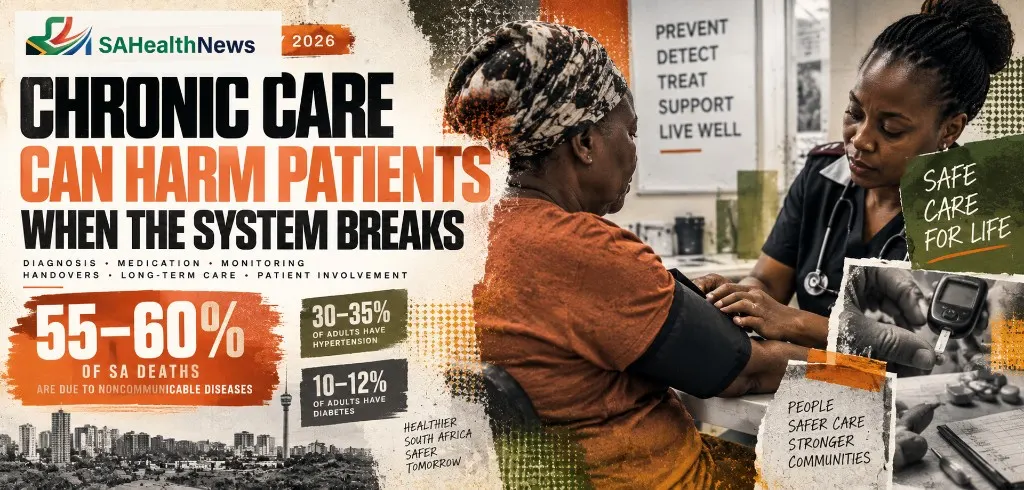
World Patient Safety Day focuses on NCD care. In SA, 55–60% of deaths are linked to noncommunicable disease — safety depends on continuity across years of treatment.
This year’s World Patient Safety Day focuses specifically on safe care for noncommunicable diseases, including cardiovascular disease, cancer, diabetes and chronic respiratory illness.
The theme has particular relevance in South Africa. WHO South Africa’s latest annual report estimates that 55–60% of deaths in the country are attributable to noncommunicable diseases, while roughly 30–35% of adults have hypertension and 10–12% have diabetes.
For people living with these conditions, patient safety is not limited to what happens during a hospital admission. Risk accumulates across years of diagnosis, prescriptions, laboratory tests, repeat visits, referrals and treatment changes.
Someone receiving long-term treatment for hypertension may move between a clinic, pharmacy, hospital and specialist service while taking several medicines.
A person with diabetes may need regular glucose monitoring, kidney and eye screening, medicine adjustments and treatment for other conditions at the same time.
Each handover creates another point at which information can be missed.
WHO identifies unsafe diagnosis, medication errors, fragmented long-term management and insufficient patient involvement as important safety risks in NCD care. Globally, around one in ten patients experiences harm during healthcare, with approximately half of that harm considered preventable.
The country’s NCD burden has expanded alongside its continuing HIV, TB and infectious-disease responsibilities.
South Africa’s 2026/27 health plan says government is strengthening hypertension, diabetes and cancer services and expanding point-of-care testing to shorten turnaround times and support faster clinical decisions.
The same plan notes that the proportion of South Africans aged 60 and older reached 9.7% in 2024 and is expected to reach 10.2% by 2030.
An ageing population means more people living with several chronic conditions simultaneously.
That increases the importance of accurate medicine lists, reliable referrals and continuity between healthcare providers.
A patient taking several medicines can face risks from incorrect doses, interactions, duplicate prescriptions or misunderstanding how treatment should be taken.
Changes in medicine appearance can create another source of confusion.
Earlier this month, the National Department of Health specifically reassured public-sector patients that receiving a medicine with a different colour, shape, packaging or manufacturer does not necessarily mean their treatment has changed. Approved interchangeable products may look different while containing the same active ingredient and strength.
Patients who are uncertain about a replacement medicine should ask a pharmacist, doctor or nurse rather than stopping treatment themselves.
Chronic conditions can cause significant damage before producing obvious symptoms.
Hypertension is a classic example.
Someone can have dangerously elevated blood pressure without feeling ill. Poorly controlled hypertension can eventually contribute to stroke, heart disease and kidney damage.
Diabetes can similarly damage blood vessels, kidneys, nerves and eyes over time.
Patient safety therefore includes detecting disease early enough to prevent complications, not simply responding correctly once someone becomes critically ill.
South Africa is expanding point-of-care testing partly to reduce delays between testing and clinical decisions.
WHO’s 2026 campaign places unusual emphasis on treating people living with NCDs as partners in care rather than passive recipients.
In practical terms, that means patients should understand what medicines they are taking, why they are taking them and what changes require medical attention.
They should also know their important measurements where appropriate: blood pressure, glucose control, treatment dates and follow-up appointments.
That information becomes particularly valuable when someone moves between facilities.
A patient arriving at an emergency department with an accurate medicine list gives clinicians better information than someone trying to remember several unfamiliar drug names while acutely ill.
South Africa has traditionally had to organise substantial parts of its health system around acute infectious disease.
NCDs demand something different.
A hypertension diagnosis may require management for decades. Diabetes care can span primary clinics, pharmacies, laboratories, ophthalmology, renal services and hospitals.
Cancer treatment can involve screening, pathology, surgery, chemotherapy, radiotherapy and long-term surveillance.
The quality of each individual appointment matters.
So does what happens between those appointments.
A referral that never reaches the next service, an abnormal result that is not followed up or a medicine that is unintentionally duplicated can undermine otherwise competent care.
For chronic disease, safer healthcare is not one successful intervention.
It is a healthcare system capable of keeping the right information, treatment and patient connected over time.
Source: SA Health News