Breaking
Latest health news from South Africa and around the world•Wellness, nutrition, and fitness updates daily•Medical breakthroughs and healthcare updates•Science-backed health explainers and guides•Health tech, reviews, and upcoming events•
 SA Health News Desk
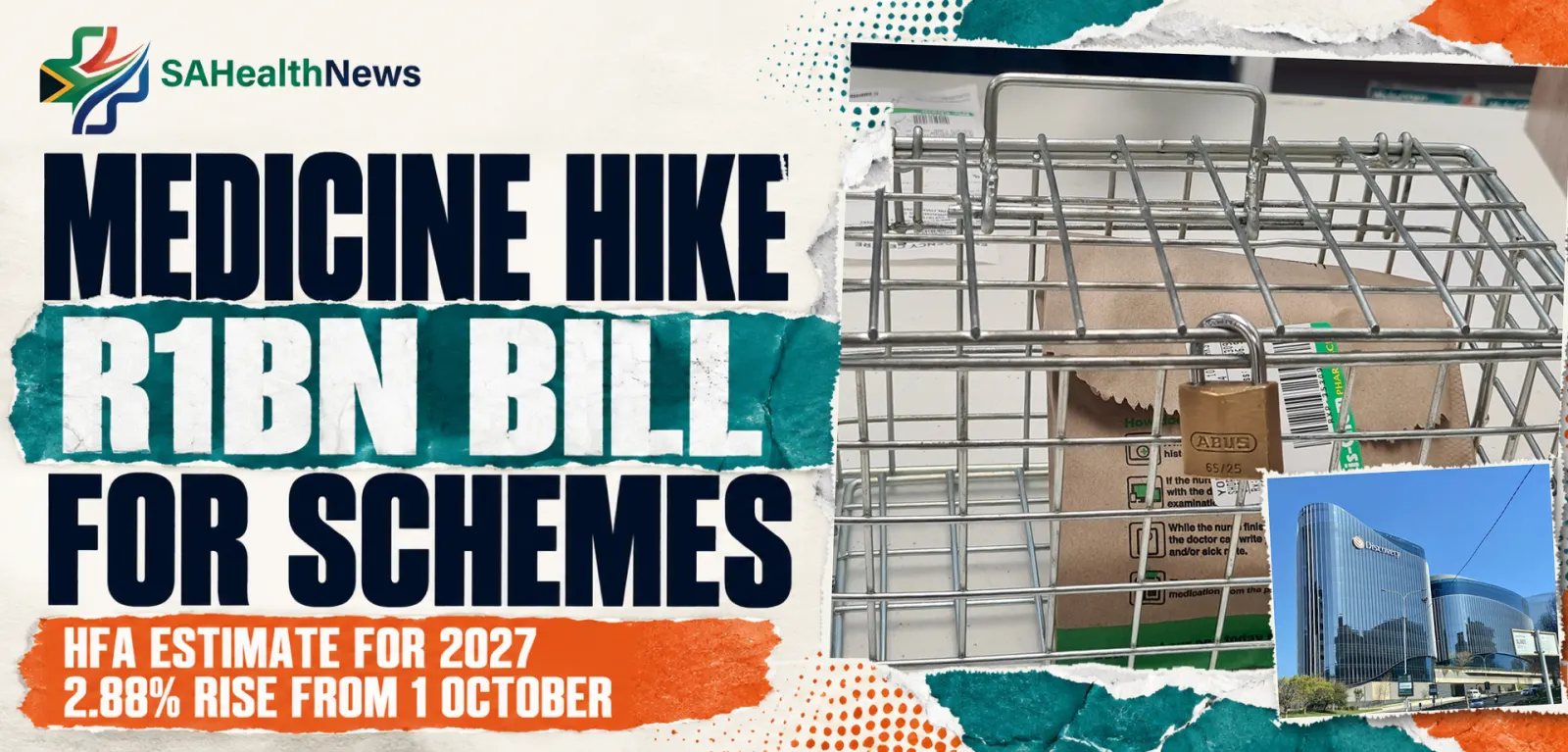
Funders estimate the 2.88% medicine price hike adds about R1bn to medical scheme costs in 2027. It was announced the day scheme budgets were due.
Medical schemes say they had no chance to plan for the 2.88% medicine price increase that took effect on 1 October. The Health Funders Association (HFA) now estimates it will add about R1bn to scheme medicine spending that was never built into their 2027 budgets.
The National Department of Health announced the extraordinary second Single Exit Price (SEP) adjustment for 2026 in a statement dated 30 September, with effect from 1 October. It applies a uniform 2.88% rise to the regulated private-sector price of every registered medicine on the national database as at 30 September. This comes on top of the 1.47% annual adjustment granted in January.
The same day was also the deadline for schemes to submit their 2027 budgets, benefit designs and contribution increases to the Council for Medical Schemes (CMS), Business Day reported.
HFA chief executive Thoneshan Naidoo told Business Day the increase would add about R1bn in medicine expenditure in 2027 that schemes had not budgeted for.
In a column published by FA News on 15 October, Naidoo said the adjustment came with one week's notice. The HFA also estimates it could add about R400m a year to what households pay directly for medicines, though the real effect depends on which medicines people use and how often.
Schemes spent R36.43bn on medicines in 2024, according to the most recent publicly available CMS analysis.
Because the higher price becomes part of the base on which future annual increases are calculated, the HFA argues the cost will carry into 2027 and compound over time.
Discovery Health Medical Scheme estimates the increase will add about R90m to its costs in the last quarter of 2026 and more than R300m in 2027. Principal officer Charlotte Mbewu told Business Day the scheme could absorb the increase without changing its announced 2027 contribution rates, but said it would affect later increases.
Discovery's medicine spending was already up 5.7% year on year, driven by greater use of high-cost medicines and January's 1.47% adjustment. Roseanne Harris, head of policy and research at Discovery Health, called the announcement surprising. The SEP is a ceiling rather than a fixed price, she noted, but all manufacturers appear to have raised their prices.
The Government Employees Medical Scheme (GEMS) has not finished its impact analysis. Chief operating officer Vuyo Gqola said the increase adds unanticipated cost pressures, and that GEMS would manage them through its wider financial and benefit framework rather than passing the full amount on to members.
Charlton Murove, head of research at the Board of Healthcare Funders (BHF), said some schemes may struggle to absorb the cost and could post an operating deficit. He warned that the next price increase could come as early as January.
The HFA and the BHF both say the department did not consult them before approving the increase. Naidoo wrote that the HFA raised the matter with the department in August, after a government statement said an extraordinary adjustment would be considered following talks with pharmaceutical industry representatives. That letter went unanswered. The HFA has since written to the department and to Health Minister Aaron Motsoaledi asking how the decision was reached.
The HFA also wants to know why the department chose a blanket increase across all medicines when the pricing regulations already let manufacturers apply for exceptional increases on specific products. It has asked the department to publish the evidence and affordability assessment behind the decision, and wants schemes and consumers given a formal place in future pricing talks.
The department had not responded to Business Day's request for comment at publication. Its 30 September statement says the adjustment responds to exceptional domestic and geopolitical pricing pressures, including rising input costs and supply-chain strain, which put the availability of medicines at risk.
The decision followed months of lobbying by manufacturers. Pharmisa chairperson Stavros Nicolaou described January's 1.47% increase as "wholly inadequate", EWN reported.
Schemes have already filed their 2027 contribution increases, and Discovery has said it will not reopen its rates. It expects the cost to show up in later contribution increases instead.
With the 2.88% in force for only the last three months of the year, EWN calculated that the combined effect on 2026 prices is about 2.1%. On the HFA's reading, the full 2.88% stays in the price base that next year's increases build on.
The SEP does not apply to medicines bought by the state, so prices at public clinics and hospitals are not affected.
If a medicine you collect every month costs more at the pharmacy this month, ask the pharmacist whether the single exit price changed and what your scheme still pays. Prices at public clinics and hospitals are not set by this adjustment. This is a funding story, not personal medical advice.
Source: SA Health News