Breaking
Latest health news from South Africa and around the world•Wellness, nutrition, and fitness updates daily•Medical breakthroughs and healthcare updates•Science-backed health explainers and guides•Health tech, reviews, and upcoming events•
 SA Health News Desk
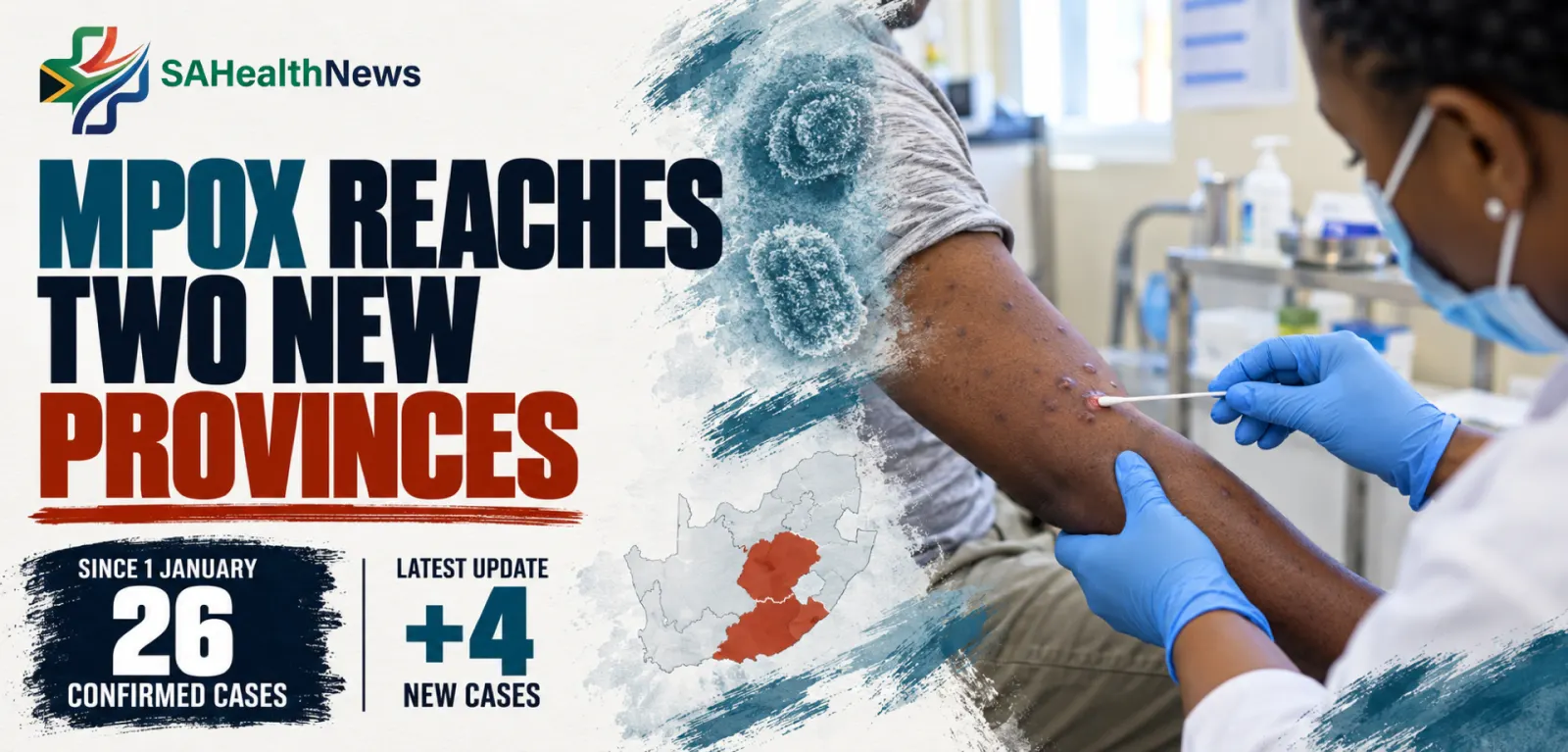
All four new mpox cases confirmed on 18 October are in the Eastern Cape and Free State, provinces with no earlier cases, taking the 2026 total to 26.
South Africa has confirmed four more mpox cases, and all of them are in provinces that had not recorded a case this year. The national total since 1 January now stands at 26 laboratory-confirmed cases, the Department of Health said on Sunday, 18 October.
When the count reached 22 in late September, every case was in the Western Cape (18), Gauteng (3) or KwaZulu-Natal (1). The latest breakdown leaves those numbers unchanged and adds two cases in the Eastern Cape and two in the Free State.
The Free State's first case was reported in Sasolburg on 16 October. Provincial health spokesperson Mondli Mvambi told SABC News the patient was clinically stable, isolating at home and receiving care. He said a small number of close contacts were being followed up and tested, that the risk to the general public was low and that there was no evidence of widespread community transmission.
"Close contacts without symptoms should be monitored for 21 days," Mvambi said.
The two Eastern Cape cases are in the Sarah Baartman district, The Herald reported. Nelson Mandela Bay residents have been urged to watch for symptoms and seek care early.
Of the 26 people with confirmed mpox, 25 are men. Their ages range from 23 to 50, with a median of 37.
The Western Cape remains the centre of the outbreak. Of its 18 cases, two were imported by foreign nationals visiting the country; the other 16 were linked to local transmission.
Laboratory typing is available for 17 cases: 13 are clade Ib and four are clade IIb. Clade Ib is the lineage that emerged in the Democratic Republic of Congo in 2023 and has since spread to other countries. Clade IIb drove the global outbreak of 2022.
Department spokesperson Foster Mohale urged people to "remain vigilant and to seek healthcare promptly" if they develop a rash, fever, headache, muscle aches, swollen lymph nodes or fatigue.
Anyone who has been in close contact with a confirmed or suspected case should tell a health worker and watch for symptoms for 21 days. People who develop symptoms should avoid close contact with others while they are assessed. The department also advises against close skin-to-skin contact with anyone who has an mpox-like rash, and against sharing bedding, towels or clothing.
Health workers have been asked to keep a high index of suspicion and follow infection prevention and control protocols. The department said it is working with the National Institute for Communicable Diseases and provincial health departments on surveillance, case finding, contact tracing and community engagement.
In September the department said it had secured limited supplies of mpox vaccine and the antiviral tecovirimat with World Health Organization support, to be used according to outbreak risk rather than offered to everyone.
The department describes mpox as preventable and treatable. Whether someone needs the vaccine or tecovirimat is a clinical decision, and those supplies are limited to outbreak use.
None of this replaces advice from your own clinician. If you develop a rash, fever, headache, muscle aches, swollen glands or unusual tiredness, or you have been close to someone with mpox, contact a clinic before the symptoms settle on their own. That is especially important if you are pregnant, caring for a child, or living with a condition that affects your immune system.
Sources: National Department of Health statement via SAnews, 18 October 2026; Free State Department of Health via SABC News, 16 October 2026; The Herald, 18 October 2026; TimesLIVE and EWN, 18 October 2026; National Department of Health update on 22 cases, September 2026.
Source: SA Health News