Breaking
Latest health news from South Africa and around the world•Wellness, nutrition, and fitness updates daily•Medical breakthroughs and healthcare updates•Science-backed health explainers and guides•Health tech, reviews, and upcoming events•
 SA Health News Desk
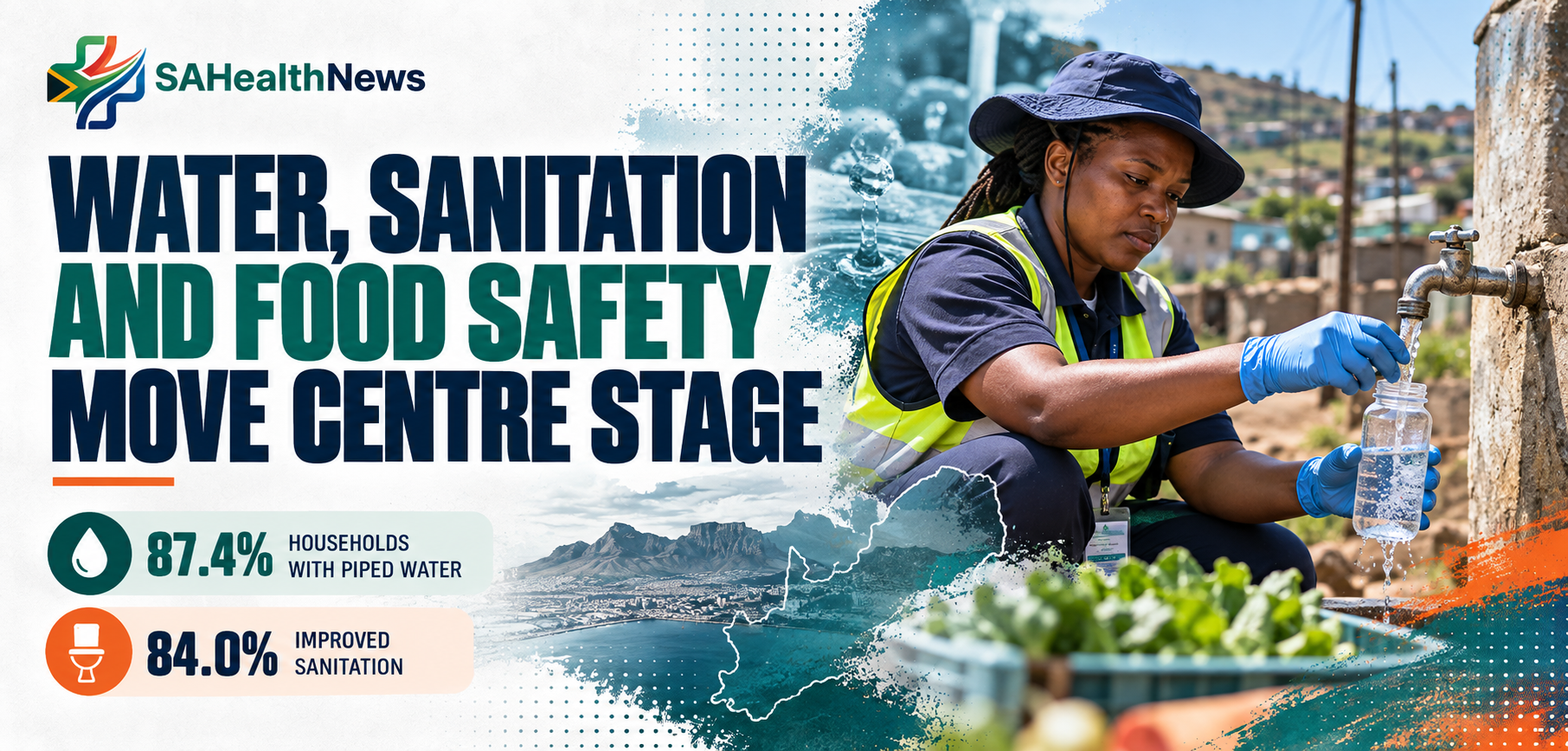
South Africa's environmental-health summit in iLembe puts water, sanitation and food safety under the spotlight as new national norms raise the enforcement bar.
South Africa's environmental-health system is in focus as national and provincial health authorities begin a two-day World Environmental Health Day commemoration in iLembe District, KwaZulu-Natal.
The 29–30 September programme, organised by the National Department of Health with KwaZulu-Natal health authorities and iLembe District Municipality, is built around the theme "Standing with Science to Protect Communities".
That sounds broad, but environmental health is one of the most practical parts of the health system. Environmental Health Practitioners inspect food premises, investigate contaminated water, monitor waste and sanitation risks, respond to outbreaks, assess chemical hazards and enforce health standards in public premises.
The latest General Household Survey shows that 87.4% of households had access to piped water in the dwelling, yard or at a communal tap in 2025.
Access to improved sanitation reached 84.0%, up from 61.7% in 2002.
Those national averages still conceal large geographic differences. Stats SA reported that piped-water access in Limpopo was 63.2% in 2025, compared with more than 98% in Gauteng and the Western Cape.
Environmental-health risk also extends beyond whether infrastructure exists. Water quality, reliability, unsafe food, illegal dumping, air pollution, pesticides, vectors and poorly maintained premises can all create health hazards.
South Africa gazetted replacement National Norms and Standards for Environmental Health in August 2026.
The standards are intended to set a common service-delivery benchmark for provinces, metropolitan municipalities and district municipalities, and to strengthen monitoring of premises that may create health hazards.
The Department of Health says food-related complaints and environmental-health complaints that pose an immediate danger to human health should be investigated within 24 hours. Other environmental-health complaints should generally be investigated within 72 hours.
That makes environmental health a frontline enforcement function, not simply an awareness programme.
The national commemoration is intended to bring government, researchers, the private sector and communities together around environmental-health monitoring, policy, compliance and intervention.
The practical test will be whether national standards translate into quicker investigation of unsafe food, contaminated water, sewage, hazardous premises and other risks at municipal level.
For households, these issues are not abstract. Environmental failures often appear first as diarrhoeal disease, respiratory illness, poisoning, vector-borne infection or recurring outbreaks.
Environmental health sits upstream of the clinic: when it works, fewer people become patients in the first place.
Source: SA Health News Desk