
Breaking
Latest health news from South Africa and around the world•Wellness, nutrition, and fitness updates daily•Medical breakthroughs and healthcare updates•Science-backed health explainers and guides•Health tech, reviews, and upcoming events•
 SA Health News Desk
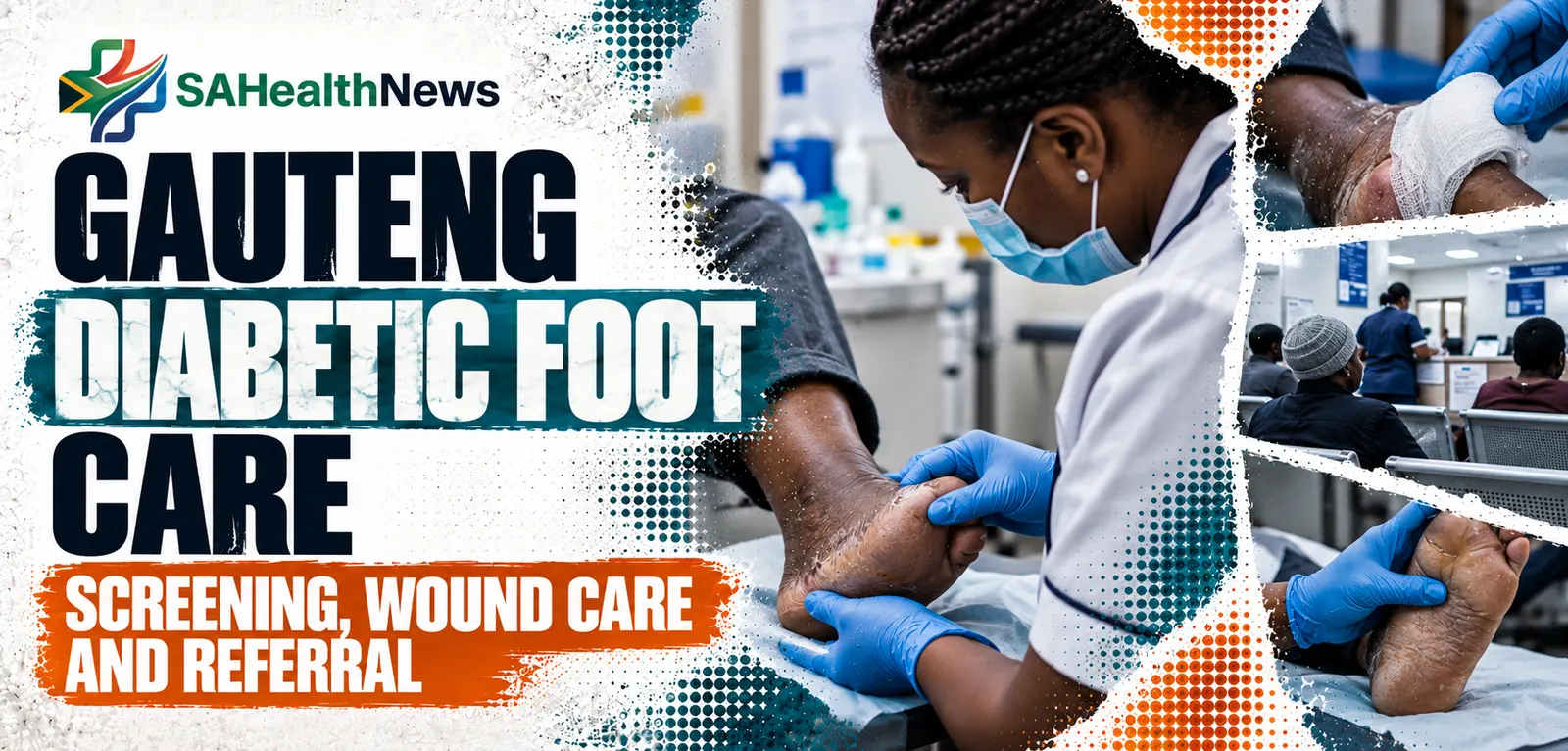
Gauteng cites 61 podiatrists and 63,046 diabetic foot consultations in 2025/26 — service activity that still needs confirmation and outcome measures beyond totals.
Gauteng's efforts to expand diabetic foot services highlight a major, often overlooked part of diabetes care: identifying circulation problems, nerve damage and wounds early enough to prevent infections and avoidable amputations.
Provincial figures cited in reporting on the programme indicate that 61 podiatrists delivered 63,046 consultations during the 2025/26 financial year. These figures describe reported service activity, not the number of unique patients treated or amputations prevented. They require confirmation against the underlying provincial report before publication.
Diabetes can damage peripheral nerves and blood vessels. A patient may not feel a blister or small cut, while reduced blood flow can slow healing. Without timely assessment and treatment, a wound can become infected and progress to an ulcer or more serious complication.
Routine foot checks are therefore not a cosmetic service. They are part of managing the risk of disability, hospitalisation and limb loss.
In a high-diabetes province, missed early foot assessments show up later as emergency admissions. That is why consultation volume matters — and why it is still not enough on its own.
A functioning diabetic foot pathway includes screening at primary-care clinics, assessment of sensation and circulation, wound care, appropriate footwear advice, prompt referral for suspected infection or poor blood supply, and follow-up after treatment. Podiatrists work alongside nurses, doctors, vascular specialists and other members of the care team.
The reported consultation volume suggests substantial demand, but consultation totals alone cannot establish whether care is equally accessible across Gauteng's districts. Useful measures would include waiting times, the number of facilities offering screening, referral completion rates, wound-healing outcomes and major and minor amputation trends.
District inequality is the quiet risk. A strong total can hide empty clinics in one corridor and overloaded services in another.
People living with diabetes should inspect their feet regularly, or ask for help if they cannot see the soles. New wounds, redness, swelling, discharge, colour changes or a foot that becomes unusually cold require medical assessment. A spreading infection, fever or rapidly worsening wound needs urgent care.
Patients should not cut away calluses or attempt to treat deep wounds themselves. Clinicians can advise on safe nail care, footwear, blood-glucose management and when specialist assessment is needed.
Footwear and nail care advice sound minor until an unnoticed injury becomes an ulcer. That is why education belongs inside the pathway, not as an afterthought leaflet.
The test of the expansion will be whether patients can access foot examinations before complications become emergencies. Gauteng should publish comparable district-level outcomes, rather than relying on the total number of consultations as the sole measure of success.
Until amputation trends, referral completion and waiting times are public, the expansion remains a service-activity story, not an outcomes story.
This article provides health journalism and does not replace individual medical advice.
Verify facility-specific claims, consultation totals and shortage reports against attributable official sources before treating them as province-wide facts.
South Africa’s diabetes burden makes foot complications a predictable, preventable pathway to disability when screening is late. Expanding podiatry capacity is therefore a rational public-health investment — if it reaches the patients who still present only when infection is advanced.
Primary-care nurses and doctors remain the first filter. Podiatrist consultations only prevent amputations when earlier clinic visits catch neuropathy, deformity and small wounds. Training and referral protocols at that first contact are as important as hiring more specialists.
Patients and families can ask a practical question at the next clinic visit: when was the last documented foot examination, and what should trigger an urgent return? That single habit closes part of the gap between provincial consultation totals and lived risk.
Until Gauteng publishes district coverage and amputation trends alongside the 61 / 63,046 activity figures — once those figures are confirmed — the expansion should be reported as promising capacity, not proven outcome.
Confirm any numerical service claims against the Gauteng Department of Health primary report before treating media-cited totals as final.
Keep the distinction between confirmed service activity and unverified outcome claims visible in every summary of this story.
A Care Room publish standard still applies: keep the checkable facts in the lead, name the source for every number, and do not upgrade preliminary reports into settled outcomes. Readers should confirm facility notices, batch lists and case counts against the primary authority on the day they act.
A Care Room publish standard still applies: keep the checkable facts in the lead, name the source for every number, and do not upgrade preliminary reports into settled outcomes. Readers should confirm facility notices, batch lists and case counts against the primary authority on the day they act.
A Care Room publish standard still applies: keep the checkable facts in the lead, name the source for every number, and do not upgrade preliminary reports into settled outcomes. Readers should confirm facility notices, batch lists and case counts against the primary authority on the day they act.
A Care Room publish standard still applies: keep the checkable facts in the lead, name the source for every number, and do not upgrade preliminary reports into settled outcomes. Readers should confirm facility notices, batch lists and case counts against the primary authority on the day they act.
A Care Room publish standard still applies: keep the checkable facts in the lead, name the source for every number, and do not upgrade preliminary reports into settled outcomes. Readers should confirm facility notices, batch lists and case counts against the primary authority on the day they act.
Source: SA Health News