Breaking
Latest health news from South Africa and around the world•Wellness, nutrition, and fitness updates daily•Medical breakthroughs and healthcare updates•Science-backed health explainers and guides•Health tech, reviews, and upcoming events•
 SA Health News Desk
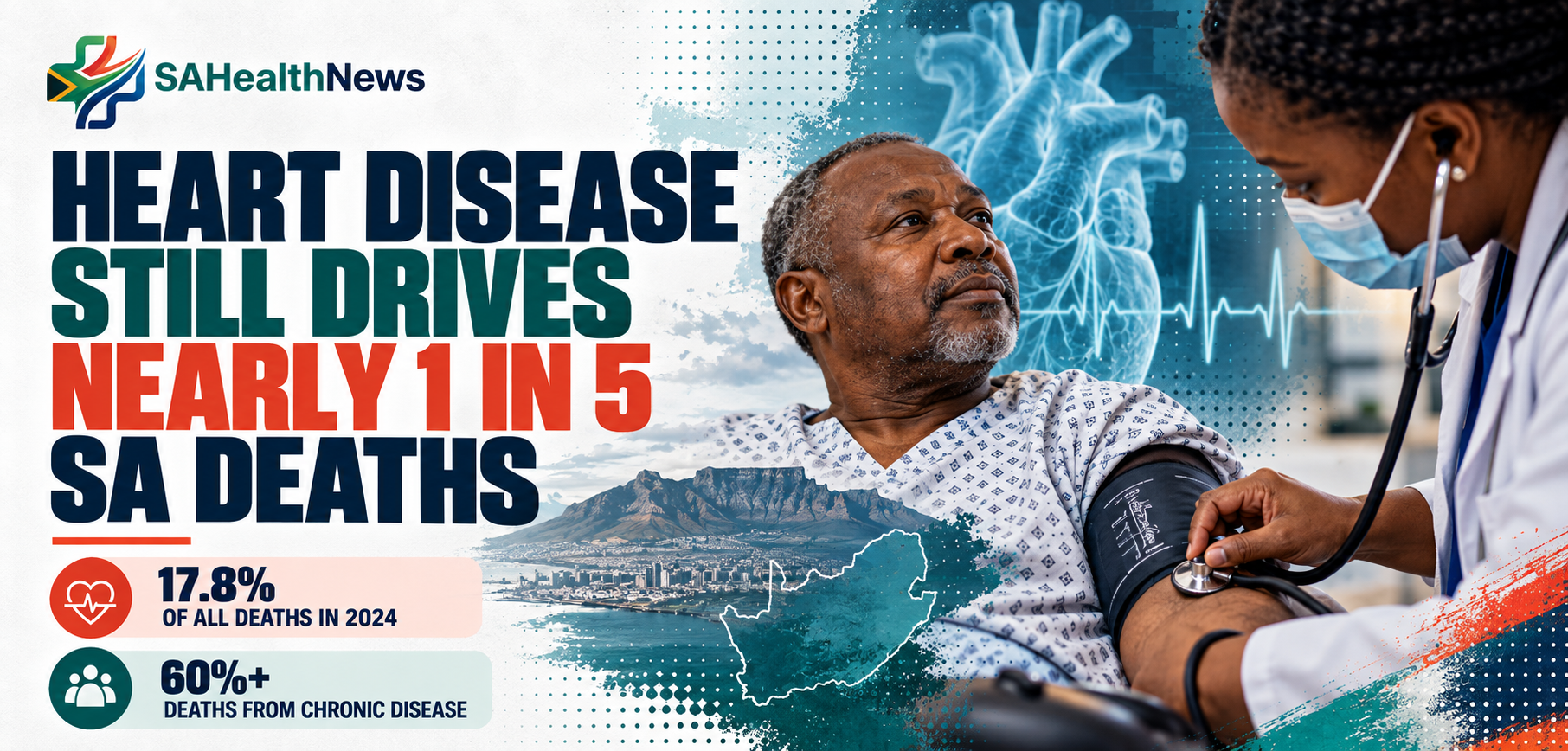
Cardiovascular disease accounted for 17.8% of registered deaths in South Africa in 2024, Stats SA says, with hypertension and stroke among the leading individual causes.
Cardiovascular disease remains South Africa's largest broad contributor to mortality, accounting for 17.8% of registered deaths in 2024, according to Statistics South Africa data released ahead of World Heart Day.
The figures underline how decisively the country's disease profile has shifted. Of 474,366 deaths registered with the Department of Home Affairs in 2024, more than 60% were attributed to non-communicable diseases.
Across the decade from 2014 to 2024, cardiovascular diseases accounted for an average of about 17.9% of all deaths.
The category includes hypertensive disease, cerebrovascular disease such as stroke, ischaemic heart disease and other heart conditions.
Two conditions stand out in the latest mortality data.
Hypertensive diseases accounted for 5.5% of all registered deaths in 2024, while cerebrovascular diseases accounted for 5.4%. They ranked second and third among the country's leading individual causes of death, behind diabetes at 6.1%.
The burden changes sharply with age and differs between men and women.
Among men, cardiovascular mortality accelerates from around age 40 and remains high through older age groups. Among women, deaths become particularly concentrated later in life, with women overtaking men in several older age bands.
Provincial patterns also differ. Hypertensive disease was the leading cardiovascular cause of death in six provinces, while cerebrovascular disease led in the Western Cape, Eastern Cape and KwaZulu-Natal.
High blood pressure often causes no obvious symptoms before complications develop. Routine blood-pressure measurement therefore remains one of the simplest ways to identify people at risk before stroke, heart failure, kidney damage or other complications occur.
One elevated blood-pressure reading is not, by itself, a diagnosis of hypertension. South African clinical guidance requires repeat assessment and clinical evaluation, with urgent referral for very high readings or associated danger signs.
World Heart Day should not reduce the issue to individual lifestyle choices alone. Access to affordable healthy food, safe spaces for physical activity, tobacco control, continuity of chronic medicines and reliable primary-care screening all shape cardiovascular risk.
The mortality data make the scale clear: heart and blood-vessel disease is not a niche problem in South Africa. It is a central chronic-disease challenge.
Source: SA Health News Desk