Breaking
Latest health news from South Africa and around the world•Wellness, nutrition, and fitness updates daily•Medical breakthroughs and healthcare updates•Science-backed health explainers and guides•Health tech, reviews, and upcoming events•
 SA Health News Desk
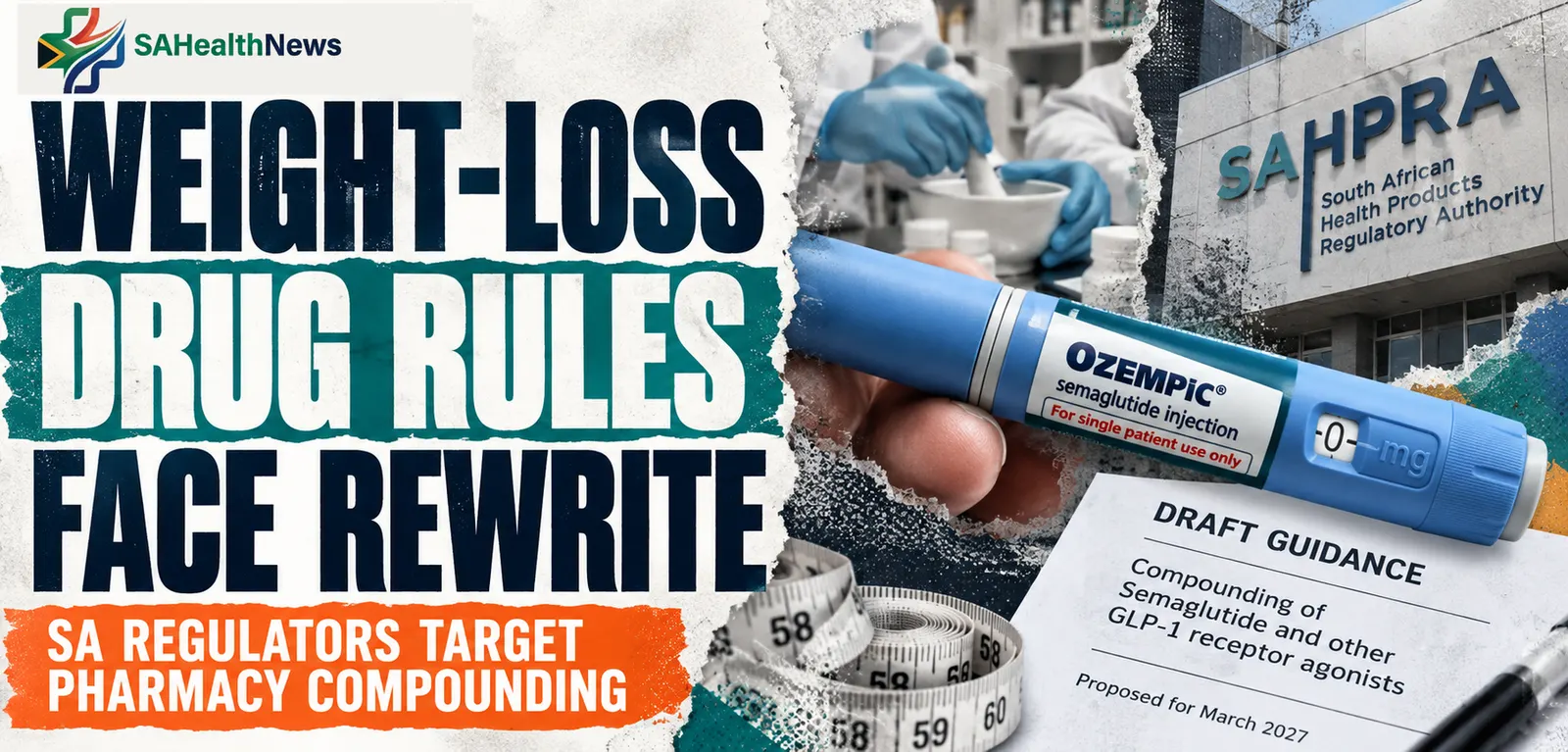
SAPC and SAHPRA are preparing revised pharmacy compounding rules as demand for injectable weight-loss and diabetes medicines tests the line between patient-specific preparation and commercial manufacture.
South African health regulators are preparing revised rules for pharmacy compounding as demand for injectable weight-loss and diabetes medicines exposes a growing dispute over where patient-specific preparation ends and commercial manufacturing begins.
The South African Pharmacy Council (SAPC) and the South African Health Products Regulatory Authority (SAHPRA) are working on updated standards and guidance. SAPC registrar and chief executive Vincent Tlala told a Johannesburg roundtable on 14 October that revised minimum standards are expected to go before the council in February 2027, with publication targeted for March. SAHPRA's updated guidelines are expected around the same time.
Those dates are targets, not an announcement that new rules have already taken effect. Existing medicines legislation and regulatory requirements continue to apply.
Compounding is the preparation of a medicine to meet an individual patient's needs, generally on the basis of a valid prescription. It is not the same as manufacturing large quantities for general sale.
Regulators say the distinction has become increasingly important as demand has risen for GLP-1 and related medicines used in diabetes treatment and weight management. The drugs include products associated with semaglutide and tirzepatide, but an individually compounded preparation should not be assumed to have the same regulatory assessment, quality controls or clinical evidence as a registered medicine.
According to Reuters, Tlala told the 14 October roundtable that pharmacies were preparing products in anticipation of demand rather than for named patients. The council's concern is that this can turn a pharmacy into a small-scale manufacturer without the safeguards expected of a licensed producer.
SAHPRA senior market-control manager Daphney Fafudi said the proposed guidance is intended to make the limits of lawful compounding clearer. The concern extends beyond technical compliance: bulk preparation and informal distribution can create opportunities for substandard or falsified products to enter the market.
The review follows earlier action against unregistered injectable products.
In May 2026, SAHPRA and the SAPC reported that a joint inspection of iDexis, trading as Sentra Pharmacy in Silverton, Pretoria, found serious regulatory non-compliance. The authorities said the site had been producing and distributing semaglutide, tirzepatide and combination preparations outside the permitted scope of patient-specific compounding.
The regulators reported deficiencies in testing, sterile manufacturing conditions and quality controls. They seized products found on site and instructed the company to recall affected products already distributed.
In July, SAHPRA, the SAPC and the Health Professions Council of South Africa warned healthcare professionals against continuing to prescribe, dispense or use the recalled iDEXIS semaglutide, tirzepatide and combination products. The regulators described the recall as Class I, Type A, their most serious category in this case.
These enforcement findings concern specific unregistered or recalled products. They do not establish that every pharmacy-compounded medicine is counterfeit or that every registered GLP-1 treatment is unsafe.
Patients using medicines for diabetes or weight management should confirm that a prescriber is appropriately registered and that a medicine is supplied through a licensed pharmacy. SAHPRA advises the public to be wary of unregistered peptide products advertised through social media, gyms and informal sellers, particularly products with unverifiable origins, unusually low prices or claims of official approval that cannot be checked.
The regulator says registered GLP-1 products are supplied in approved presentations such as pre-filled pens or vials, while unregistered powders sold for mixing should be treated with caution. The precise registration and indication of any medicine must be checked against SAHPRA's current records.
Patients should not stop or change prescribed diabetes or weight-management treatment on the basis of a news report. Anyone concerned about a product's source, packaging or effects should contact the prescribing clinician or pharmacist promptly and seek urgent care for serious symptoms.
The next test will be whether the proposed 2027 standards draw a workable boundary between legitimate patient-specific compounding and commercial-scale manufacture, while giving inspectors and pharmacy professionals clearer requirements.
For patients, the practical question is simpler: whether a product has a verifiable source, appropriate regulatory status and a reliable route for reporting safety concerns.
The SAPC's proposed February consideration and March publication timetable remains provisional. SA Health News will report the final standards and their commencement dates when the regulators formally release them.
This report is journalism, not individual medical advice.
Sources verified: Reuters, 14 October 2026; SAHPRA/SAPC enforcement statement, 23 May 2026; joint regulator recall warning, 8 July 2026; SAHPRA public guidance on peptide products.
Injectable medicines linked to semaglutide and tirzepatide have become highly visible in South Africa because of diabetes care and weight-management demand. That demand creates commercial incentives: some channels advertise access faster or cheaper than registered supply routes. Regulators’ worry is not that every compounded product is automatically unsafe; it is that scale, sterility and quality systems for named-patient compounding are not designed for bulk anticipation of demand.
Patient-specific compounding exists for legitimate clinical gaps — for example when a registered product is unavailable in a needed form and a pharmacist prepares a medicine against a valid prescription. Once preparation shifts toward stockpiling for unknown future customers, the activity starts to look like manufacturing. Manufacturing attracts different licensing, testing and distribution controls for a reason: sterile injectables are high-risk when controls fail.
The May 2026 iDexis / Sentra Pharmacy inspection findings illustrate why regulators treat that boundary as more than paperwork. Reported gaps in testing, sterile conditions and quality controls, followed by seizures and a Class I Type A recall warning in July, show the enforcement path when authorities conclude a site has left the compounding lane. Those findings remain about specific products and a specific site. They are still the clearest recent public signal that South African regulators will act when compounding language is used to cover broader production.
A SAHPRA-registered medicine has been assessed under the medicines regulatory framework for quality, safety and efficacy claims tied to its approved indications and presentation. That is stronger protection than an informal peptide powder sold through social media. It is not a promise that every patient will tolerate a medicine, or that off-label use is risk-free. Registration is a product-control standard, not personal medical advice.
Conversely, a compounded preparation may be lawful in narrow circumstances and still lack the same evidence package as a registered GLP-1 product. Patients should not equate “made in a pharmacy” with “same as the branded pen.” Packaging, concentration, sterile process and cold-chain handling can all differ. Anyone offered a product that must be mixed from powder, arrives without clear labelling, or is priced far below registered channels should treat those as warning signs and verify before use.
Clinicians face a parallel duty. Prescribing or dispensing recalled or unregistered injectables after a joint regulator warning is not a grey area in the public record the authorities have already issued. The July warning to healthcare professionals exists precisely because demand pressure can pull practice ahead of compliance.
Hold the story to the ledger available on 16 October 2026: SAPC and SAHPRA are preparing updated compounding standards and guidance; SAPC’s February 2027 council consideration and March publication targets remain provisional; existing law still applies; May and July enforcement actions concern specific unregistered or recalled products linked to the iDexis / Sentra matter; patients should verify registration and supply route rather than stop prescribed treatment on the basis of a news report. Final standards and commencement dates will matter more than roundtable timetables until they are formally published.
This report is journalism, not individual medical advice.
Source: SA Health News