Breaking
Latest health news from South Africa and around the world•Wellness, nutrition, and fitness updates daily•Medical breakthroughs and healthcare updates•Science-backed health explainers and guides•Health tech, reviews, and upcoming events•
 SA Health News Desk
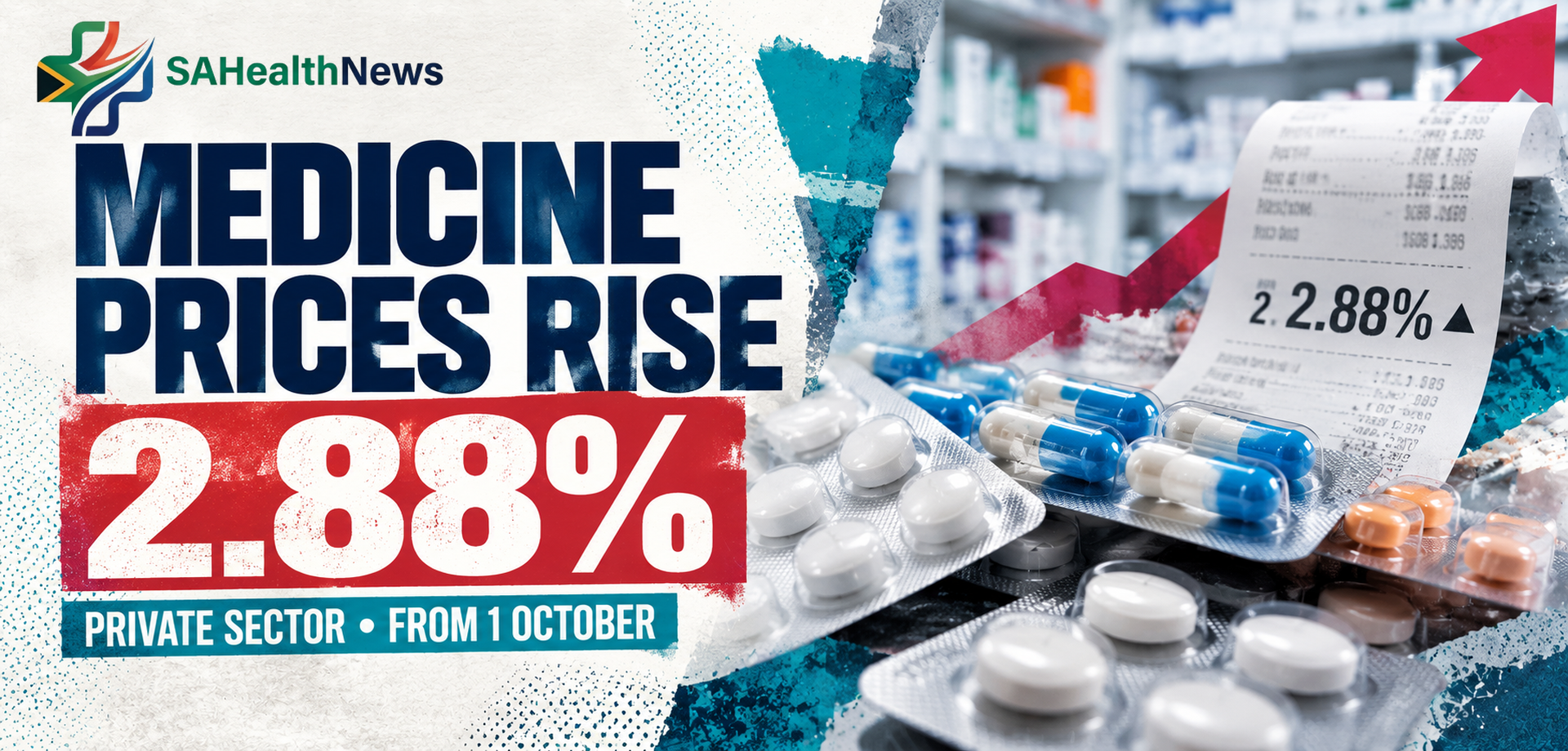
Private-sector medicine prices can rise another 2.88% from 1 October after Health approved a second Single Exit Price Adjustment for 2026.
South Africa's regulated private-sector medicine prices have been allowed to rise by a further 2.88%, after the National Department of Health approved an extraordinary second Single Exit Price Adjustment for 2026.
The increase took effect on 1 October 2026 and applies to registered medicines and scheduled substances listed on the national medicine-pricing database as at 30 September, including their related pack sizes.
For patients, the important distinction is that this is an adjustment to the Single Exit Price (SEP) , the regulated price at which manufacturers and importers sell medicines into the private market. It does not apply to medicines bought by the state for the public health system.
South Africa normally determines an annual adjustment to medicine prices. The 2.88% increase is unusual because it is the second SEP adjustment in 2026.
The Department of Health says pharmaceutical manufacturers have been facing higher input costs, supply-chain pressure and geopolitical disruptions that threaten the sustainability of medicine supply.
The first 2026 adjustment was 1.47%, effective in January. Pharmaceutical manufacturers subsequently argued that the increase was insufficient to absorb rising production and supply costs.
The department describes the new 2.88% adjustment as an extraordinary intervention intended to give manufacturers temporary relief while maintaining medicine availability and affordability.
The SEP is a central part of South Africa's medicine-pricing system.
It establishes the regulated price at which a manufacturer or importer may sell a medicine to private-sector buyers such as pharmacies, dispensing doctors and private hospitals. The framework was introduced to improve price transparency and prevent the same medicine being sold to different private buyers at negotiated manufacturer prices.
That does not mean every pharmacy bill simply rises by exactly 2.88%.
The final amount a patient pays can also be affected by dispensing fees, the medicine selected, pack size, medical-scheme benefits and whether a manufacturer applies an allowable price reduction. The adjustment instead raises the permitted SEP base for affected products.
The change matters most to people obtaining medicines through private pharmacies, dispensing practitioners and private hospitals, as well as medical schemes paying medicine claims.
Patients who regularly use chronic medicines could feel increases repeatedly over time because those medicines are purchased every month.
However, the effect will differ by product. The government's announcement does not establish that every patient's out-of-pocket medicine bill will rise by a uniform 2.88%.
Public-sector procurement operates separately. The Department of Health explicitly states that the SEP does not apply to the state, so the adjustment should not be interpreted as a 2.88% increase in the price of medicines dispensed through public clinics and hospitals.
The policy problem is not simply whether medicine prices should rise.
Keeping regulated prices too low when manufacturing, imported ingredients, freight and other costs increase can make some products commercially difficult to supply. Allowing larger increases, however, transfers more cost into a healthcare system where households and medical schemes are already under financial pressure.
The department says the additional adjustment follows engagement with the pharmaceutical sector over risks to medicine availability.
That makes medicine supply an important measure of whether the intervention works. A price increase intended to protect supply should ultimately be judged against actual product availability, discontinuations and shortages , not only the relief it provides manufacturers.
Private patients taking repeat medication should check the price of their specific medicine rather than assuming the same rand increase across all prescriptions.
Where cost becomes a problem, patients can ask a pharmacist or prescribing clinician whether an appropriate lower-cost generic is available. A prescribed treatment should not be stopped, reduced or substituted without appropriate clinical or pharmaceutical advice.
The National Department of Health maintains the official medicine-pricing database containing Single Exit Prices and related pricing information.
The second adjustment is now in force. Its practical effect will become clearer as pharmacies implement updated prices and the sector moves towards the next annual pricing cycle in 2027.
This article is for public information. It is not medical advice. Speak to a pharmacist or clinician before changing any prescribed medicine.
Source: SA Health News Desk