Breaking
Latest health news from South Africa and around the world•Wellness, nutrition, and fitness updates daily•Medical breakthroughs and healthcare updates•Science-backed health explainers and guides•Health tech, reviews, and upcoming events•
 SA Health News Desk
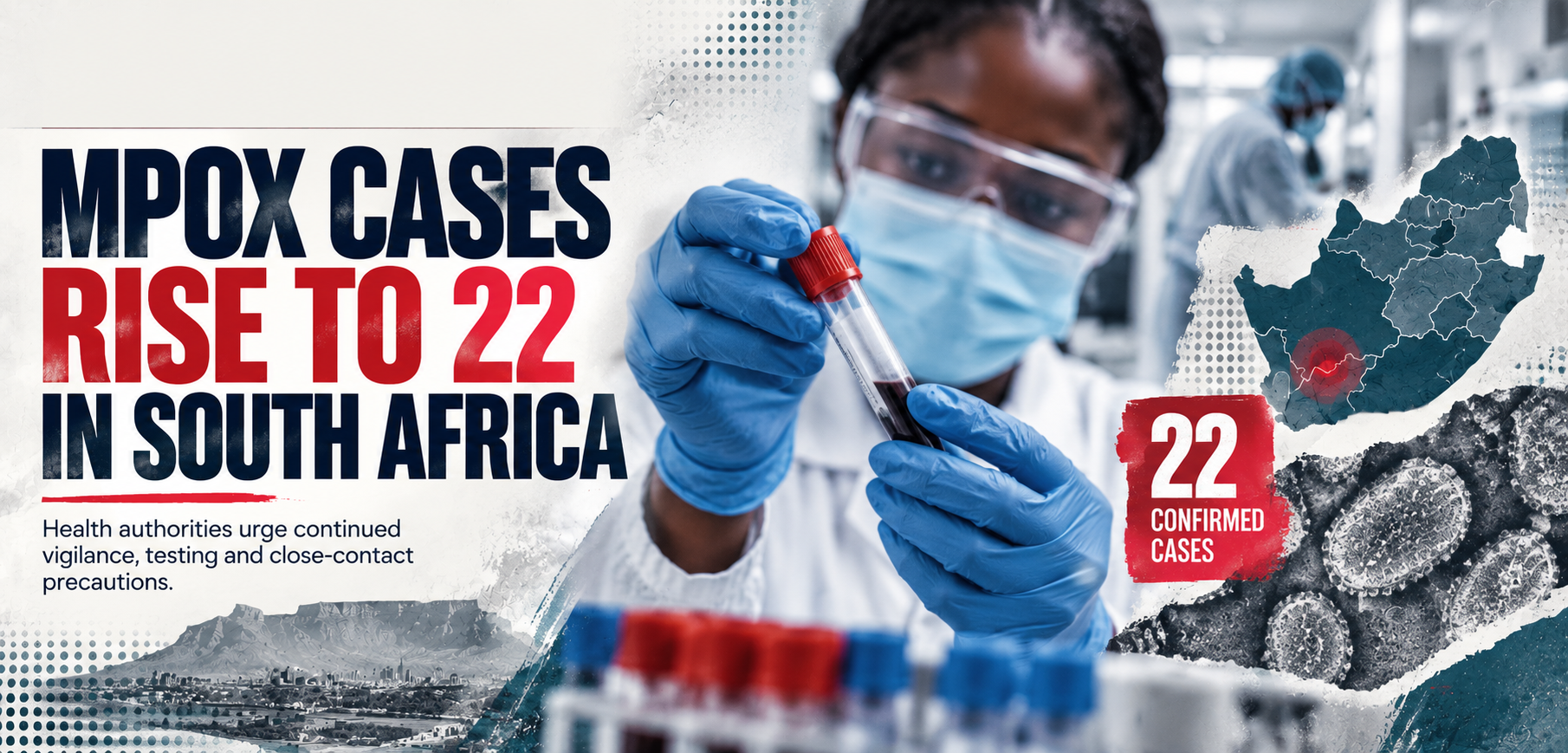
South Africa’s mpox count has risen again as health authorities intensify surveillance and outbreak response in the provinces reporting infections.
South Africa’s mpox count has risen again as health authorities intensify surveillance and outbreak response in the provinces reporting infections.
Current reporting on 23 September puts the national count at 22 laboratory-confirmed cases as of 22 September. The National Institute for Communicable Diseases’ most recent public dashboard update before that reported 21 confirmed cases as of 18 September: 17 in the Western Cape, three in Gauteng and one in KwaZulu-Natal.
The rapid rise is concentrated in recent weeks. The National Department of Health said on 17 September that 13 cases had been recorded between 13 August and 17 September, raising concern about local transmission. The Western Cape, particularly Cape Town, has carried most of the recent burden.
NICD preliminary analysis has linked both Western Cape clusters to Clade Ib mpox virus, although final analysis was still pending in its latest update.
Mpox spreads mainly through close physical contact with an infected person, including direct skin-to-skin contact with lesions. Transmission can also occur through contaminated materials such as bedding, clothing or towels, and through respiratory droplets during prolonged face-to-face contact.
Symptoms can include fever, headache, muscle aches, back pain, fatigue and a rash or skin lesions. The Department of Health says symptoms typically appear six to 13 days after exposure, although the incubation period can range from five to 21 days.
People who develop a new or unexplained rash or lesions — particularly after close contact with a confirmed or suspected case — should seek medical advice promptly and avoid close physical contact while being assessed.
Gauteng has activated outbreak response teams across all five health districts. Provincial officials say the teams are supporting case detection, investigation, infection prevention, environmental health, immunisation and public communication.
The national department says South Africa has secured limited supplies of MVA-BN mpox vaccine and tecovirimat treatment with support from the World Health Organization.
Use of those supplies is being targeted according to outbreak risk rather than offered as a universal vaccination programme. South Africa previously received about 10,500 doses of Imvanex through the Africa CDC access mechanism, with importation authorised by SAHPRA under Section 21.
The latest rise does not mean everyone is at equal risk. Mpox can affect anyone, but risk is highest where there has been close contact with an infected person. Health authorities have also stressed that stigma can undermine outbreak control by discouraging people from testing or seeking care.
The practical public-health priority remains early recognition, testing, contact tracing and rapid isolation of suspected cases while investigations continue.
Sources: National Department of Health / South African Government, NICD mpox dashboard, Gauteng Department of Health reporting, current 23 September reporting.
Source: SA Health News Desk