Breaking
Latest health news from South Africa and around the world•Wellness, nutrition, and fitness updates daily•Medical breakthroughs and healthcare updates•Science-backed health explainers and guides•Health tech, reviews, and upcoming events•
 SA Health News Desk
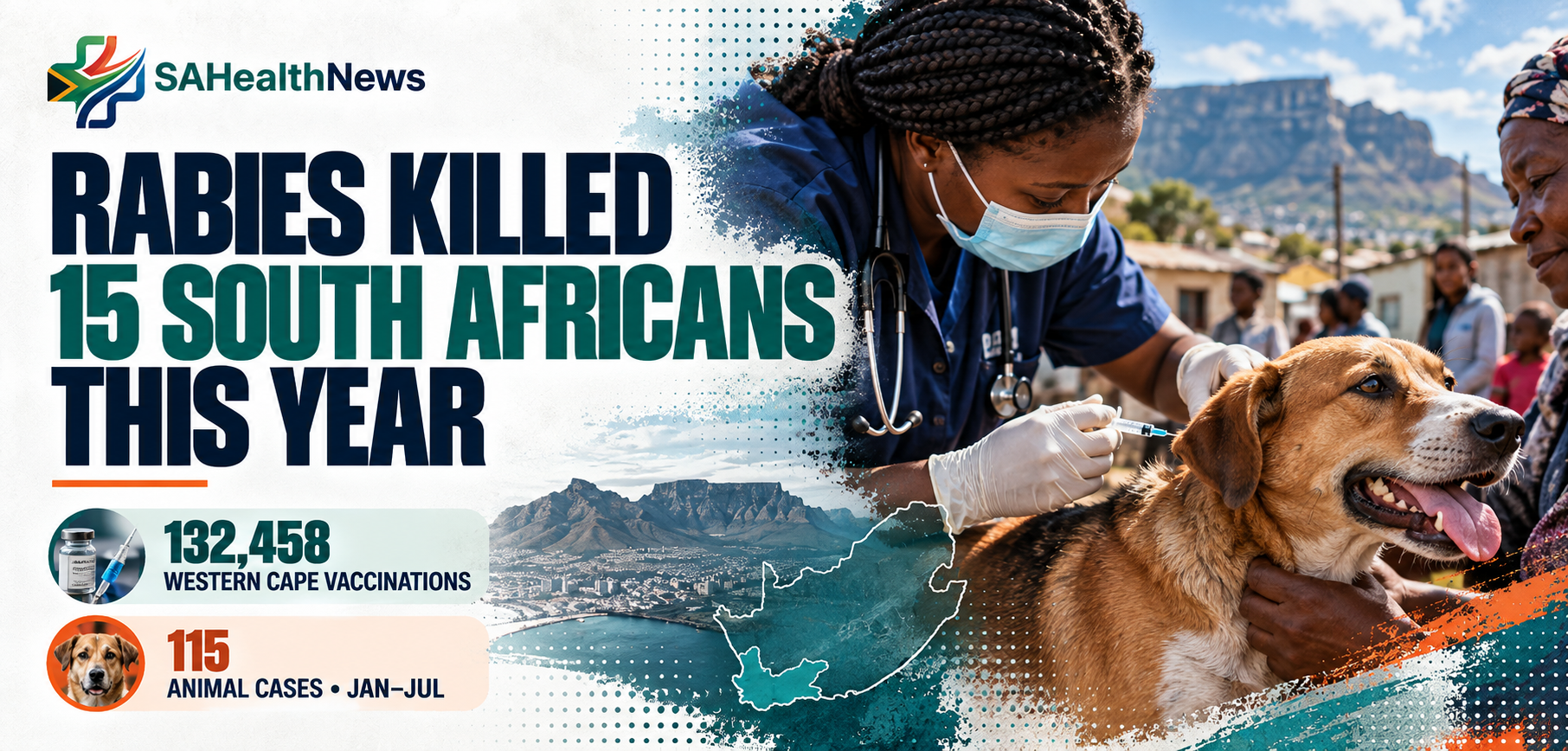
By late August, 15 human rabies deaths had been recorded in South Africa in 2026, while vaccination campaigns continue as the first prevention barrier.
South Africa marked World Rabies Day with a blunt reminder that one of the world's most preventable infectious diseases is still killing people locally.
National agriculture authorities reported that, by 26 August, 15 human rabies deaths had been recorded since the start of 2026. The Eastern Cape accounted for seven confirmed and two probable cases, KwaZulu-Natal five confirmed cases and Limpopo one confirmed case.
A further 115 laboratory-positive animal cases were recorded nationally between 1 January and 31 July.
Rabies is almost always fatal once clinical symptoms begin, but human deaths can be prevented when exposure is recognised early and the correct post-exposure treatment is given promptly.
South Africa's rabies-control strategy relies heavily on vaccinating dogs and cats because infected domestic animals are the main bridge between the virus and people.
In the Western Cape, veterinary teams administered 132,458 rabies vaccinations to dogs, cats, cattle and horses during the 2025/26 financial year, according to the provincial agriculture department. The vaccination programme was valued at more than R1.2 million.
The province says community vaccination campaigns, surveillance and outreach are particularly important in areas where access to private veterinary care is limited.
Nationally, Limpopo, KwaZulu-Natal and the Eastern Cape remain important rabies hotspots.
Anyone bitten or scratched by an animal suspected of carrying rabies should wash the wound immediately and thoroughly with soap and running water and seek medical care without delay.
Post-exposure management can include a course of rabies vaccine and, for higher-risk exposures, rabies immunoglobulin infiltrated into and around the wound.
People should not wait for an animal to develop obvious symptoms before seeking care. Rabies risk is assessed using the type of exposure, animal species, behaviour, health and vaccination history, and the area where the incident occurred.
The central prevention message is uncomplicated: vaccinate dogs and cats, avoid handling strange or sick animals, report suspected cases and treat any potentially risky exposure as urgent.
Source: SA Health News Desk