Breaking
Latest health news from South Africa and around the world•Wellness, nutrition, and fitness updates daily•Medical breakthroughs and healthcare updates•Science-backed health explainers and guides•Health tech, reviews, and upcoming events•
 SA Health News Desk
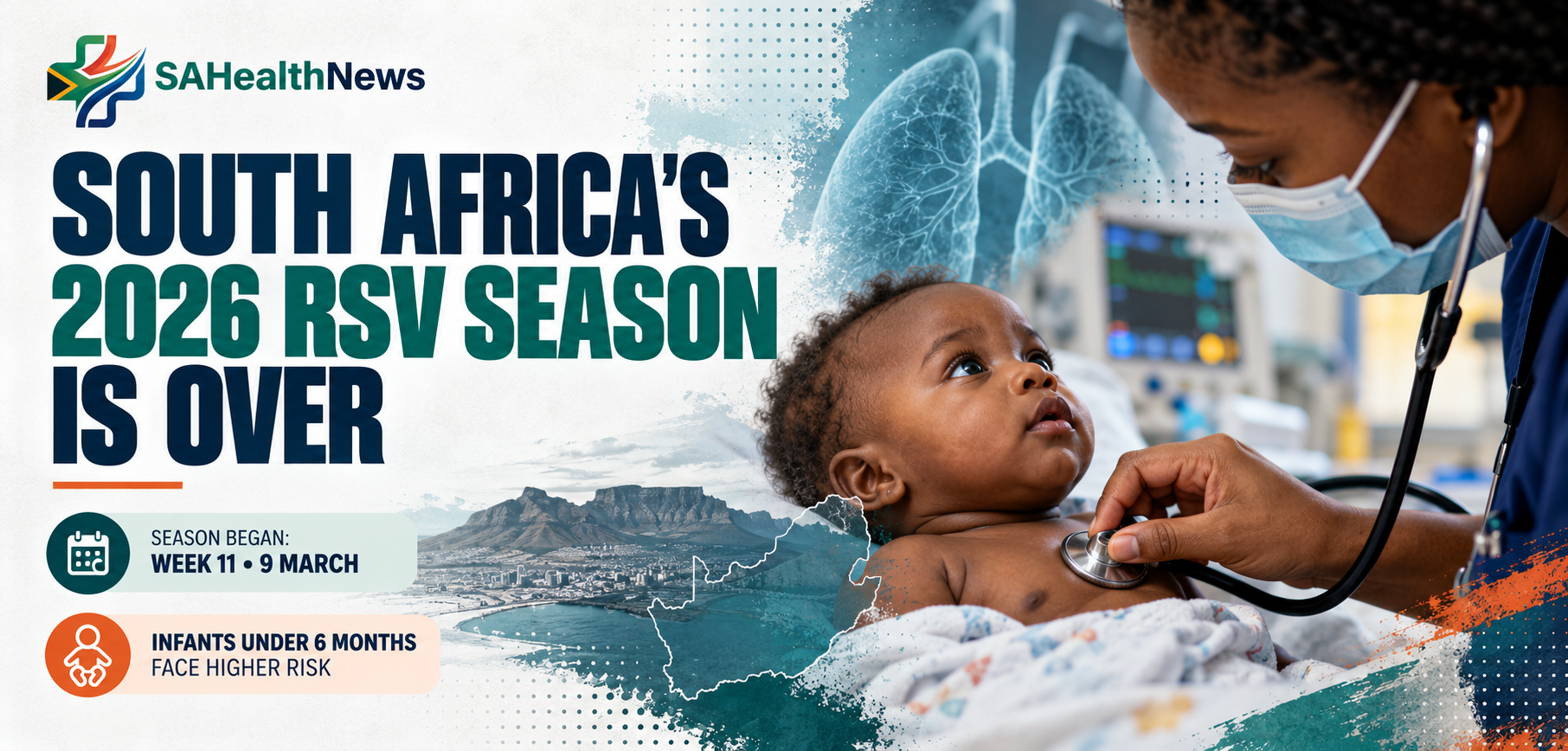
South Africa's 2026 RSV season has ended after a later-than-usual start, but NICD says sporadic infections can still occur.
South Africa's 2026 respiratory syncytial virus season has ended, according to the National Institute for Communicable Diseases, after a later-than-usual start and a winter peak that again placed infants at the centre of the country's respiratory-disease burden.
The NICD says the season began in epidemiological week 11, the week starting 9 March, when the RSV detection rate among children younger than five enrolled in inpatient pneumonia surveillance at public hospitals moved above the seasonal threshold for two consecutive weeks.
Activity increased through autumn and early winter, peaking in week 25, which began on 15 June, at a level the institute classified as moderate. The defined season ended in week 34, beginning 17 August.
The formal end of the season does not mean RSV has disappeared. The virus circulates throughout the year and sporadic infections can still occur outside the seasonal period.
RSV is one of the most important causes of bronchiolitis and lower respiratory tract infection in young children. Most infections are mild, but very young infants can deteriorate quickly.
The NICD identifies age below six months as an important risk factor for severe disease. Other recognised risk factors include prematurity, congenital heart disease, chronic lung disease of prematurity, neurological conditions, immunodeficiency, HIV infection or exposure and lack of breastfeeding.
Parents and caregivers should seek medical assessment when a baby or young child develops signs of breathing difficulty, struggles to feed, becomes unusually lethargic or develops pauses in breathing.
Measures that reduce spread of RSV also reduce transmission of other respiratory viruses: regular handwashing, covering coughs and sneezes, avoiding close contact with people who are ill and staying home when symptomatic where possible.
South Africa also has RSV-specific prevention options, but access differs between the public and private sectors. Palivizumab has long been available for selected high-risk infants, although monthly dosing and cost limit its use. Long-acting monoclonal antibodies and maternal RSV vaccination are available in the private sector.
The NICD says introduction of maternal RSV vaccination into the public sector is being considered but is not currently available.
The public-health value of declaring the end of a season is practical. Hospitals can use seasonal surveillance to anticipate paediatric pressure, while clinicians are reminded not to rule out RSV simply because the main seasonal wave has passed.
Source: SA Health News Desk