Breaking
Latest health news from South Africa and around the world•Wellness, nutrition, and fitness updates daily•Medical breakthroughs and healthcare updates•Science-backed health explainers and guides•Health tech, reviews, and upcoming events•
 SA Health News Desk
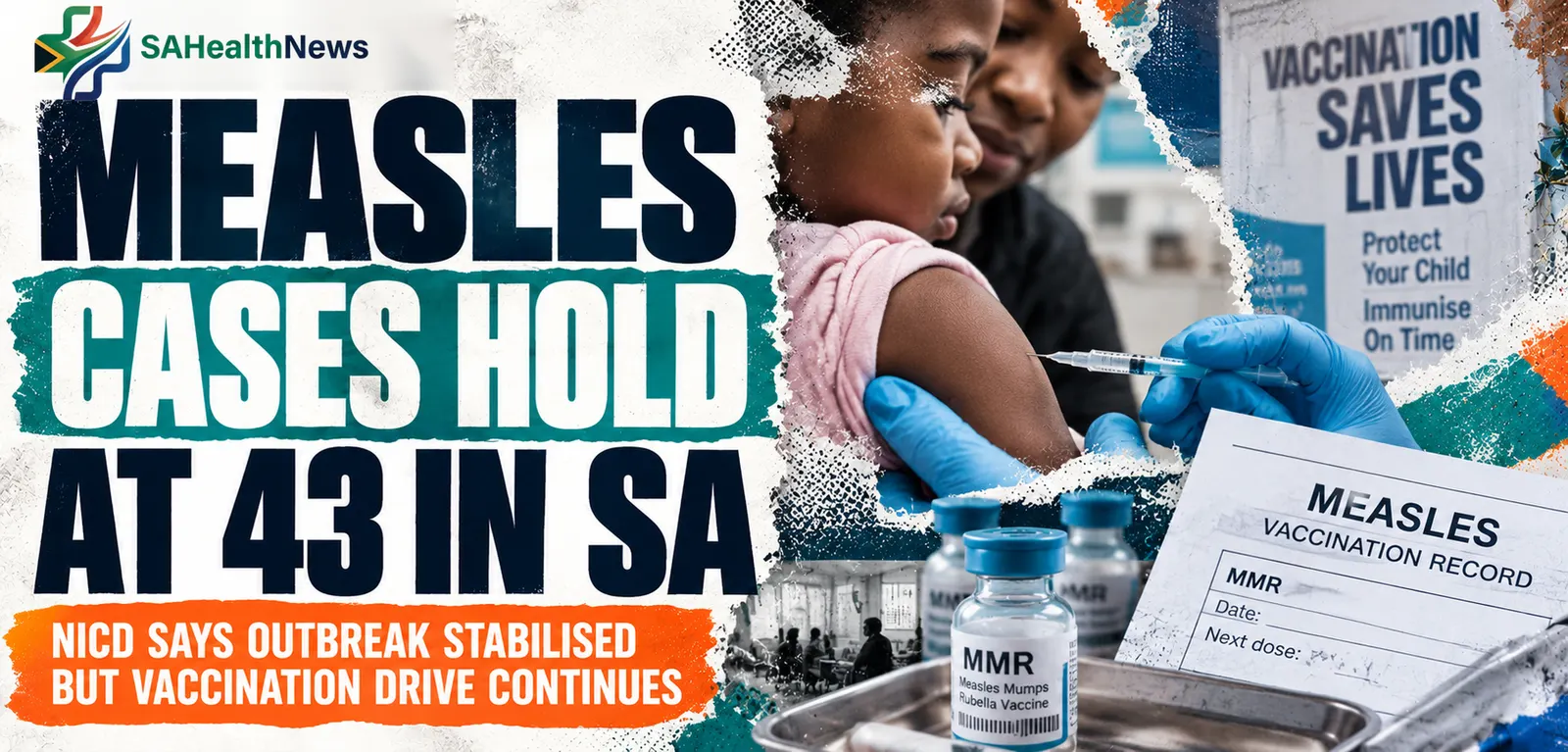
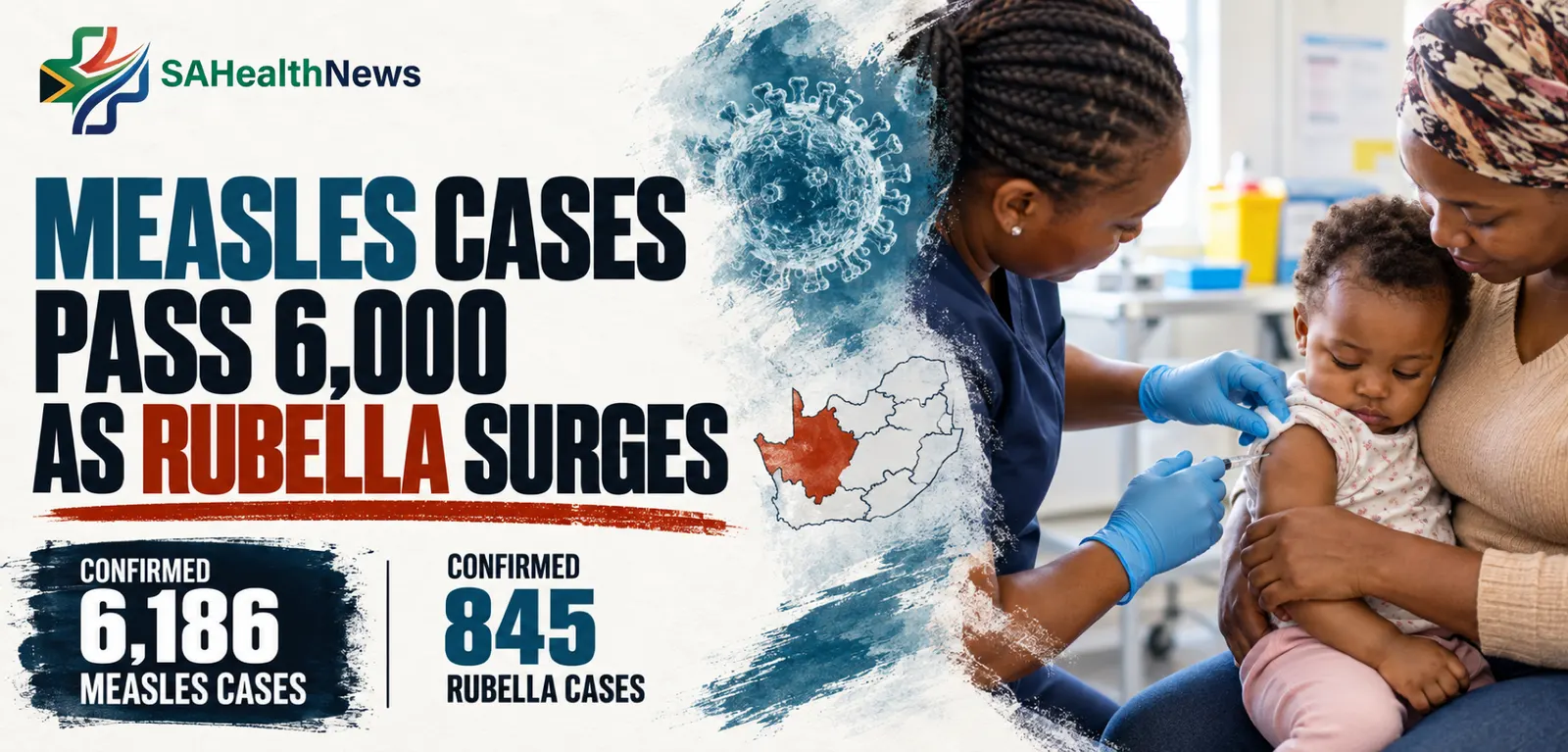
South Africa has recorded more than 5,000 laboratory-confirmed measles cases in 2026, with the latest national surveillance data showing a sharp increase across every province.
South Africa has recorded more than 5,000 laboratory-confirmed measles cases in 2026, with national surveillance data showing infections across every province. The National Institute for Communicable Diseases reported 5,037 laboratory-confirmed cases from 29 December 2025 to 13 September 2026. The latest surveillance update in that series added 458 cases to the national tally.
The Northern Cape recorded the largest number of newly reported cases in the update, with 115, followed by the Free State with 80 and Limpopo with 56. The Western Cape reported 53 new cases, North West 49, Mpumalanga 35, Gauteng 34, KwaZulu-Natal 28 and the Eastern Cape eight.
NICD says the figures can change as specimens from suspected cases reach laboratories and results are incorporated into the national surveillance system. A rising laboratory-confirmed total is therefore both a measure of transmission and a measure of testing and reporting activity. Readers should treat the 5,037 figure as the confirmed count through the stated end date, not as a final annual total for 2026.
Measles is highly contagious and spreads through respiratory droplets and airborne particles when an infected person coughs or sneezes. Early symptoms usually include fever, cough, runny nose and red eyes, followed by a characteristic rash. Although many people recover, measles can cause serious complications, particularly in young children, pregnant people and people with weakened immune systems.
Complications can include pneumonia, severe diarrhoea, dehydration, ear infections and encephalitis, an inflammation of the brain. Those risks are why public-health agencies treat measles outbreaks as more than a temporary childhood illness. High vaccination coverage is required to interrupt transmission because the virus spreads so efficiently among susceptible contacts.
Vaccination remains the main protection against measles and the central tool for interrupting community spread. South Africa’s routine childhood immunisation programme includes measles-containing vaccine; catch-up opportunities matter when doses have been missed. A laboratory-confirmed national rise above 5,000 cases is evidence that immunity gaps remain large enough for a vaccine-preventable virus to keep circulating.
The provincial breakdown in the NICD update is useful for allocating attention, not for ranking provinces as permanently “worst” or “safest.” A province with more newly reported cases in one update may have more intense transmission, more testing, or both. Northern Cape’s 115 new cases in the update period deserve local public-health focus; they do not by themselves describe the whole year’s risk everywhere else.
Urban provinces with large populations can still contribute meaningful absolute numbers even when their share of a single update looks smaller. Gauteng’s 34 newly reported cases and KwaZulu-Natal’s 28 sit alongside smaller provinces with higher counts in that window. The practical lesson is nationwide: clinicians should keep measles on the differential for compatible illness, and caregivers should check immunisation status rather than assume their province is unaffected.
Surveillance lag also matters. Specimens take time to reach laboratories; confirmed counts rise as results are filed. Families should not wait for the next weekly total before using catch-up vaccination if a child’s doses are incomplete. The surveillance report is a rear-view mirror. Prevention is a forward action.
The same NICD surveillance programme recorded 595 laboratory-confirmed rubella cases from 29 December 2025 to 13 September 2026, including 13 additional cases in the latest reporting period. Rubella is often mild, but infection during pregnancy can cause miscarriage, stillbirth or congenital rubella syndrome, which can lead to serious birth defects.
South Africa uses the combined measles-rubella vaccine in the routine childhood immunisation programme. That pairing means catch-up campaigns and routine clinic visits protect against both viruses when the schedule is completed. Pregnant people who are concerned about exposure should speak to a clinician; they should not self-diagnose from a news report or social-media claim.
NICD is urging clinicians and public-health teams to strengthen case reporting, laboratory confirmation and contact tracing. Suspected measles should be notified and investigated according to current public-health guidance, with laboratory confirmation where indicated. Contact follow-up matters because measles can infect susceptible people before the rash is obvious.
For families, the immediate action is simpler: check whether children are up to date with routine immunisations and use catch-up vaccination opportunities where doses have been missed. Adults unsure of their measles immunity — especially those in healthcare, education or other high-contact roles — should ask a clinician whether vaccination or immunity checking is appropriate. People with fever and rash who may have measles should avoid exposing others and seek clinical advice promptly, particularly for infants, pregnant people and immunocompromised contacts.
A rising national case count is not simply a surveillance statistic. It is a warning that immunity gaps remain large enough for a vaccine-preventable virus to keep circulating. Care Room reporting sticks to the NICD ledger: confirmed case totals, provincial additions in the stated update, co-circulating rubella counts, and the practical vaccination message. Update when NICD publishes a newer surveillance cut — not when unverified social totals circulate without a laboratory basis.
Sources: National Institute for Communicable Diseases, Measles and Rubella Weekly Surveillance Report, data through 13 September 2026.
Hold the confirmed NICD numbers through 13 September 2026 in view: 5,037 laboratory-confirmed measles cases year to date in that series, 458 added in the latest update, and 595 laboratory-confirmed rubella cases over the same window. Provincial additions explain where reporting concentrated in that cut; they do not replace the national vaccination message. The useful next update is a newer NICD surveillance report, not an unverified social total.
Source: SA Health News Desk